
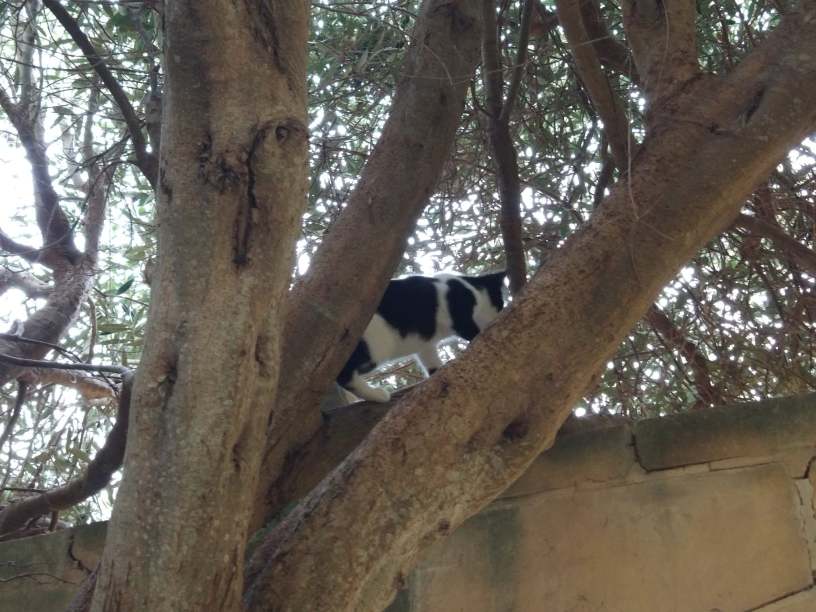
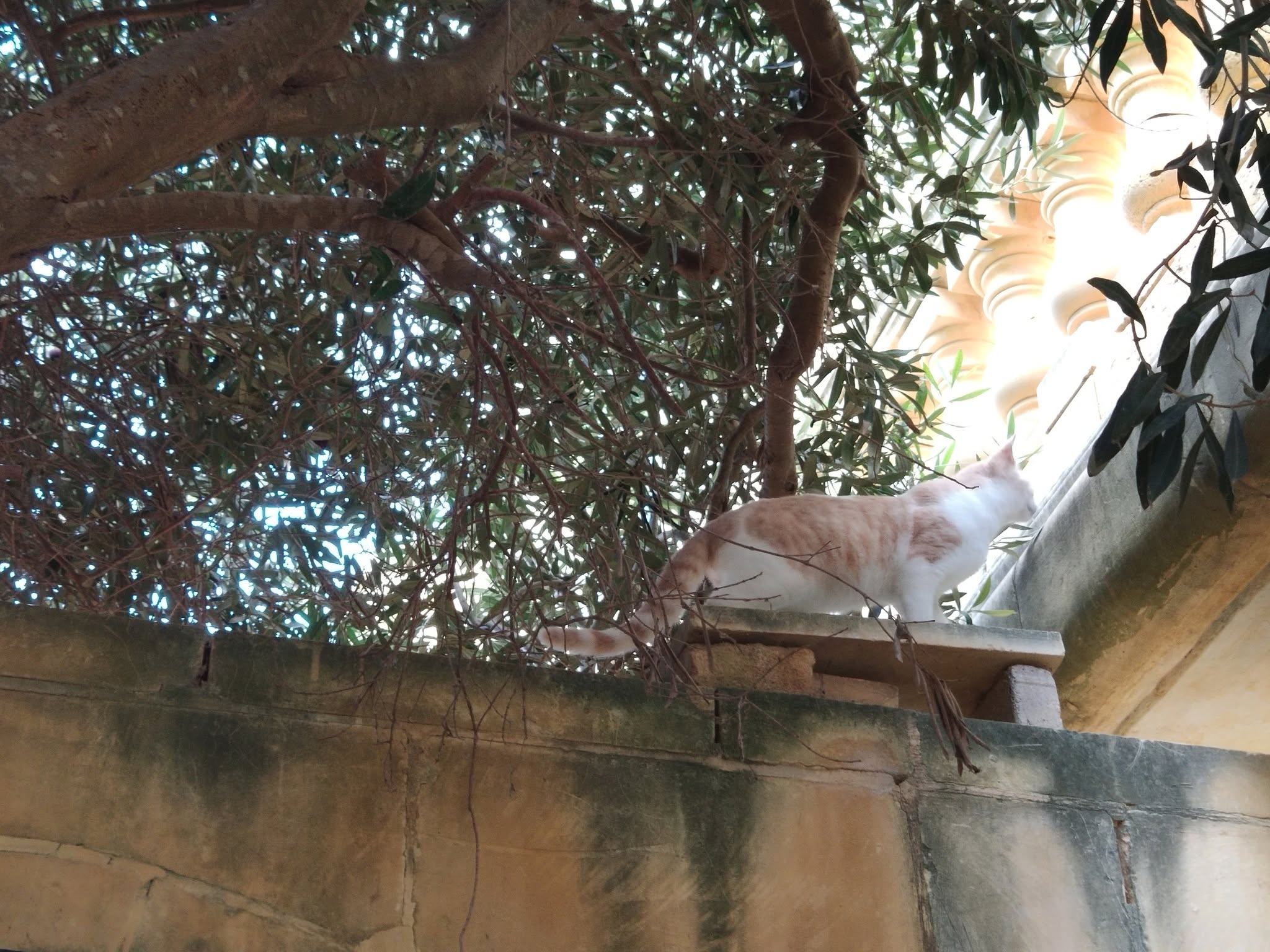
The olive tree, with its trunk in the garden and its branches spreading over the garden, drive and field, was the equivalent of a garden staircase combined with a main road as far as the cats were concerned. It gave them a direct route from the garden to the top of the dividing wall separating the garden and the drive, from which they could get down into the drive, or across to the terrace (accessed by jumping up to and through the stone balustrade, as Pascha was demonstrating in the photo below).
Coming back from the drive, cats would jump up from the field wall, up onto the dividing wall, and then climb down the olive tree into the garden.
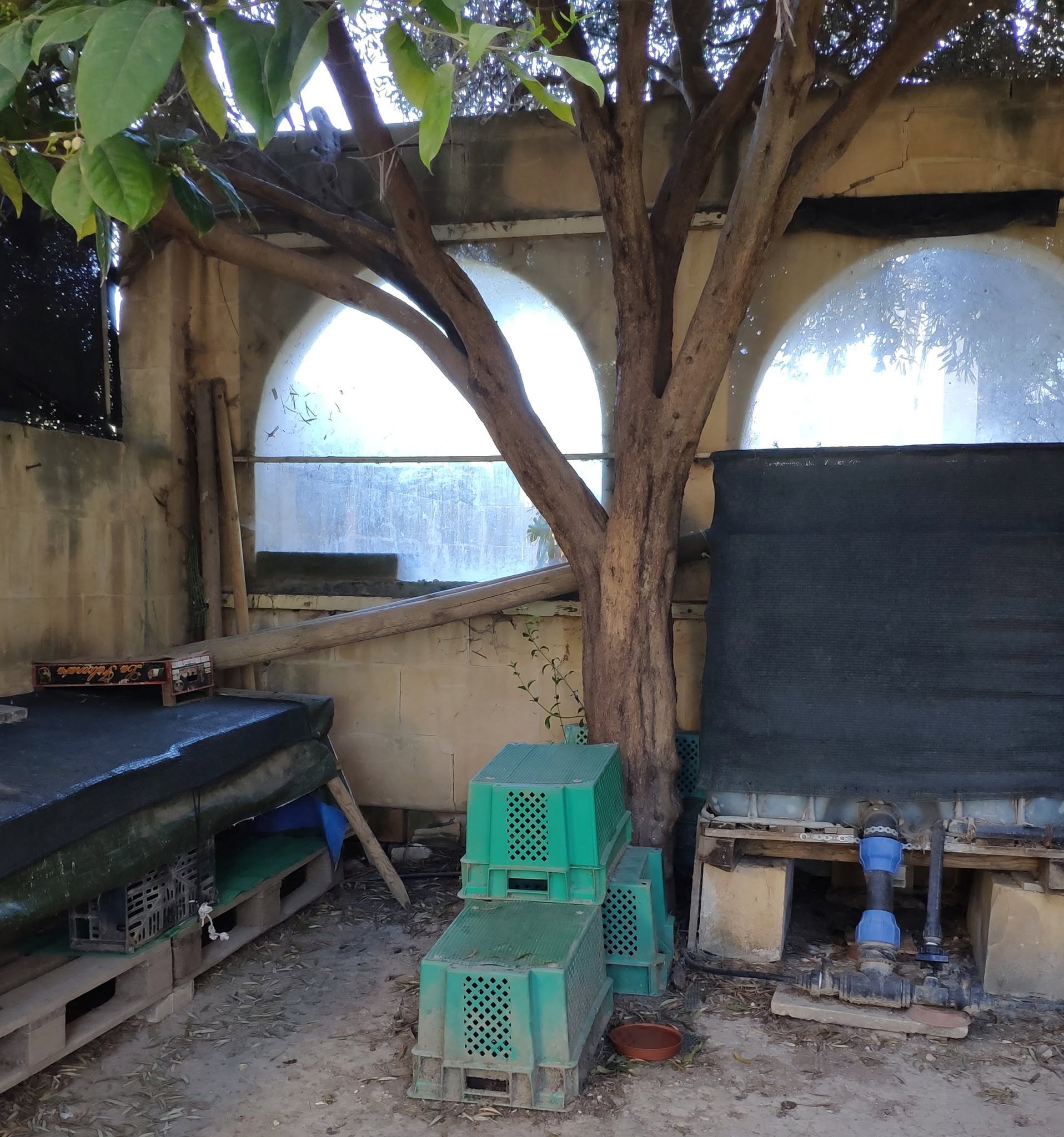
In the garden, there were upturned plastic crates to make steps for less able cats to reach the first fork in the olive tree, and the sound of paws landing on the top of the tank or on the green crates became part of the everyday soundtrack of the garden. Of course it made life tricky for cats coming down the olive tree if they found the green crates occupied by other cats, queuing for their food which was being served on the feeding station opposite the crates.
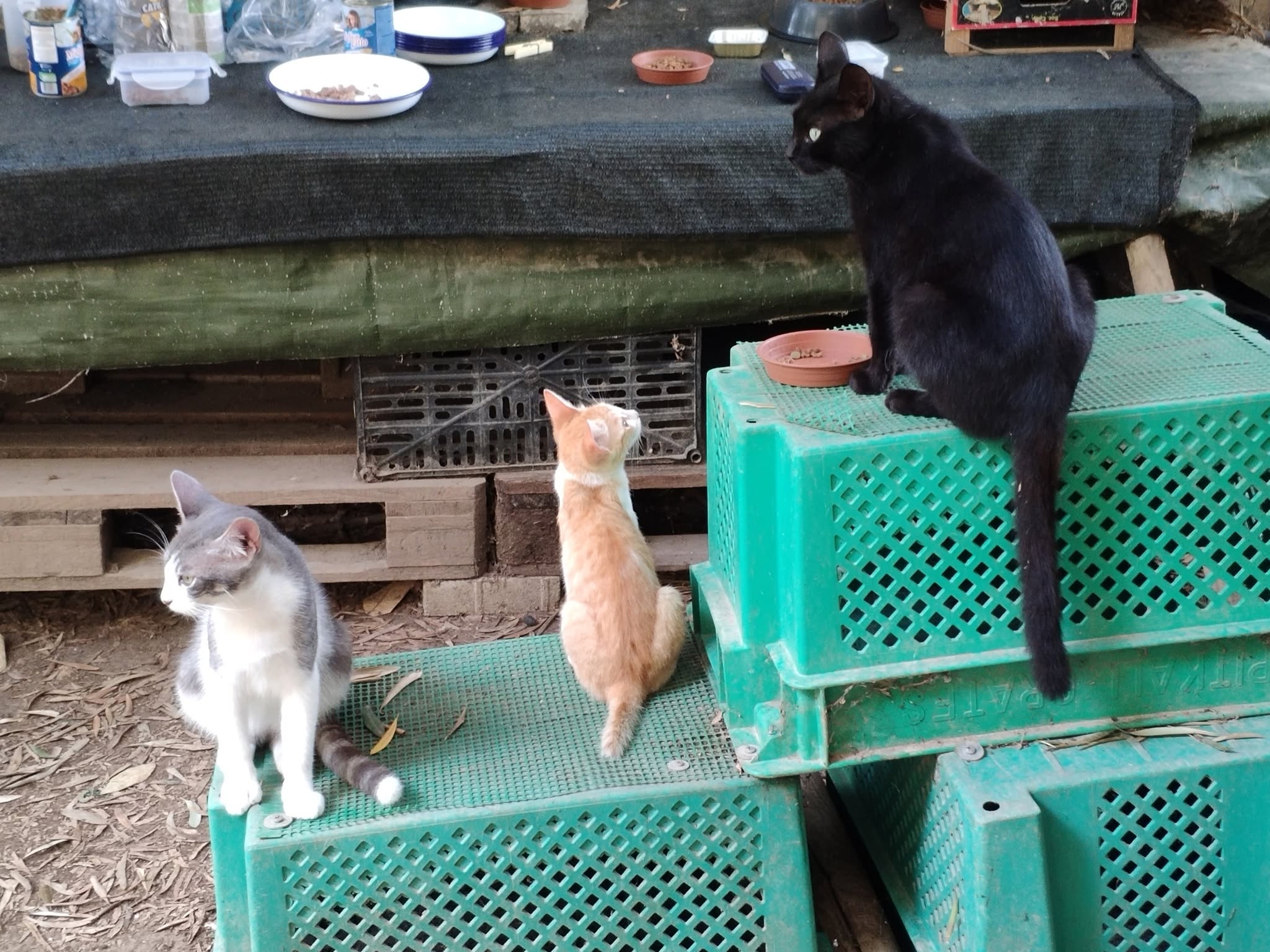
Once the cats had reached the fork in the tree, they would then decide whether to continue up the tree, or stop off on the water tank where they could nap, groom or generally relax;
It was always a nervous time when kittens discovered the olive tree and high wall and there were a few accidents when kittens fell off the high wall, either into the field or the drive.
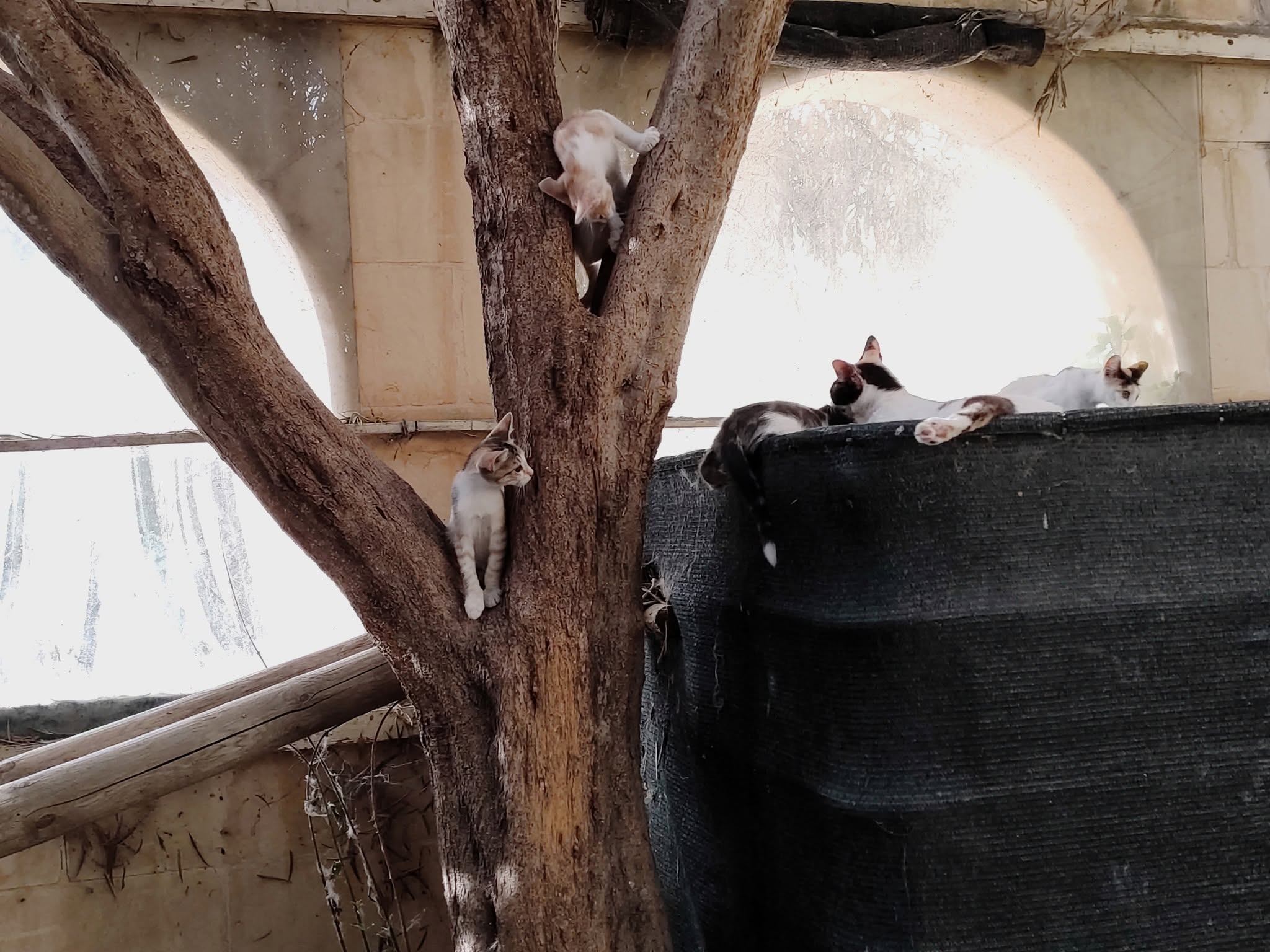
Luckily no one was badly injured, although a few did need rescuing because they were too small to make their own way back to the garden.
The olive tree had been there for years before the house and humans arrived, keeping watch over the neighbourhood. How many cats had scrambled through its branches we will never know as Nature keeps her secrets.

