
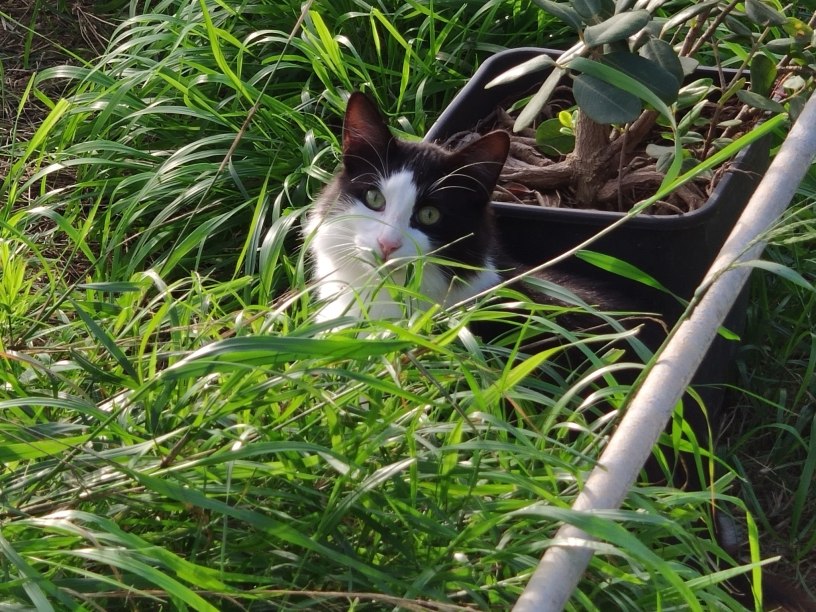
Many early photos of the cats were taken from the humans’ first floor terrace but, as The Cat and her family became more accustomed to having the humans around, it was possible to take photos at closer quarters without frightening them. Generally, the Visiting Cats who came from the fields were more feral and thus less likely to be happy with humans nearby, but most of them became more relaxed with the humans around, so long as their personal boundaries were observed.
Having cats who were less likely to disappear the moment a camera appeared was a big help to the feline photographic records of this period in the humans’ lives, and it became easier to identify cats from a distance once we knew what their distinguishing features were.
Turning the clock back to when Dinky arrived, The Cat had made her feelings about the newcomer known and chased him out of the garden; this might have been because she was expecting a new family and protecting her domain.
(This really does have a bearing on the photographic archive – just bear with me a minute longer, dear reader.)
The Cat chose to have her litter out in the fields which meant she was absent from the garden for longer periods of time. So I brought Dinky into the garden and we walked round together. He explored, sniffed, investigated, and took it all in. And it was then, as I was crouched down with him, that I realised how different the garden looked from the cats’ viewpoint. It was like a different world. The grass which looked impenetrable and dense from above was actually passable at ground level, with well-worn paths woven in and out of the stalks by the regular passage of cats. Gaps under and between boxes and crates suddenly became shortcuts, as did the tops of plant troughs and pots. It was a moment of realisation. Why would cats have the same view of their surroundings as humans? Of course it was obvious, really – it just hadn’t occured to me.
Taking photos from knee level showed a different world, a world as different as the world appeared to the cats when they poked their heads through the gaps in between the balustrades of the terrace and looked down from above. They would not have realised for one moment that they were looking at the garden which they knew so well.
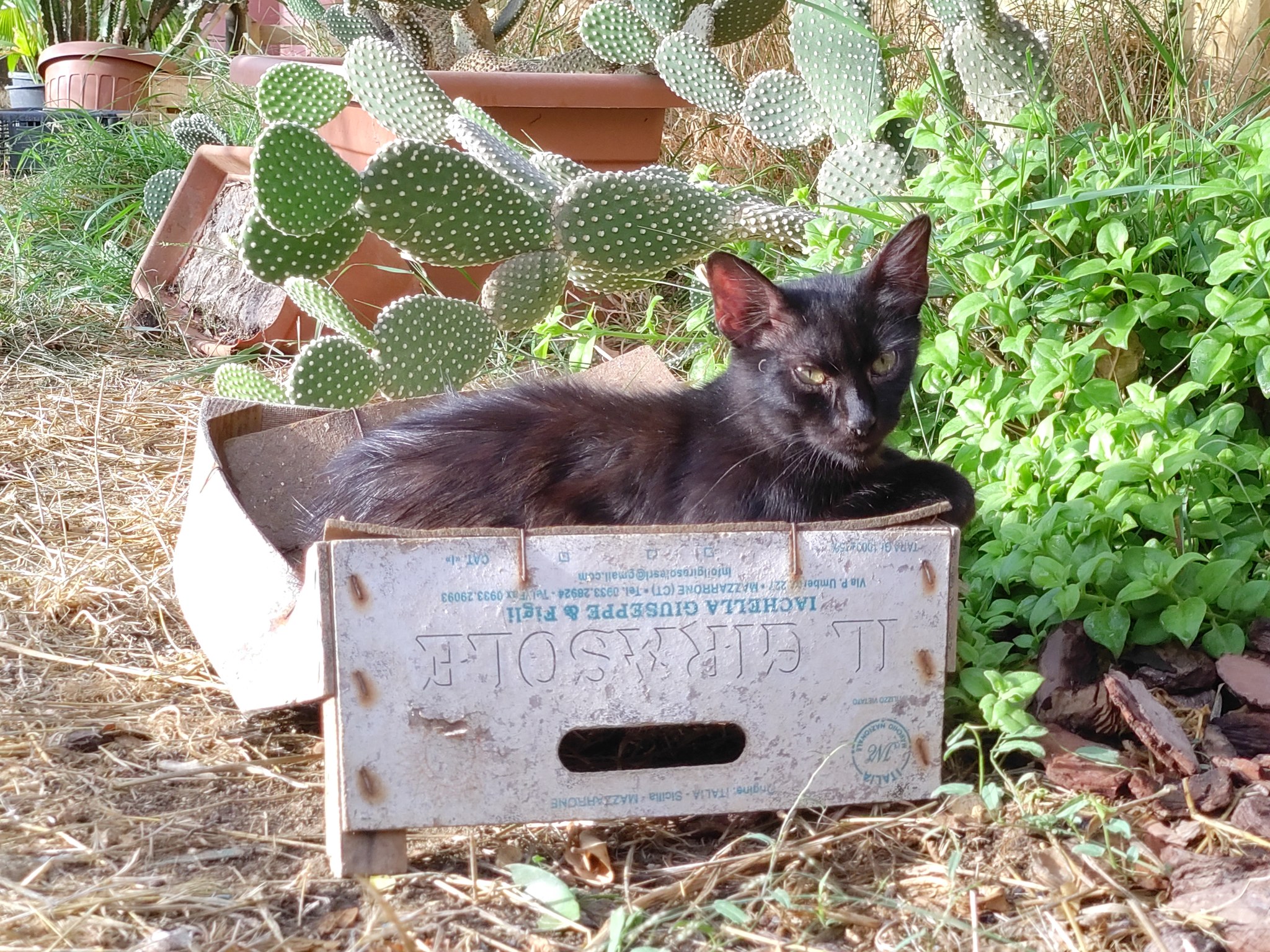
These upturned fruit boxes soon sagged – not under the weight of Raven, but because the base (which had become the top) was made from hardboard and suffered in the damp. But the cats loved them – they chose them in preference to non-sagging boxes.
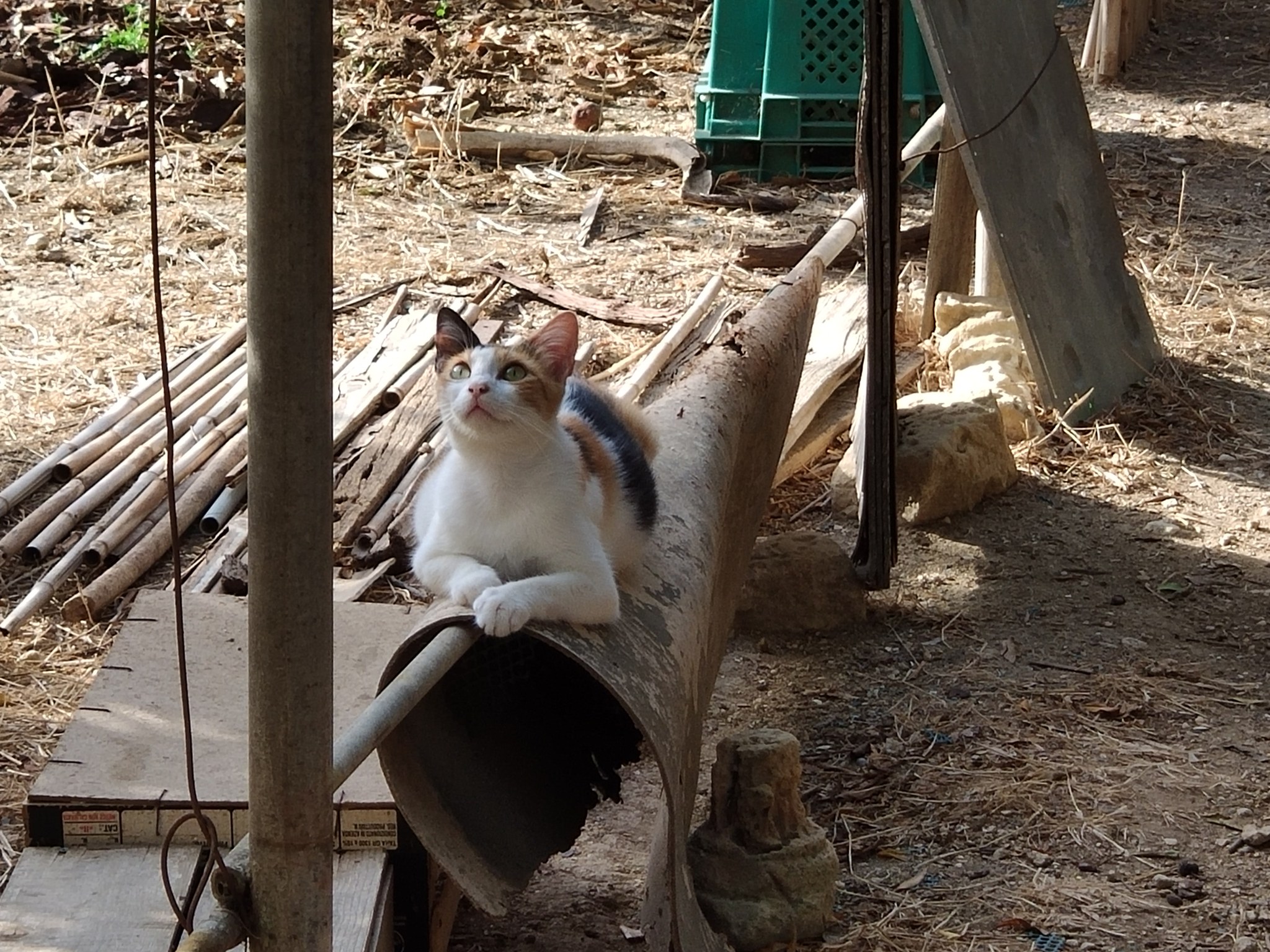
The sheet of hardboard on which Dawn was lying here was originally put here as part of an adventure playground for Lightning as he was the only kitten in the garden at the time. The cats loved to play under it and, as depending on how damp the weather was, it changed shape.
Swift enjoying the morning sun. Underfoot were dried olive leaves, old pomegranate shells, and twigs – maybe it looks uncomfortable, but it was better than sitting in the damp grass after a humid night (although cats with thicker coats such as Checkers who is shown in the header photo enjoyed the grass).
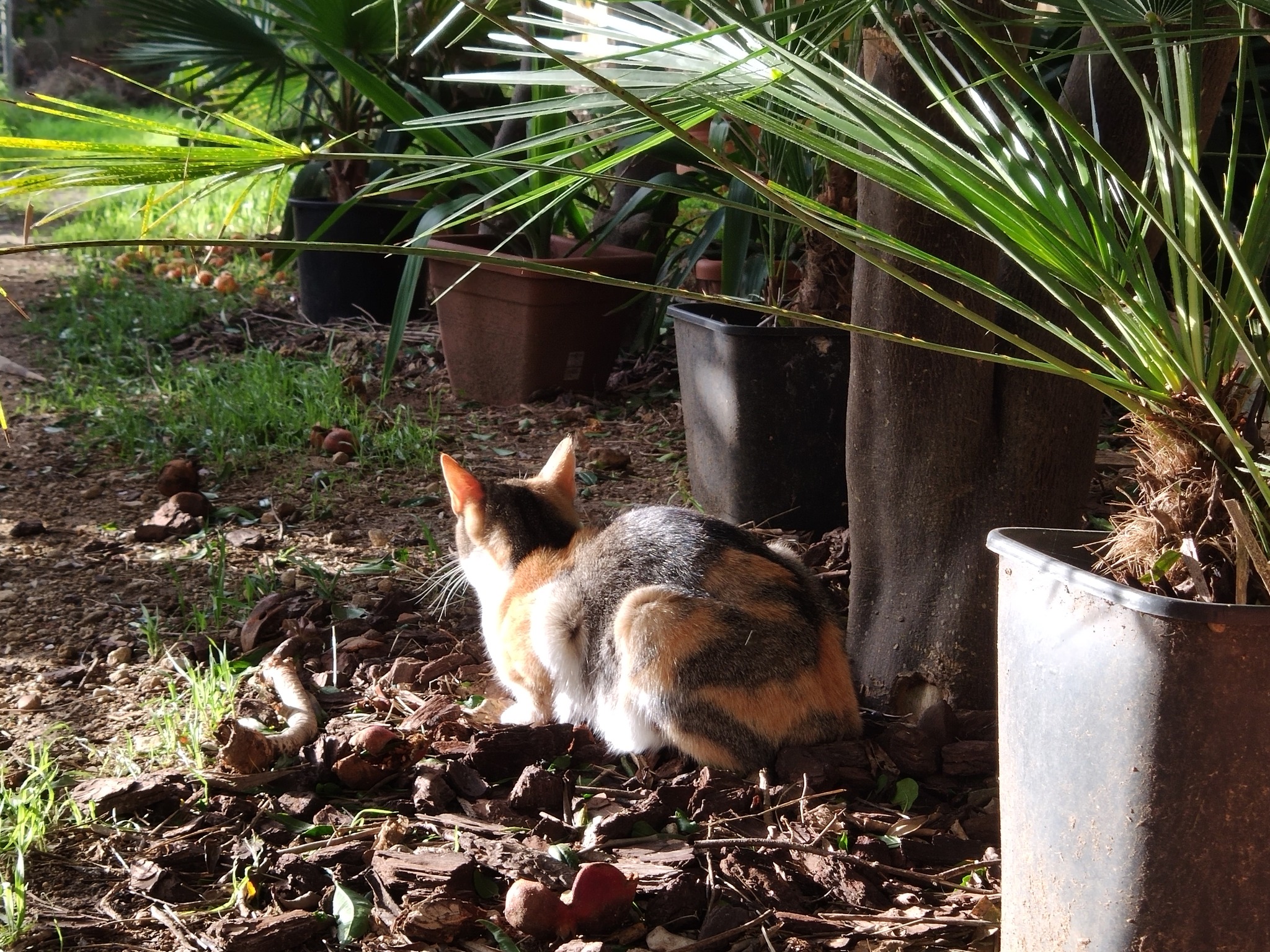
There was no point in being too precious about plants – there were always new cuttings to plant, new leaves for the cats to squash. In the summer, these pots were a clever choice for the younger cats as soil watered in the evening would remain nice and cool for much of the following day.
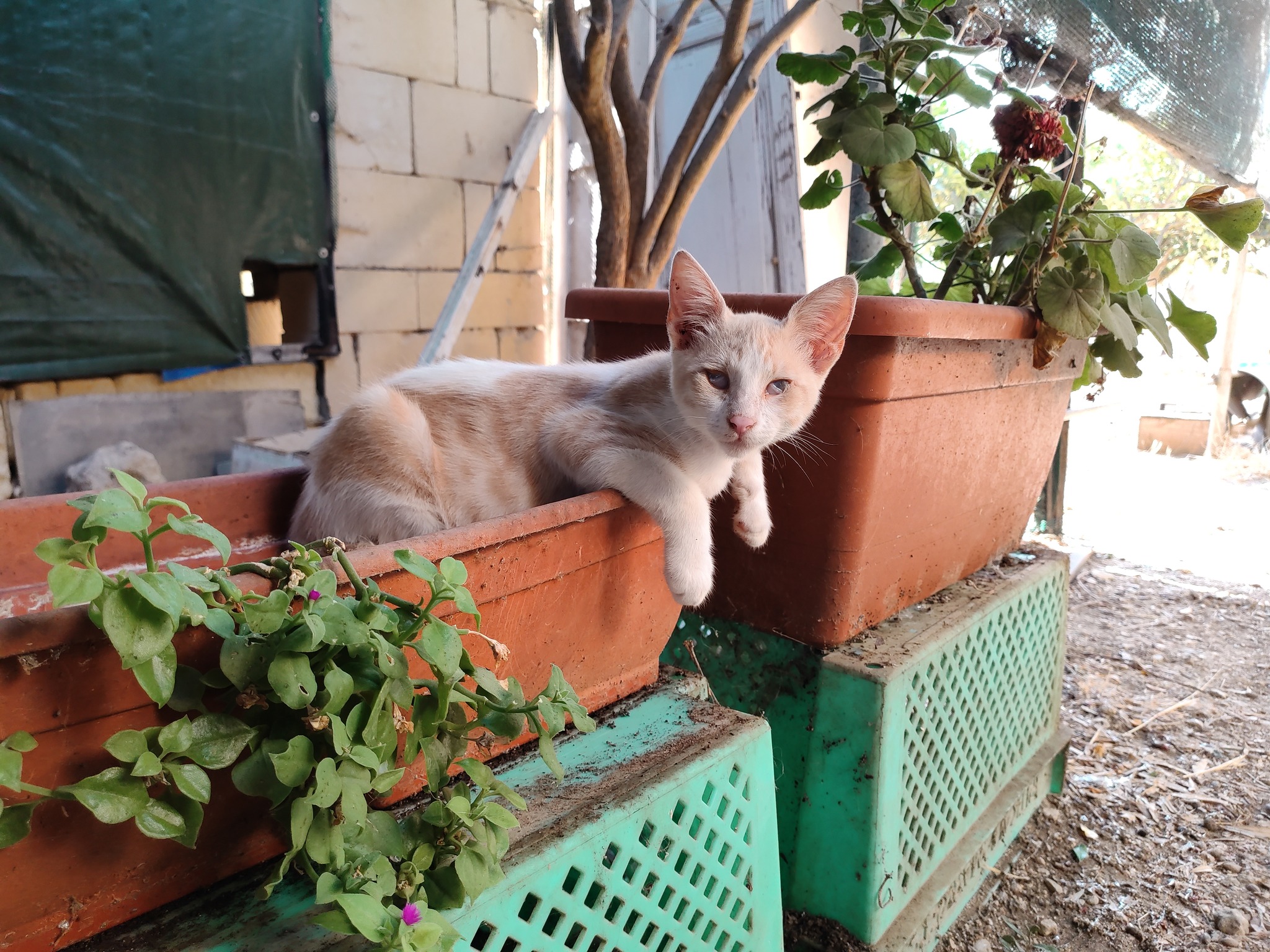
And these plastic vegetable crates looked a lot bigger when you saw the world from Sherpa’s level.
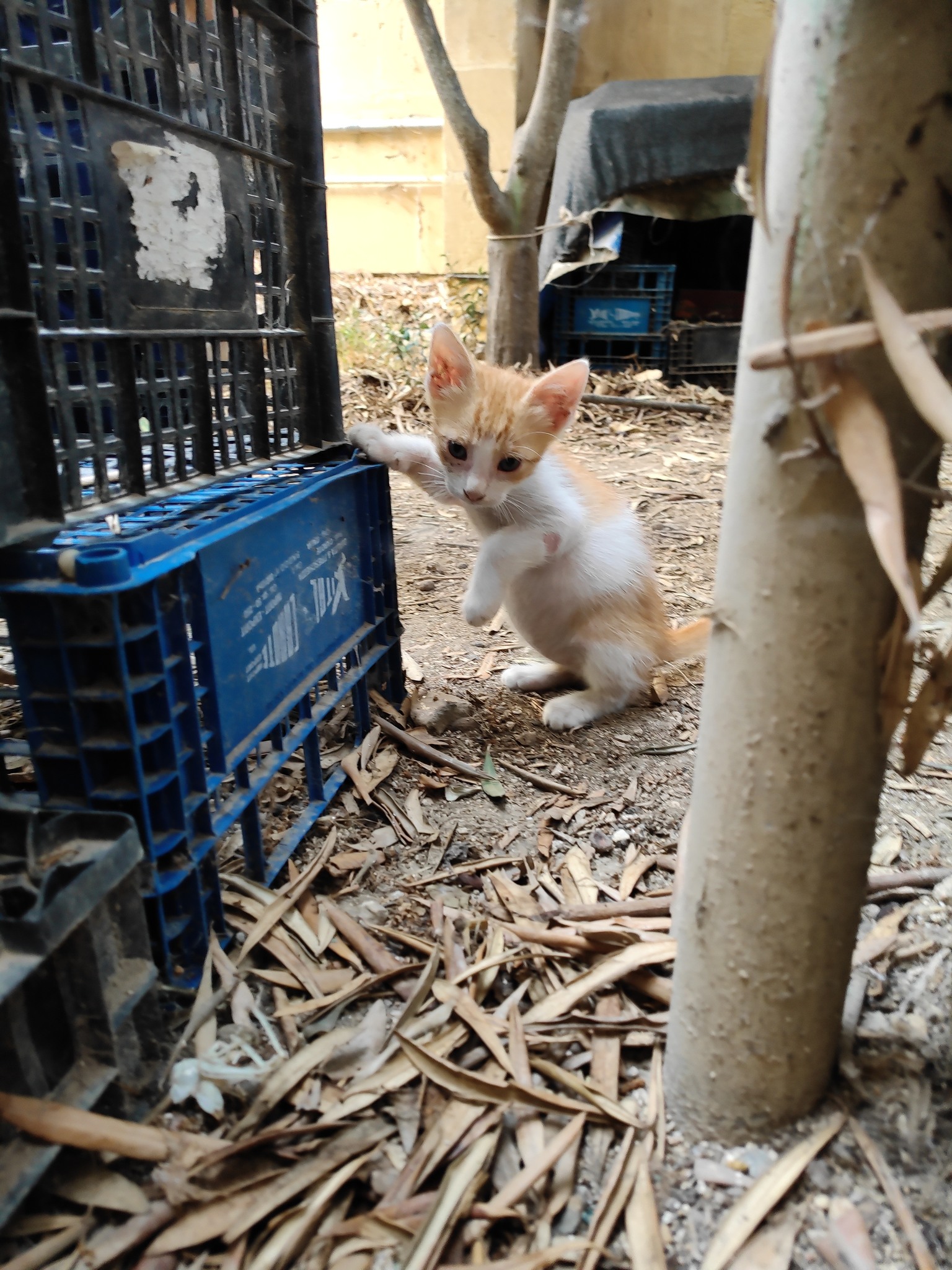
It was all to do with your point of view, and knowing how others saw world which you were sharing was fascinating.

