
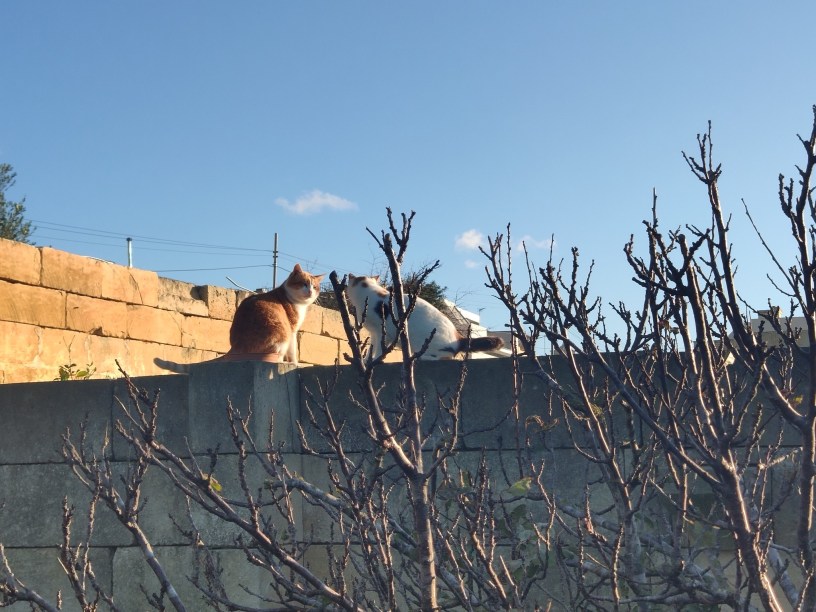
Thundercat had arrived together with Ghost Cat and BBC from the direction of the other garden over the fields, where cats were also fed.
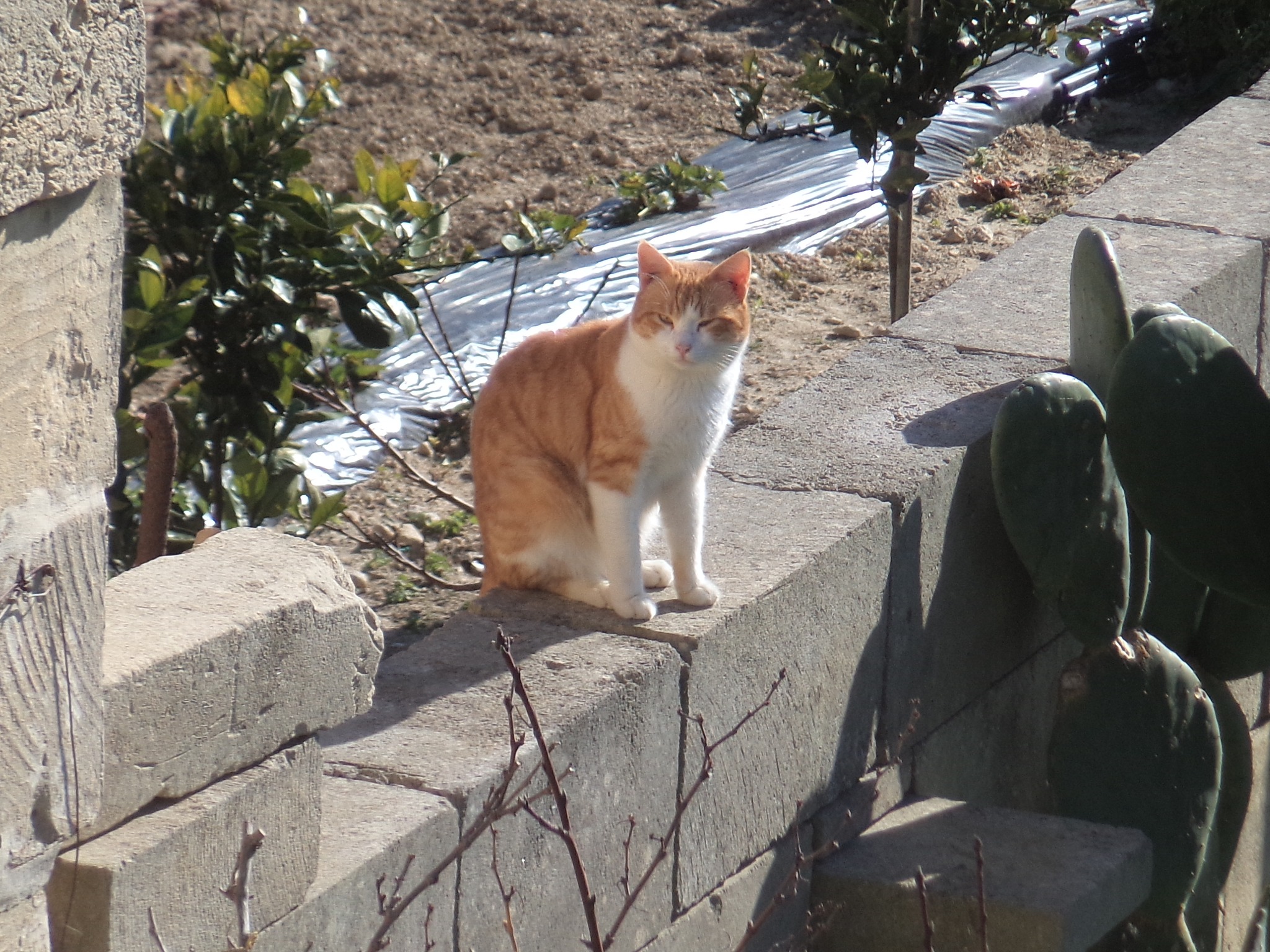
Thundercat was the least friendly of the three, but that didn’t mean for one moment that he didn’t fit in with the other cats. He was not aggressive like NVQ who would stare at the humans with an expression of pure contempt and had managed to alienate all other cats (excepting a handful of females who tolerated him). On the contrary, Thundercat got on with the Garden Family and Visiting Cats, joining them at mealtimes and for naps afterwards, before heading off into the fields to do his own thing.
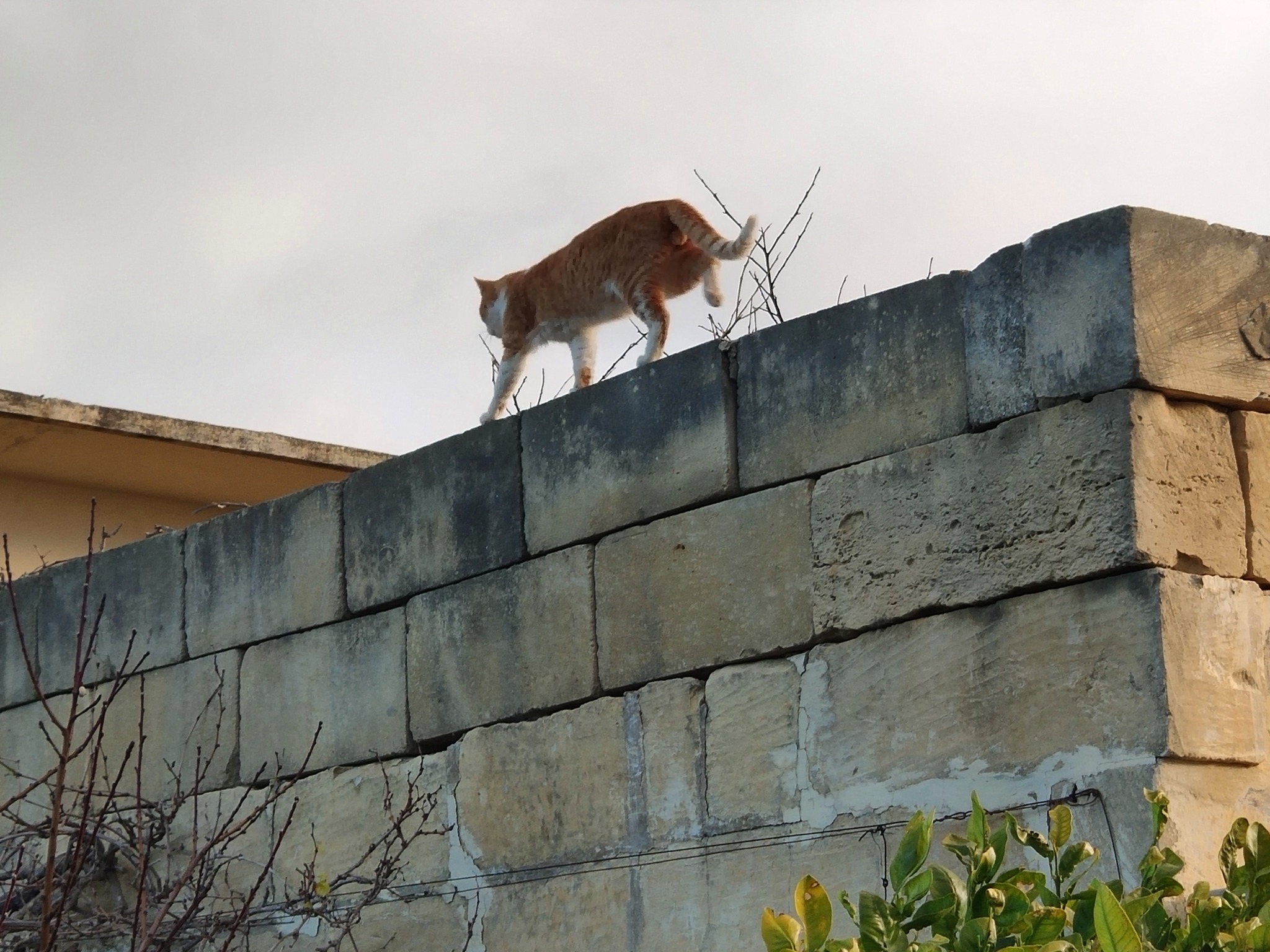
Most cats leaving the garden by the wall would simply jump up, take a quick look left and right, and jump down into the field. But for Thundercat as a young, active male who was still working his way up the alpha-male ladder, there might be trouble waiting. If he jumped down and found one of his potential rivals in the field, Thundercat might well come off worse.
And so Thundercat made the garden wall his friend. He patrolled, he marked, he napped, he sat and looked, he took everything in from a position which gave him the choice of jumping into the field or back down into the garden, rather than be cornered at ground level.
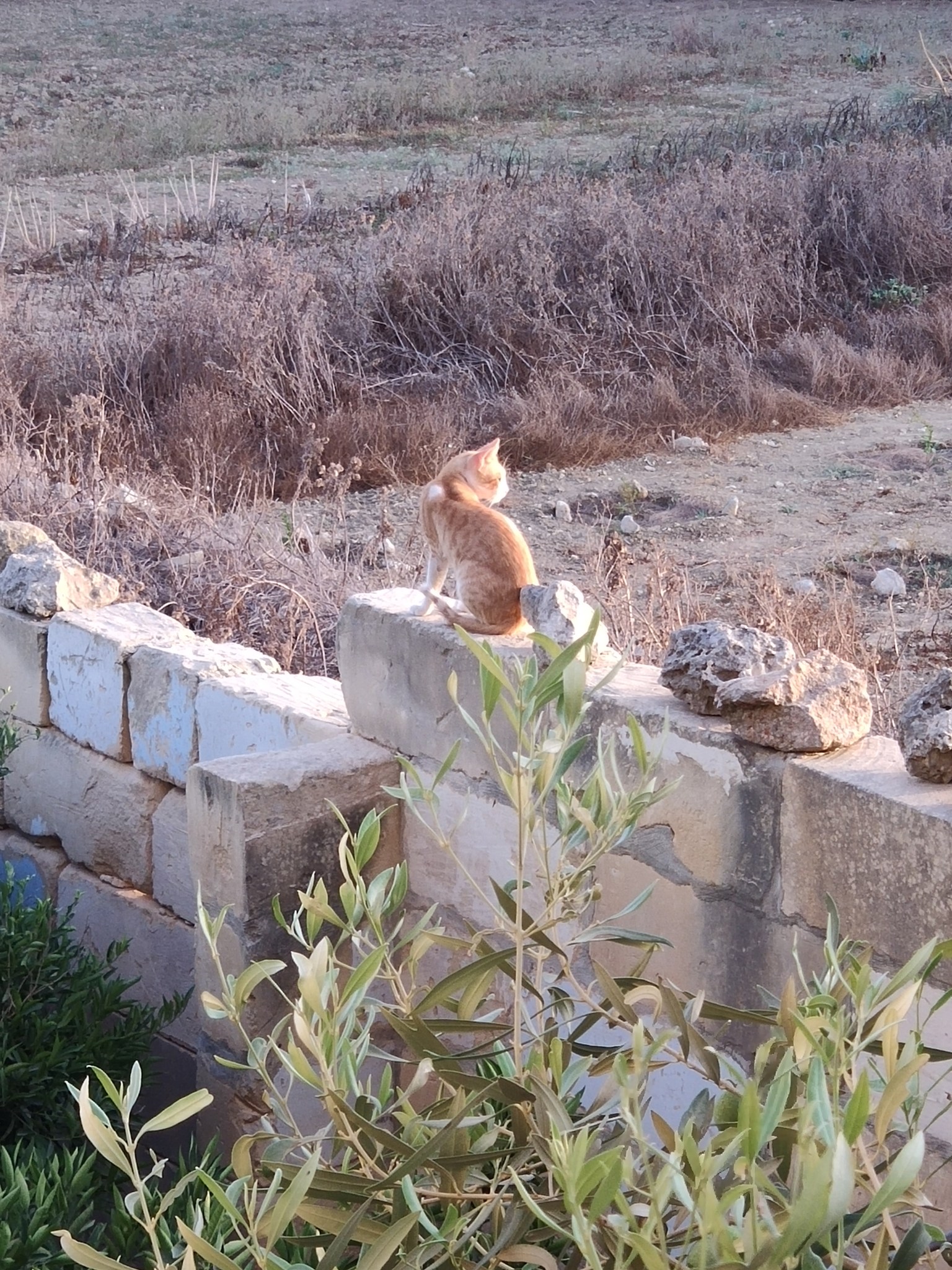
For a cat who was partially sighted, it was a smart move. His left eye was clouded, and we were careful never to take him by surprise from his left hand side. His eyesight put him at a natural disadvantage, but no more so than other males such as Mr Bright, who had a crooked front leg and a limp.
The motto was ‘adapt to survive’, and that was exactly what Thundercat did.

