
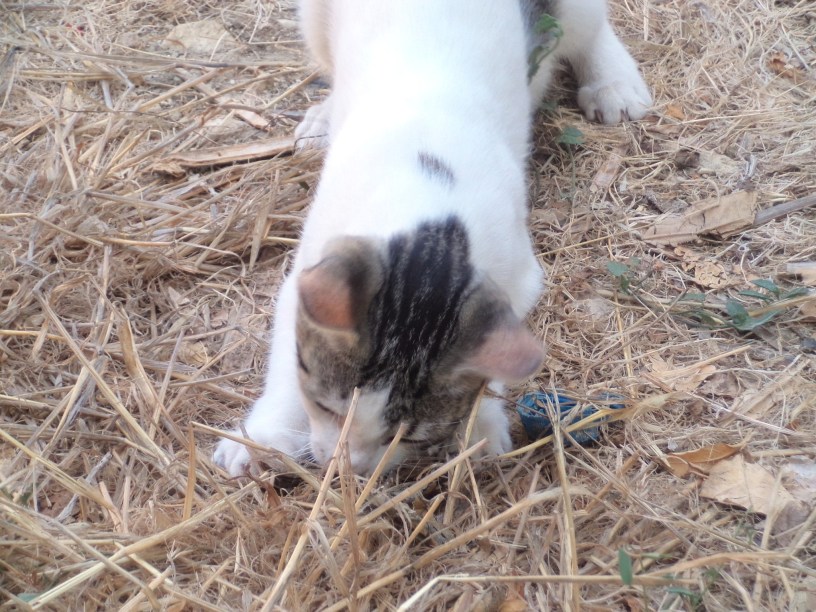
As we’ve seen, the cats who lived in the fields were naturally excellent hunters. When they found food sources such as the local farmers, householders, or The Cat’s garden, drive or path, it must have made life easier for them, but that didn’t mean that they gave up hunting, in fact for most of them, hunting was their first choice when it came to food and they visited the food bowls only when they needed topping up or when hunting was scarce.
On the other hand, many of the Garden Family cats and kittens came every day to eat – often twice, at breakfast and teatime. There was always more than enough food, and nobody left without eating their fill – and, in any case, there were bowls of food available 24/7, which were replenished at least twice a day.
And yet these cats also hunted. From an early age, they honed their skills chasing crickets and locusts, beetles and butterflies (occasionally successfully, but more often not). And, if they caught something, they hung onto it as though it was the only food in the world.
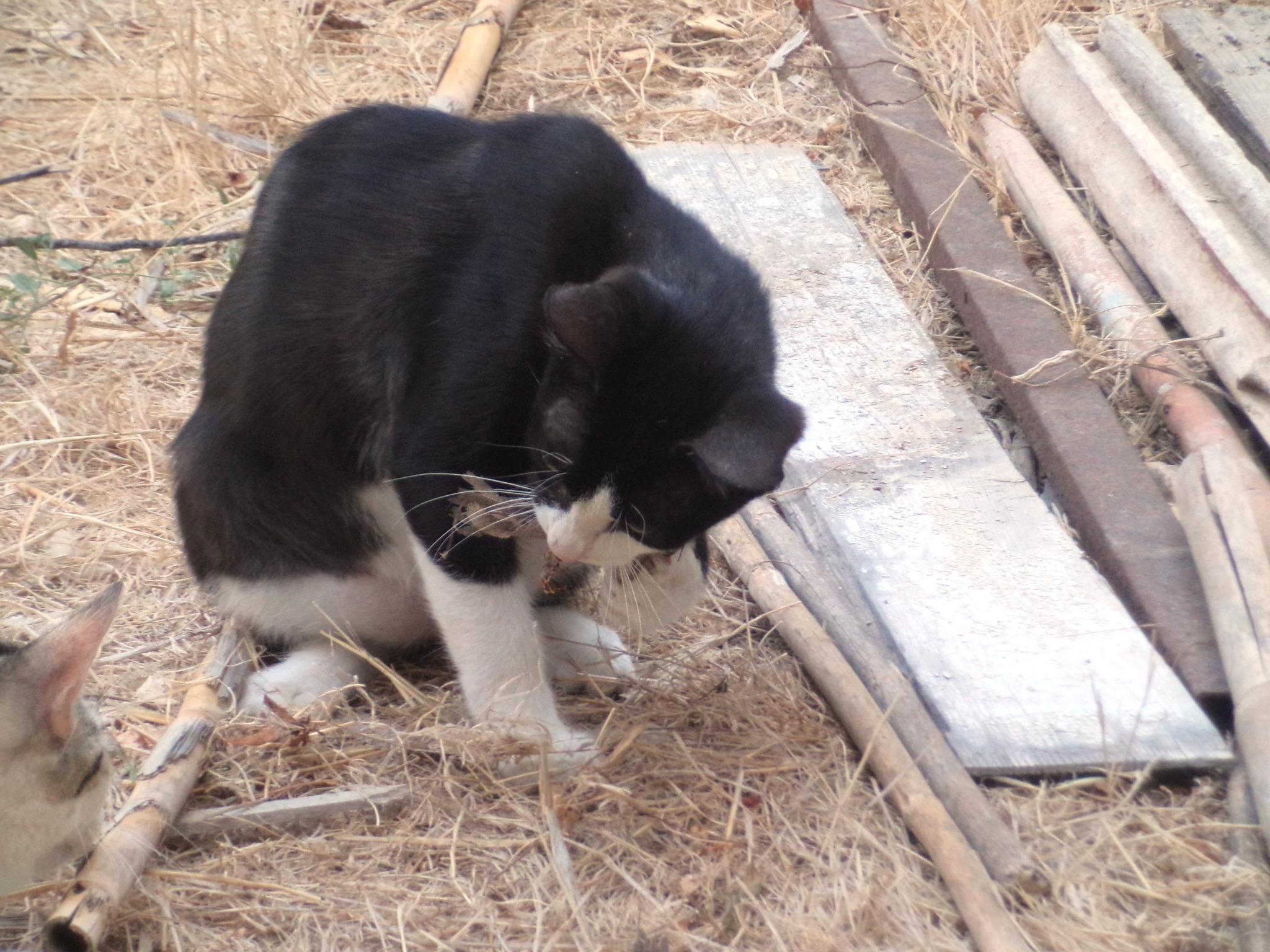
In fact, Sprocket once ran away in the middle of breakfast to chase a shrew which had emerged from under a stone at the back gate. Her instincts told her to leave a bowl of food for which she needed to expend zero calories in favour of chasing a tiny shrew around the garden.
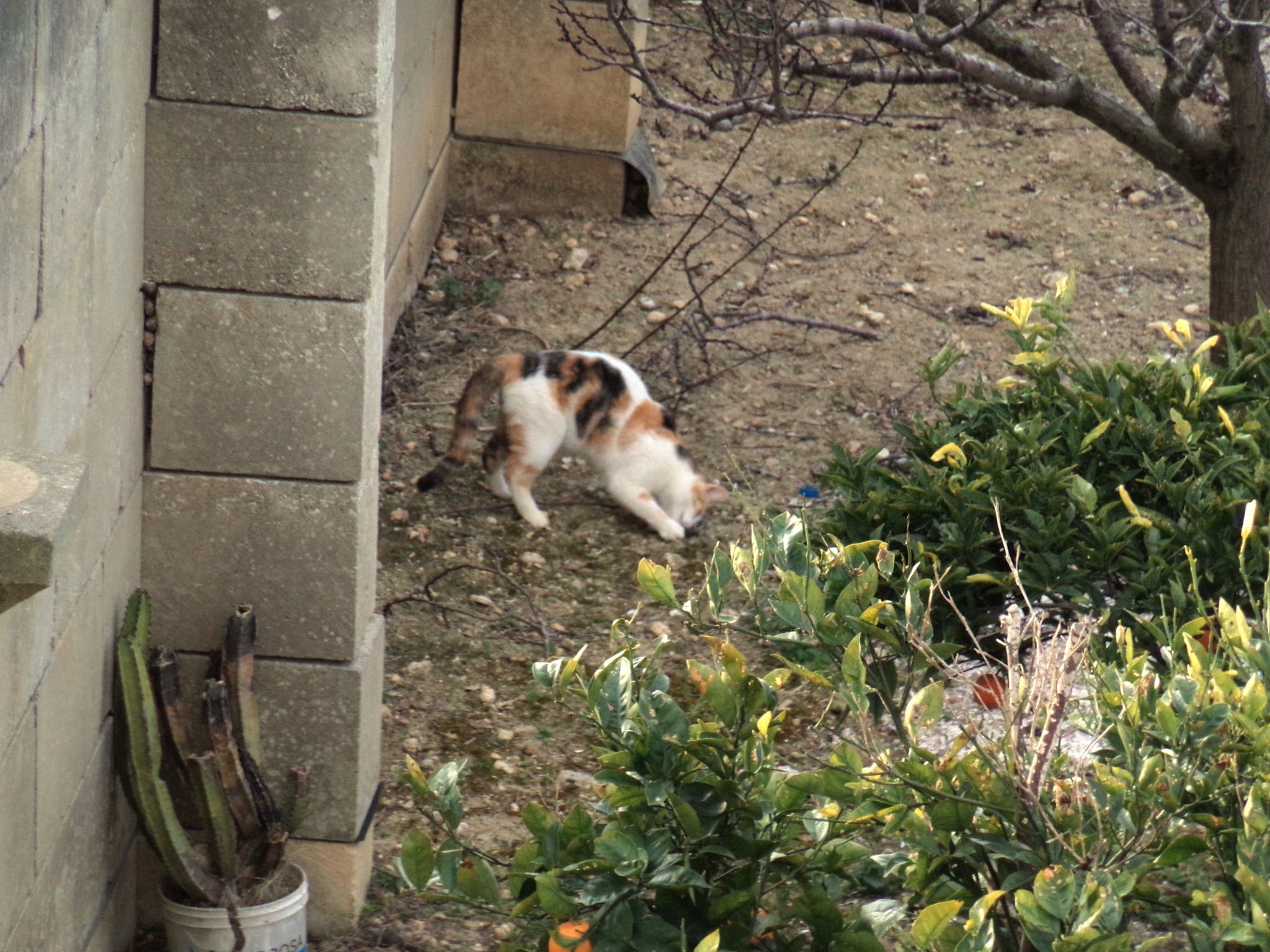
Mothers would not only bring their kittens to the food bowls for weaning, they would also hunt for them – something that they started doing days and weeks before their kittens were ready for solid food. And anything which was delivered to the kittens by their mothers was closely guarded and prized – they were being taught the feel and smell of field-caught food long before they were eating from a bowl
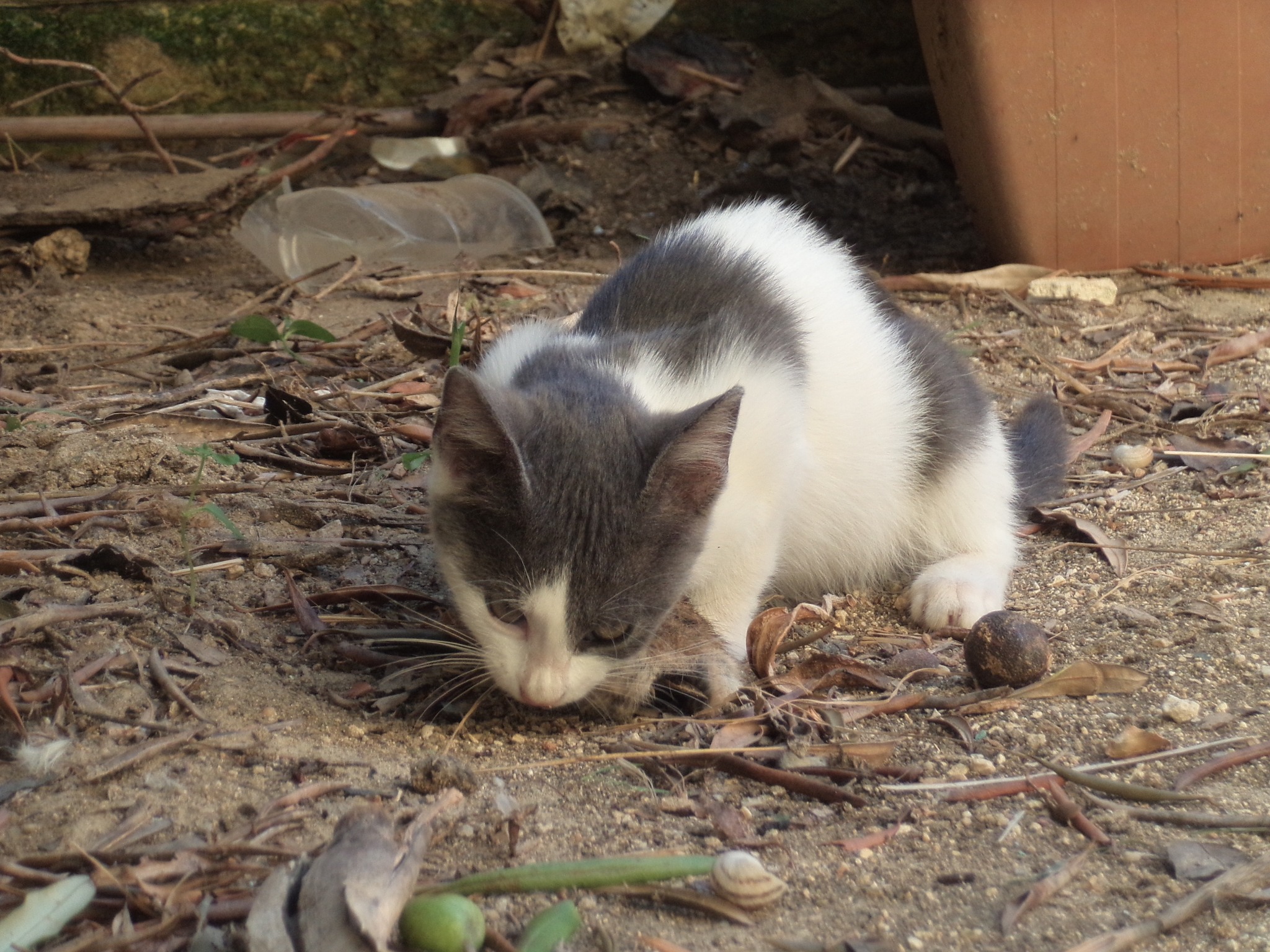
And so, despite the ease of access and availability of bowls of food, instinct still dictated that the cats should hunt. And, in this respect, everyone from the most wary field feral to the friendliest kitten was the same.

