
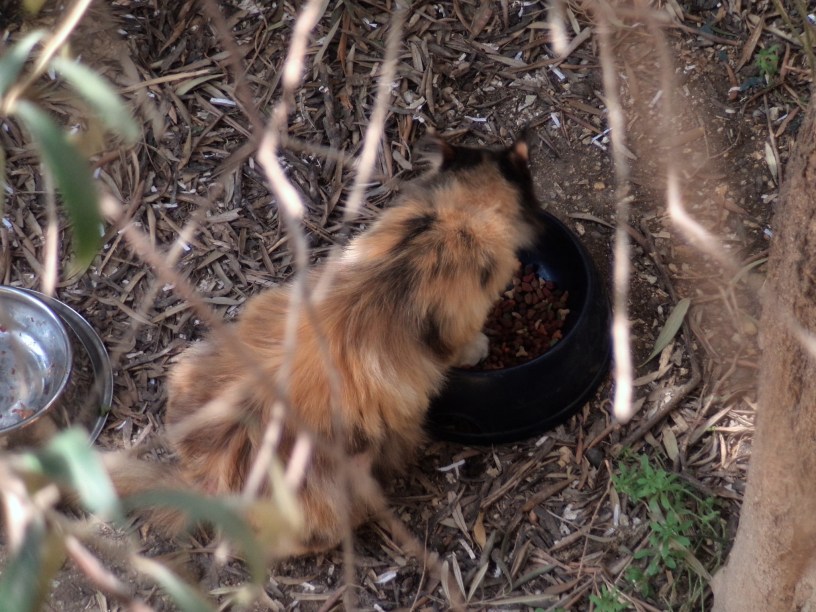
While we had started feeding just The Cat and Ana Half-Tail, the appearance of other Visiting Cats (and The Cat’s kittens) led us to gradually make food available to all.
The Cat was indeed training her humans well, and they had discovered that feeding cats was not a casual affair, rather a slippery slope of more food, more bowls, and more cats, all of whom were given names and had their own character. Once subsumed into the world of cat feeding, there was no way out (nor would the humans have wanted to stop, in any case).
A plastic dog bowl (known as the Bobo bowl) had been left by the previous feeder and that was the very first bowl which we used to feed The Cat and her family. It became an important part of daily life for cats and humans alike and had the status of a precious family heirloom. It was a sad day when it developed a crack after so long in the bright sunshine, and had to be replaced.
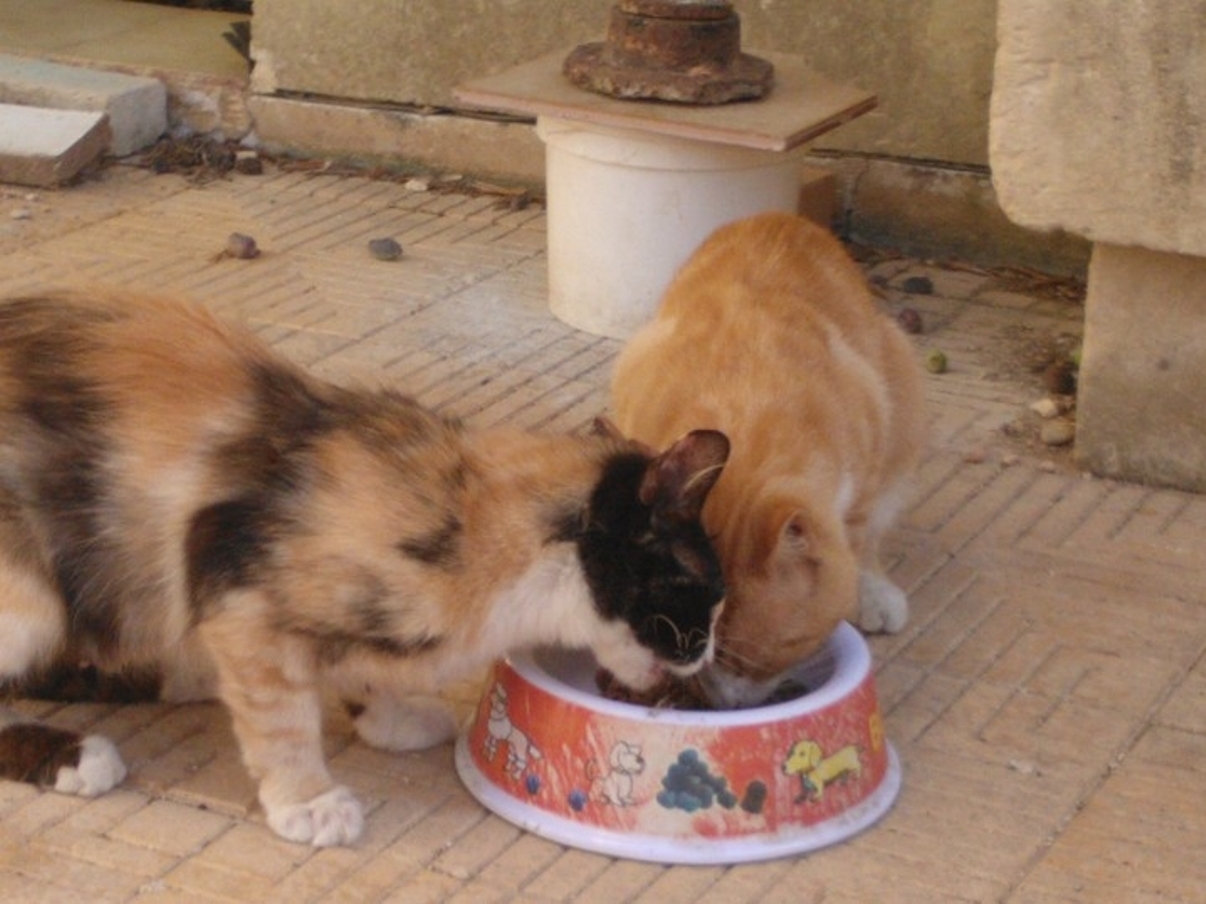
Feeding arrangements were refined as time passed and of course feeding in different areas (eg the drive, path and garden) meant that the humans would eventually own an armoury of bowls, some of which were more suitable for cats and their needs than others. But on a very small island, sometimes you can’t be too choosy, and food was food, at the end of the day (and at the beginning, as The Cat would have been keen to point out).
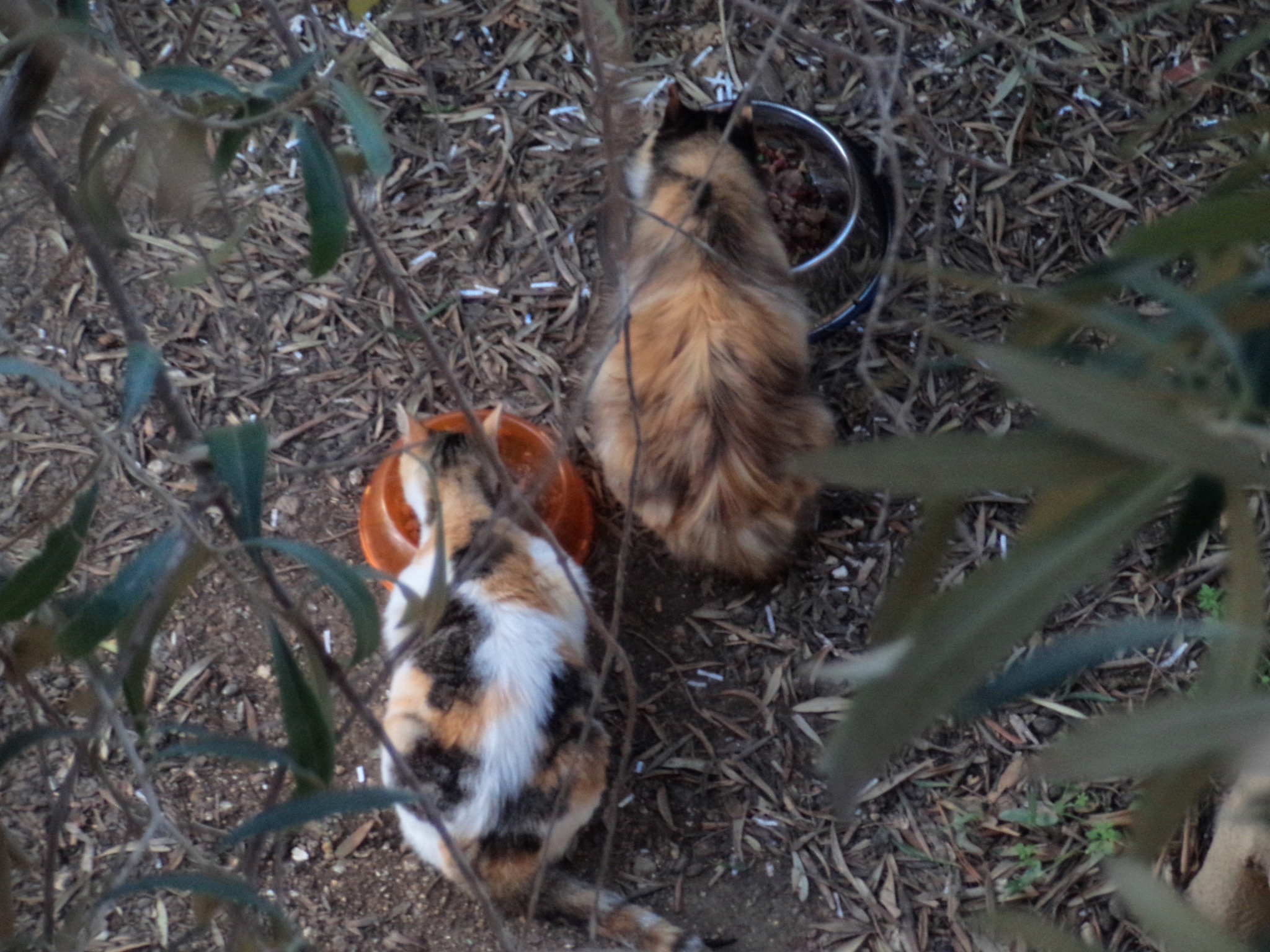
When The Cat’s and Sprocket’s kittens came to the garden for weaning, it was obvious that we needed to find some dishes with lower rims to make eating easier for small kittens. And metal bowls (while practical for keeping clean) were not popular with all the cats as some of them were frightened by their own reflections in the side of the bowl as they walked towards it.
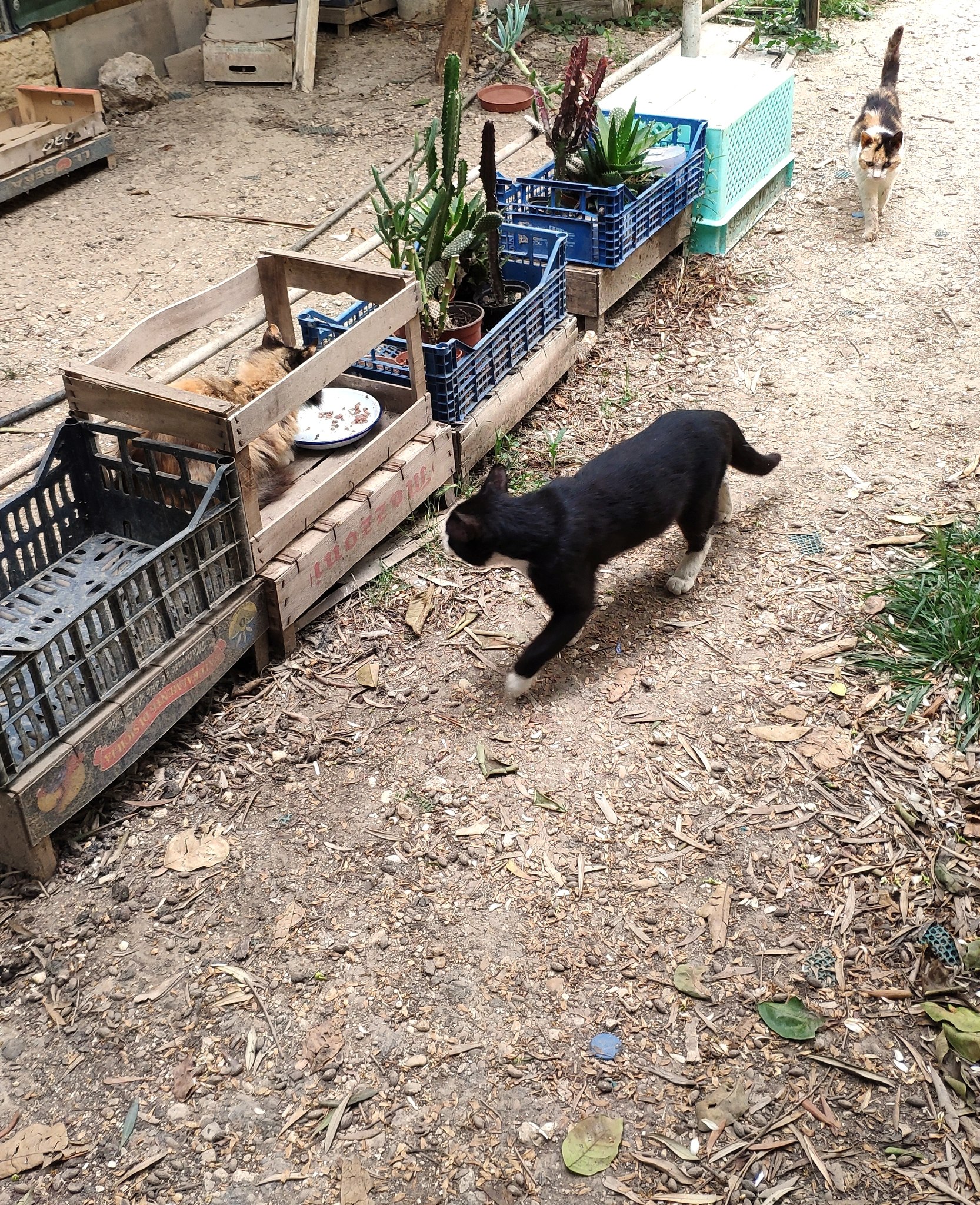
So, in the end, enamelled bowls were used in a smaller size, meaning that individual cats could each have their own dish. Of course some still liked to share and larger bowls were available for family groups who ate together. But individual bowls suited The Cat in particular as she was a slow and dainty eater who liked time and space for her meals (also important as she suffered from FOPS, or feline orofacial pain syndrome). Later in life, we fed her in a box of her own, giving her privacy and space. If presented with a particularly tasty feast (generally duck, rabbit and jelly fell into that category) she would completely clear the dish, licking the sides and top rim as well to get any last morsels.
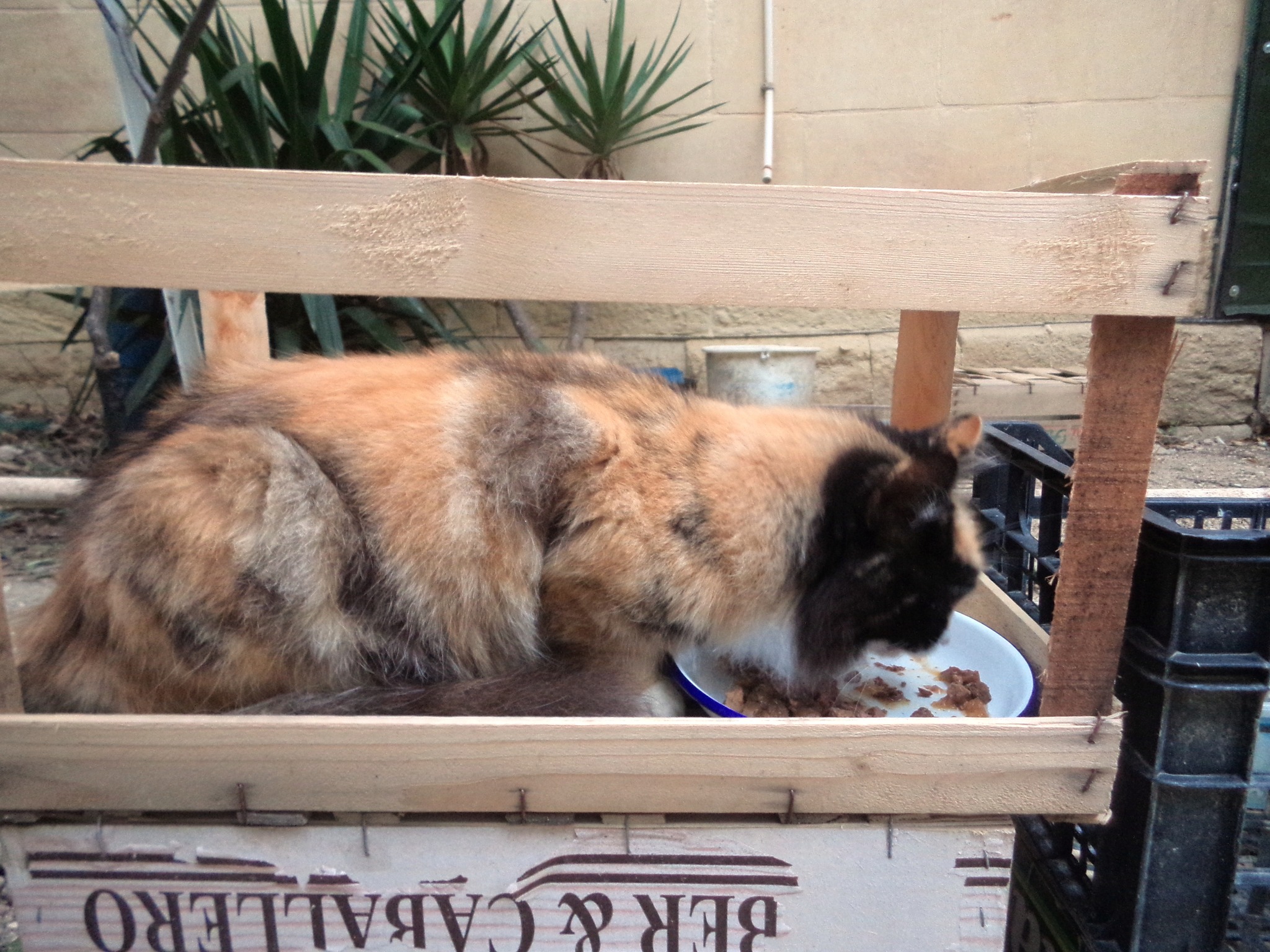
No one except for her kittens joined her in her special box (known to us as the Four Poster), tempted though they might have been. Blackfur here was casting a sideways glance at his mother’s bowl, but knew better than to encroach on her space.
The enamelled bowls were hygienic, easy to clean and the cats liked them. In actual fact, there were probably more in use in the garden than there were in most local human families. How things had changed since the Bobo bowl.

