
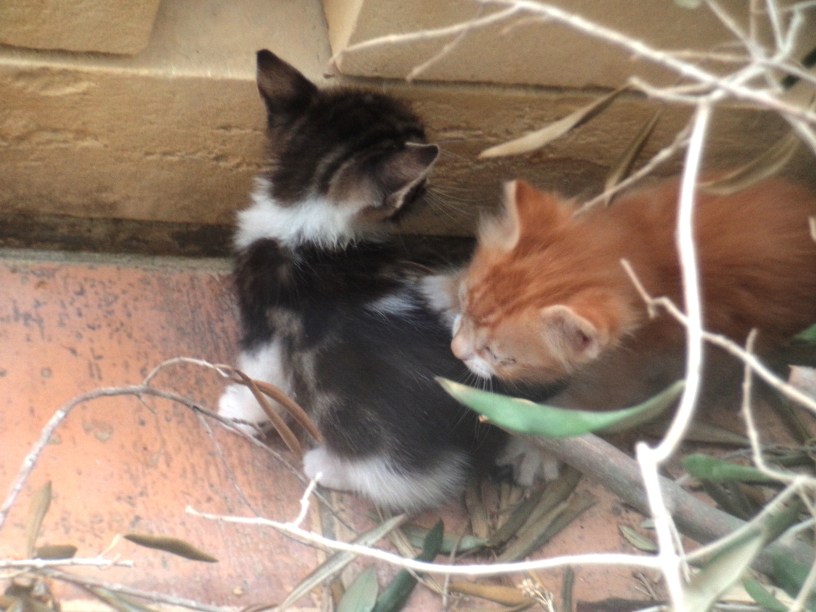
It was early in May one year when The Cat’s daughter Sprocket painstakingly carried all seven of the kittens belonging to her and her mother up to the first-floor terrace, and tucked them safely away behind a pile of pruned branches and olive tree twigs.
The kittens had been born in the garden next to the feeding station under the olive tree, behind some more olive tree prunings. Female cats preferred dark places for their kittens for their first few weeks until eyes started to open and the first tottering steps were taken.
The similarities between The Cat’s and Sprocket’s litters were quite striking. They each had given birth to four kittens (The Cat’s first, Sprocket’s a few days later). At first glance, each mother had two orange kittens, and one grey-and-white, with The Cat’s fourth being black and Sprocket’s white. The distribution of colours seemed quite a coincidence.
Once the kittens started stretching their limbs and exploring (under their mothers’ watchful gaze), it was easier to identify which kittens belonged to which mother.
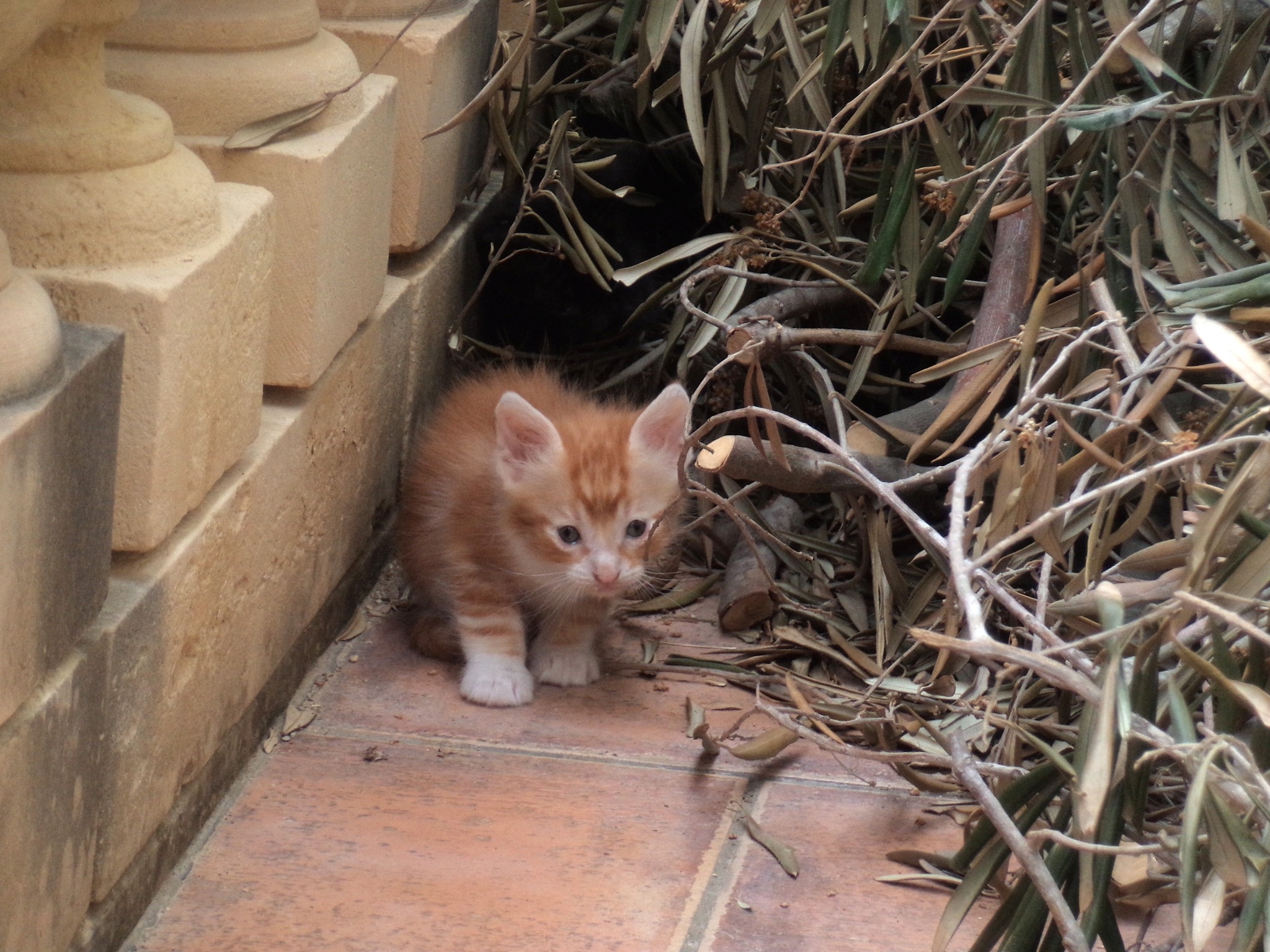
The first four kittens to emerge from the nest were The Cat’s. The first was the biggest of the two orange kittens, Oranjiboom. He was quite fluffy and had big paws.
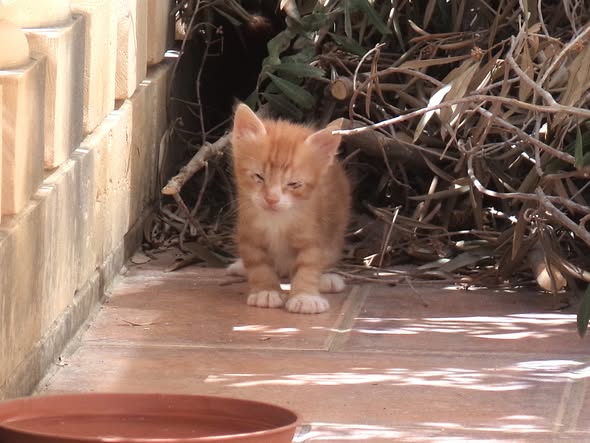
Next was his brother, Tippex, who was also orange and white but not as fluffy, and with a white tip to his tail.
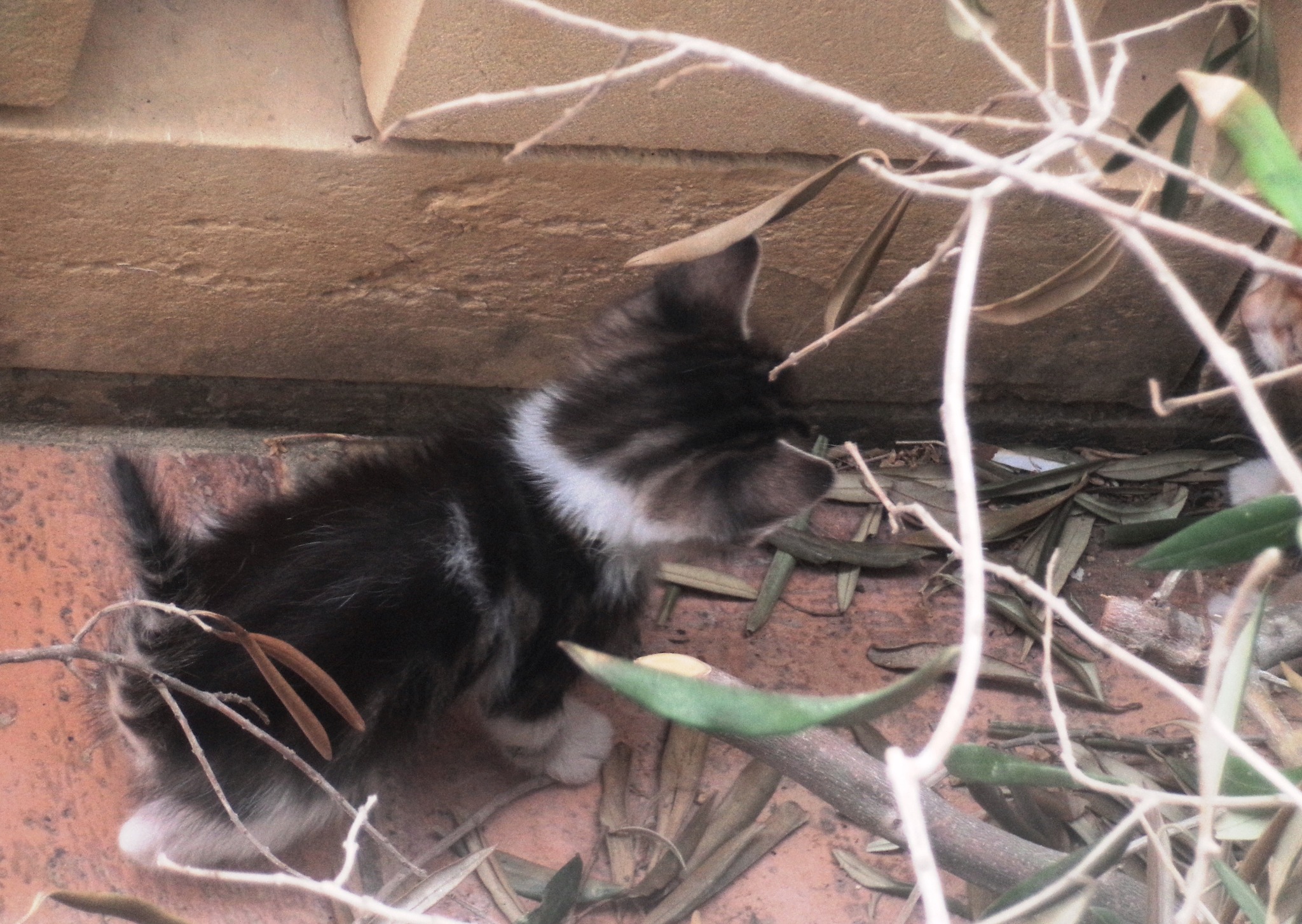
Big Bang was grey-and-white with a white scarf which went around her neck. Her little tail was like an aerial.
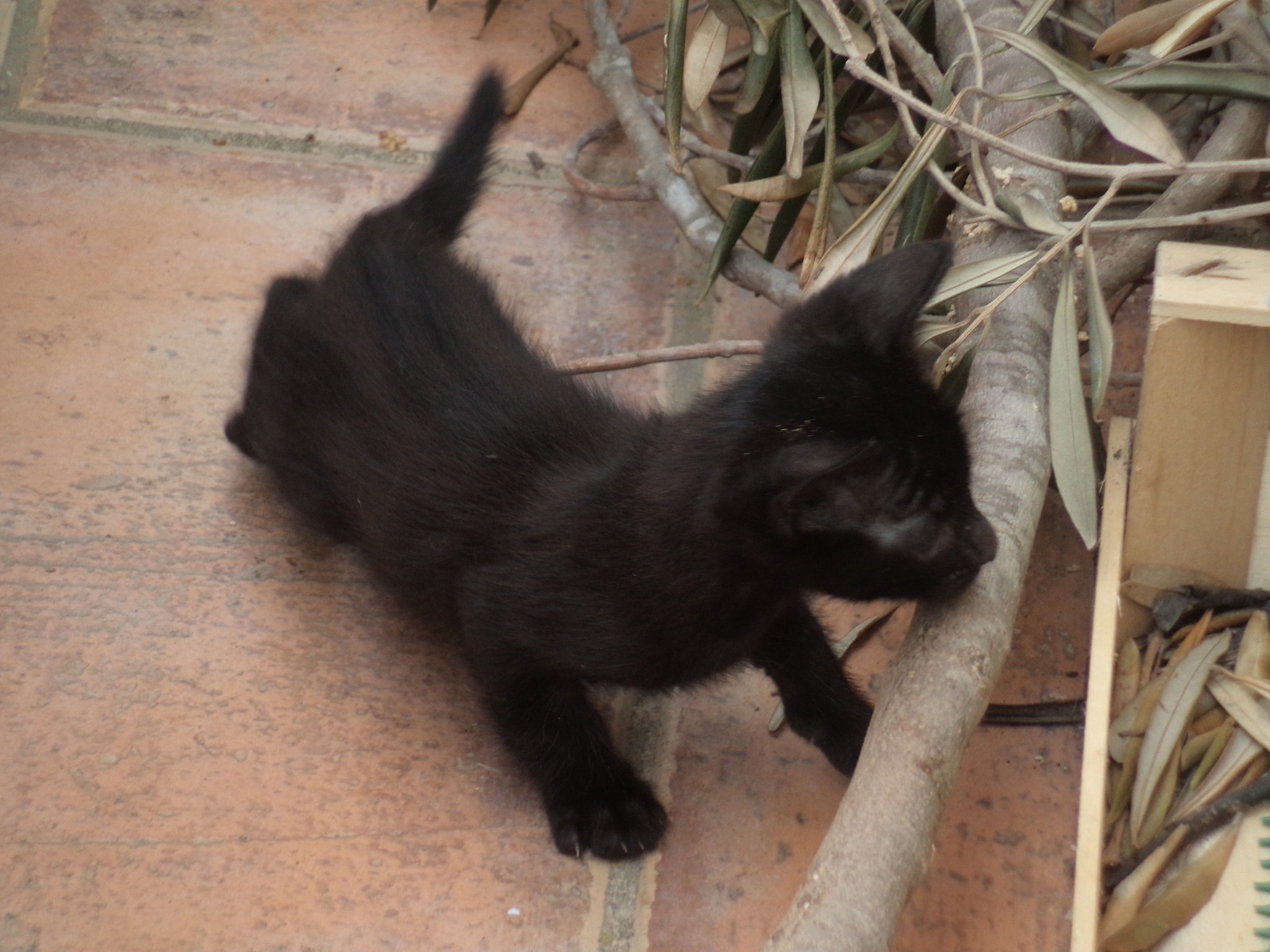
And lastly, the runt of the litter, Prince. Traditionally, black kittens were the brains of the litter so we were interested to see how Prince would develop.
Having been raised as part of a colony, the kittens were happy to mix, play and sleep together as one big family and, despite their mother being The Cat, their time outside the nest was supervised by Sprocket who also fed them while The Cat remained hidden, looking after the smaller kittens of their family.
 thecatisbusy