
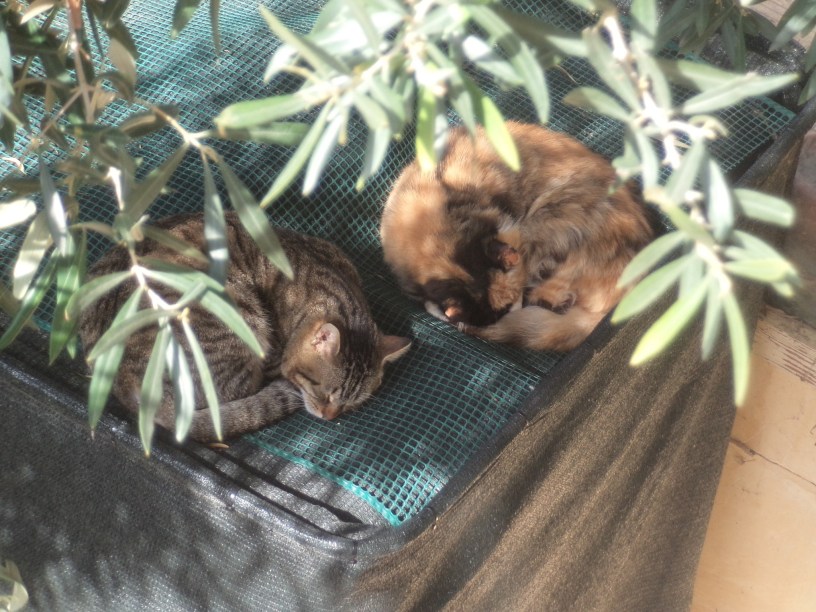
The olive tree was an important part of the garden. It stood at the bottom of the driveway, just inside the garden wall, and cats could jump up from the wall between the drive and field onto the cross-wall between the drive and garden, and then go down the olive tree into the garden itself. The tree stood strong and tall, providing shade, shelter, and acting as a feline highway. It was where many kittens practised their climbing skills, where some fell off, and others discovered that, at the other end of the cross-wall, was the humans’ terrace which could be accessed by jumping up through the balustrades.
It’s not really surprising then, that the olive tree features on a lot of photos as it was an integral part of the lives of many cats, including The Cat herself.
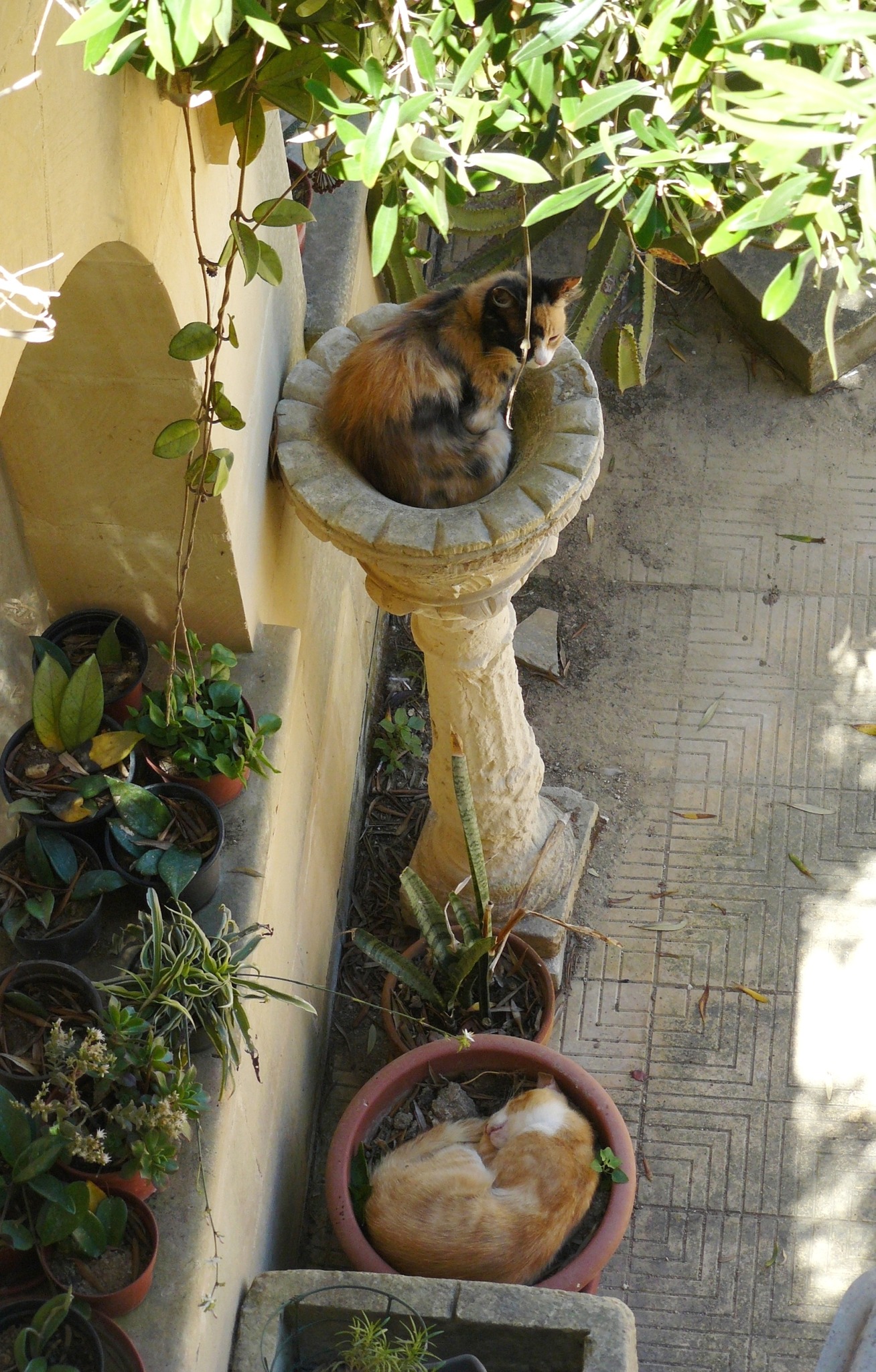
The wall with its windows, at the bottom of the driveway, separated the drive from the garden and was built long after the olive tree was there. Maybe the wall did not seem so close to the tree when it was built as the tree was constantly expanding, but when we arrived there were only inches between the wall and the trunk in places. This meant that the higher branches of the tree spread over the bottom of the driveway, providing much-needed shade for cats who didn’t want to go into the garden. When we first arrived, The Cat and her family spent most of their time in the fields and the drive and this stone birdbath became one of her favourite places for her afternoon siesta, often with her adult son Ana Half-Tail curled up in a plantpot at ground level.
On the other side of the wall under the olive tree stood a large water tank. We soon covered it with garden netting to protect it from the sun and it became a firm favourite with the cats. They ate up there, washed, played and slept, and they used it as a stepping stone to jump up into the tree.
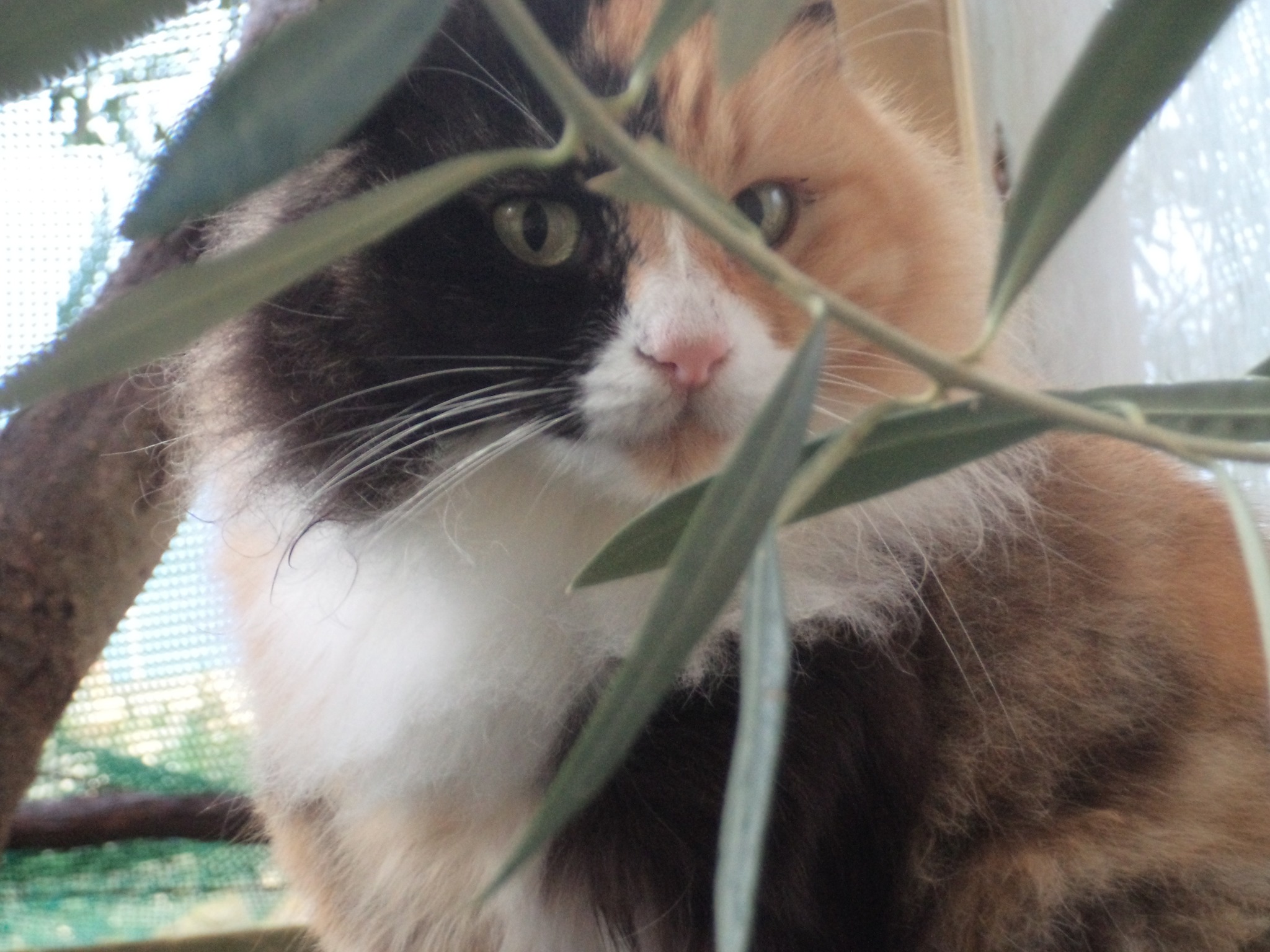
Once again, it was a favourite place of The Cat’s, especially when she started spending more time in the garden. As she grew into her matriarchal role, sitting in an elevated position was preferred, and from here she could monitor any other cats coming in to and leaving the garden by way of the olive tree.
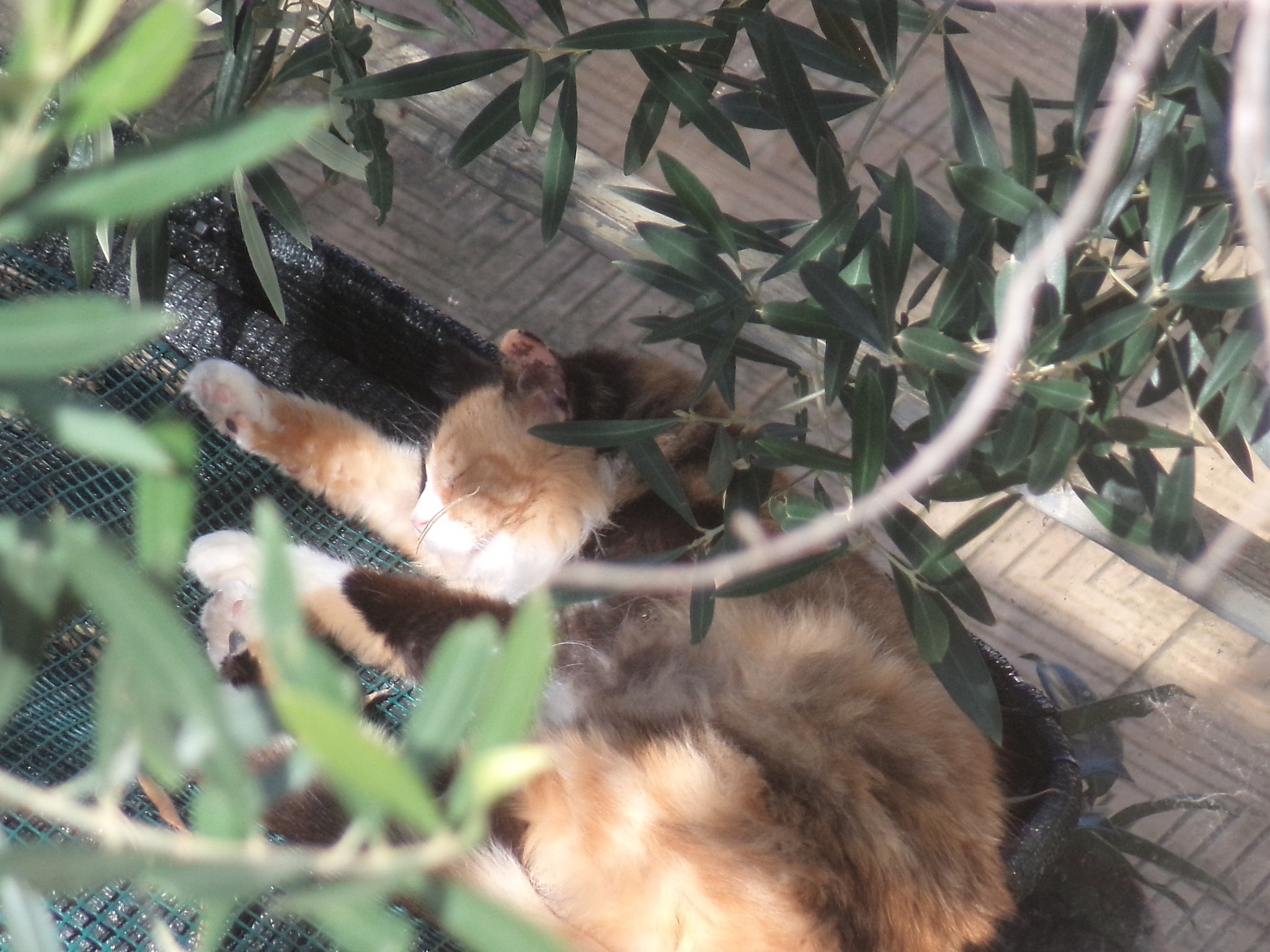
The corner in which the tree stood remained one of the coolest spots in the garden and the shade from the branches was welcome during the heat of the long summers.
So, when the humans decided to put a cat pod in the garden in the hope that The Cat might use it, its popularity led us to construct a cat feeding station in that corner.
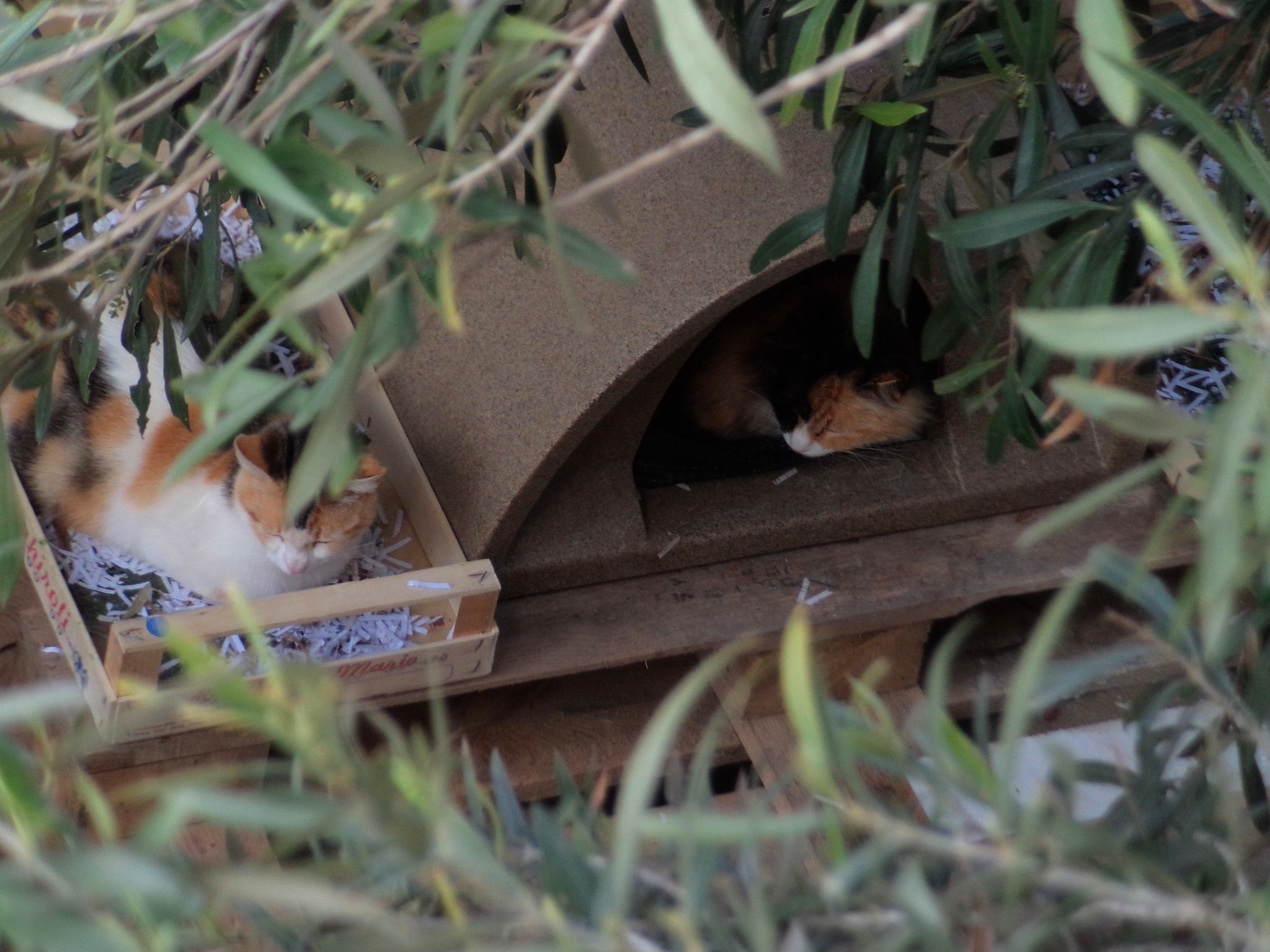
Obviously we had to get more pods! In the end, the area underneath the feeding station housed a row of pods with spaces in between, also some fruit boxes and netting, all covered with garden netting and heavy tarpaulin – somewhere where cats could shelter in extreme weather. It became known locally as The Cat Hotel.
And even the fallen leaves of the olive tree were appreciated, especially by The Cat who would happily lie in the dry leaves, the colours of her coat blending in perfectly.
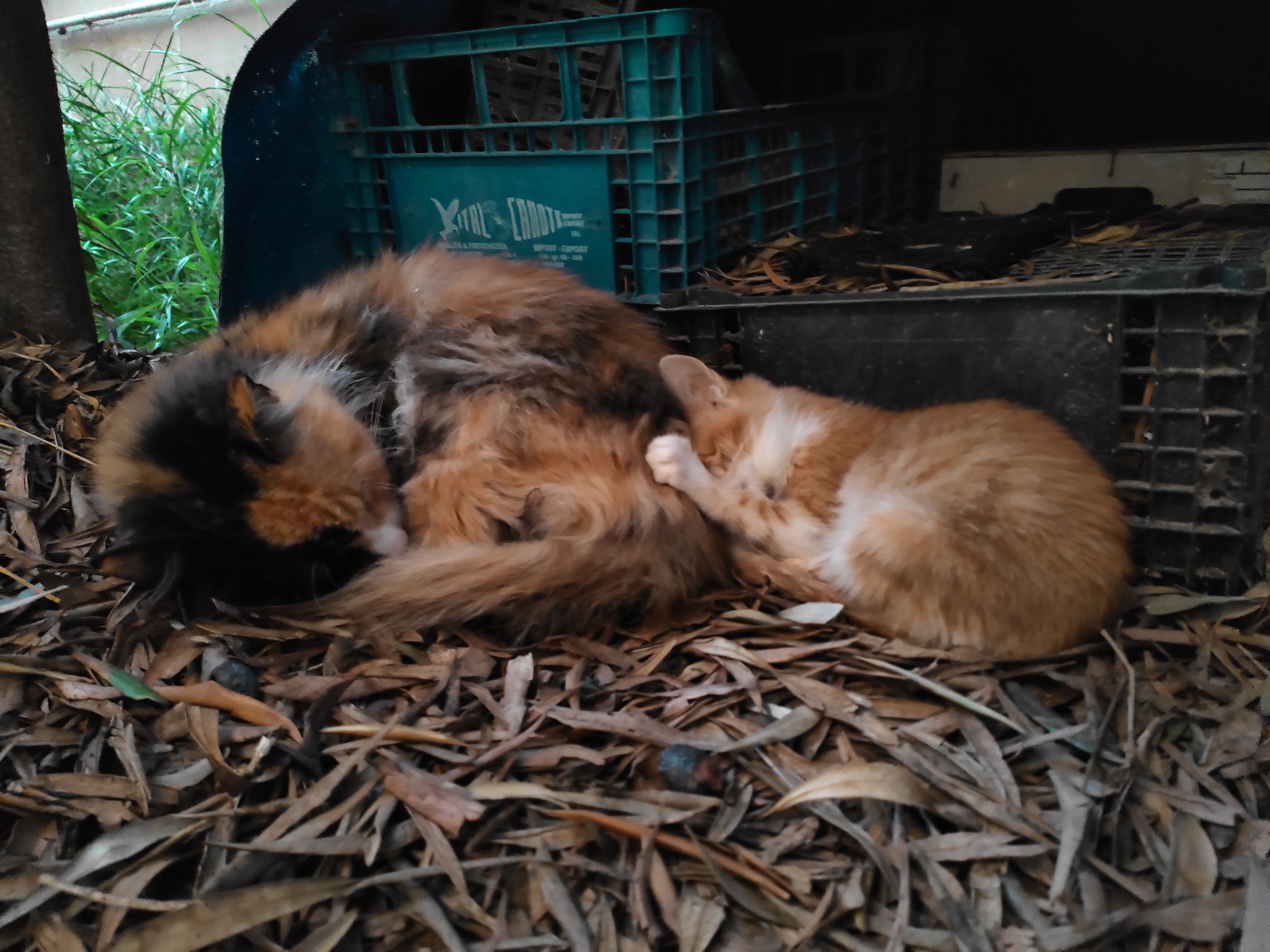
This photo shows The Cat in her later years with Lychee, a sickly kitten whose mother left her in the garden for us to nurse. Lychee took to The Cat and would spend her nights cuddled up. It was a touching sight, the older matriarch of the garden, feeling her age and in her later years, and the small chronically unwell kitten.
The olive tree was not just a tree; it was a feline highway, provider of cushioned flooring, Nature’s umbrella in the rain and her parasol in the sun. The garden would have been a poorer place without the tree.

