
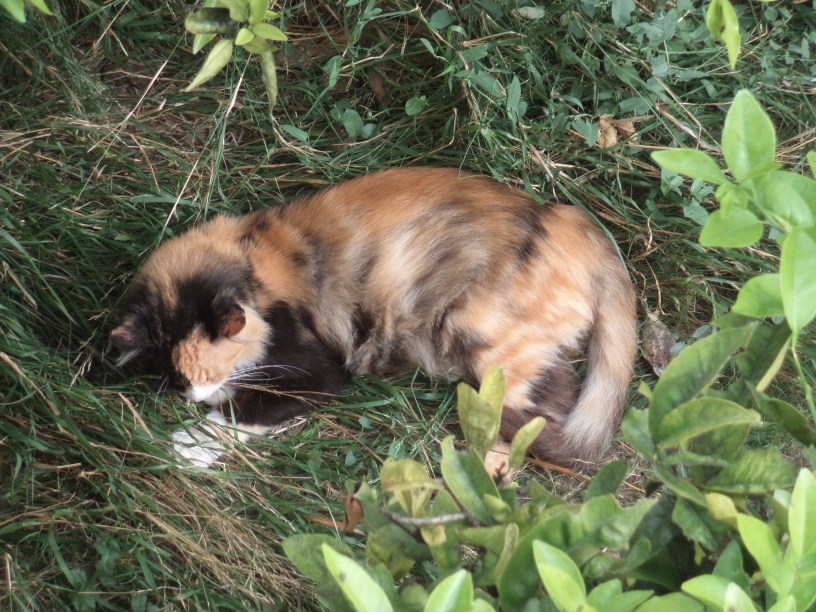
Tortoiseshell, calico, tortie, or torbie? There’s a fine line between them and, depending where you take your information from the distinction is not always clear.
We always referred to The Cat as tortoiseshell, and to cats with a predominantly white background as calico.
Darker tortoiseshell cats were not much in evidence in and around The Cat’s garden. The Cat herself was a mix (in decreasing order) of orange, with chocolate brown and white and, in a certain light, you could see stripes in her fur. The brown was nearly black, the orange sometimes looked more cinnamon, and the white could look off-white in a certain light. Mottled is, as mottled does – a saying I’ve just made up.
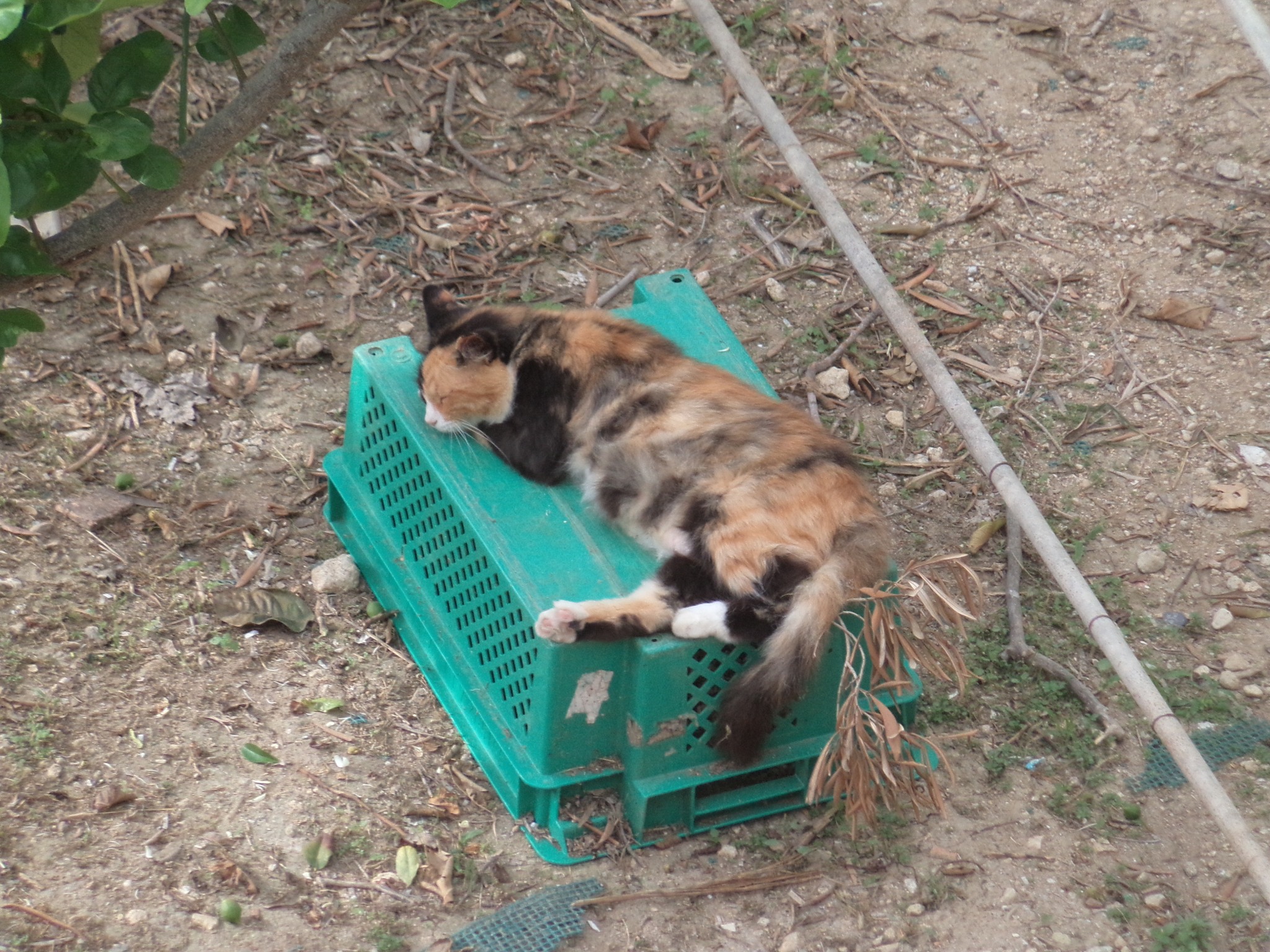
The closest of The Cat’s kittens to her in colour was Fleckle, who had a lot of her mother’s fur patterns, but with more chocolate brown and less orange. She had the long brown sock on her front left leg, nicely terminated by a white paw, but lacked the traditional face pattern, segmented into the three colours.
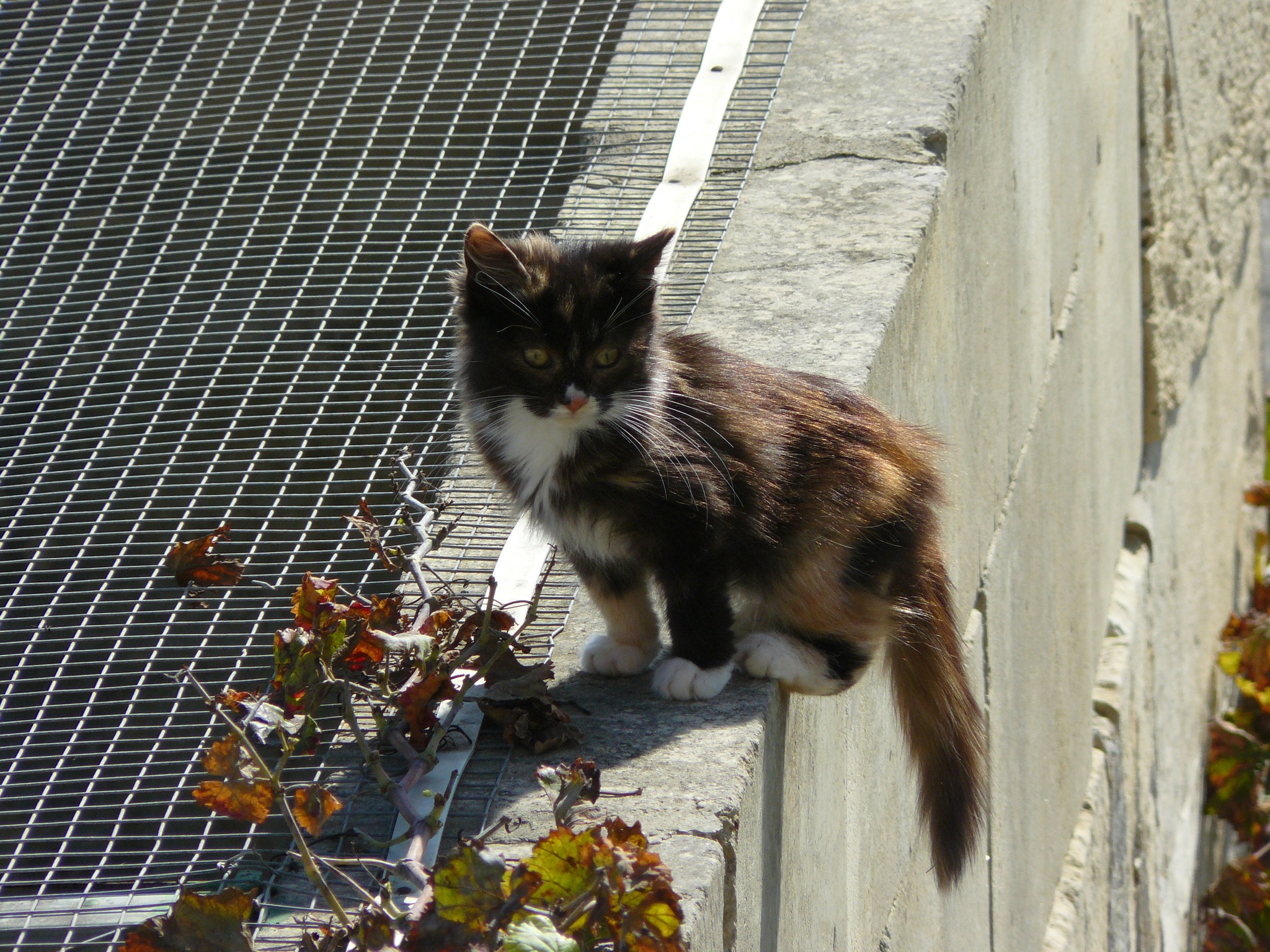
Twilight, one of the Visiting Cats, was what we called a brindle tortoiseshell, a mix of chocolate brown, cinnamon and white; she also had an underlying pattern of stripes or bands across her back. From the front without seeing over her back, she could sometimes look like a tuxedo cat as the brown was almost black and the white was very white.
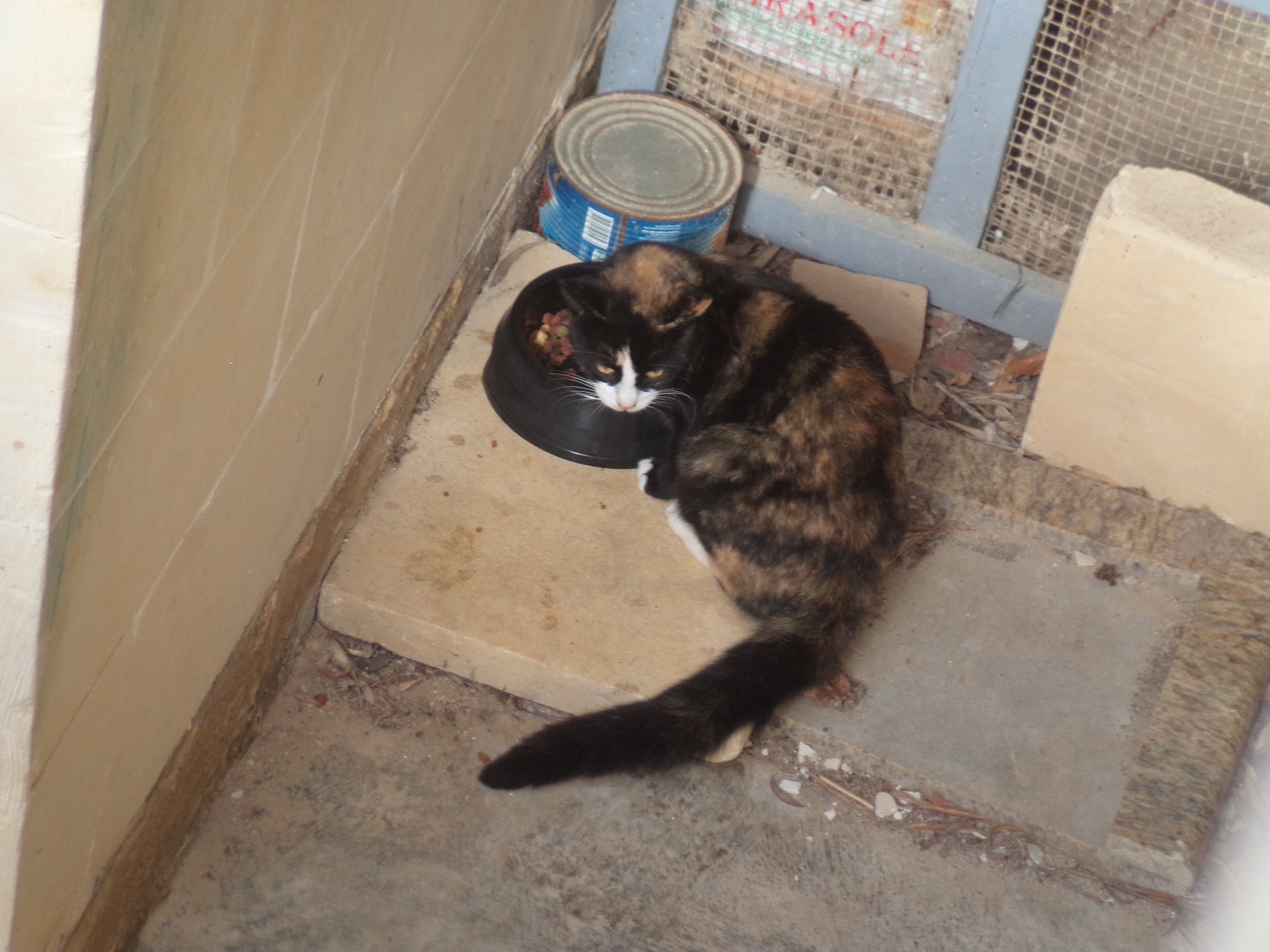
Dusk was Twilight’s daughter and, at first glance, the spitting image of her mother although, on closer inspection, there was a little more white and her shades were generally a touch lighter. As Dusk grew, it became more difficult to tell her and Twilight apart.
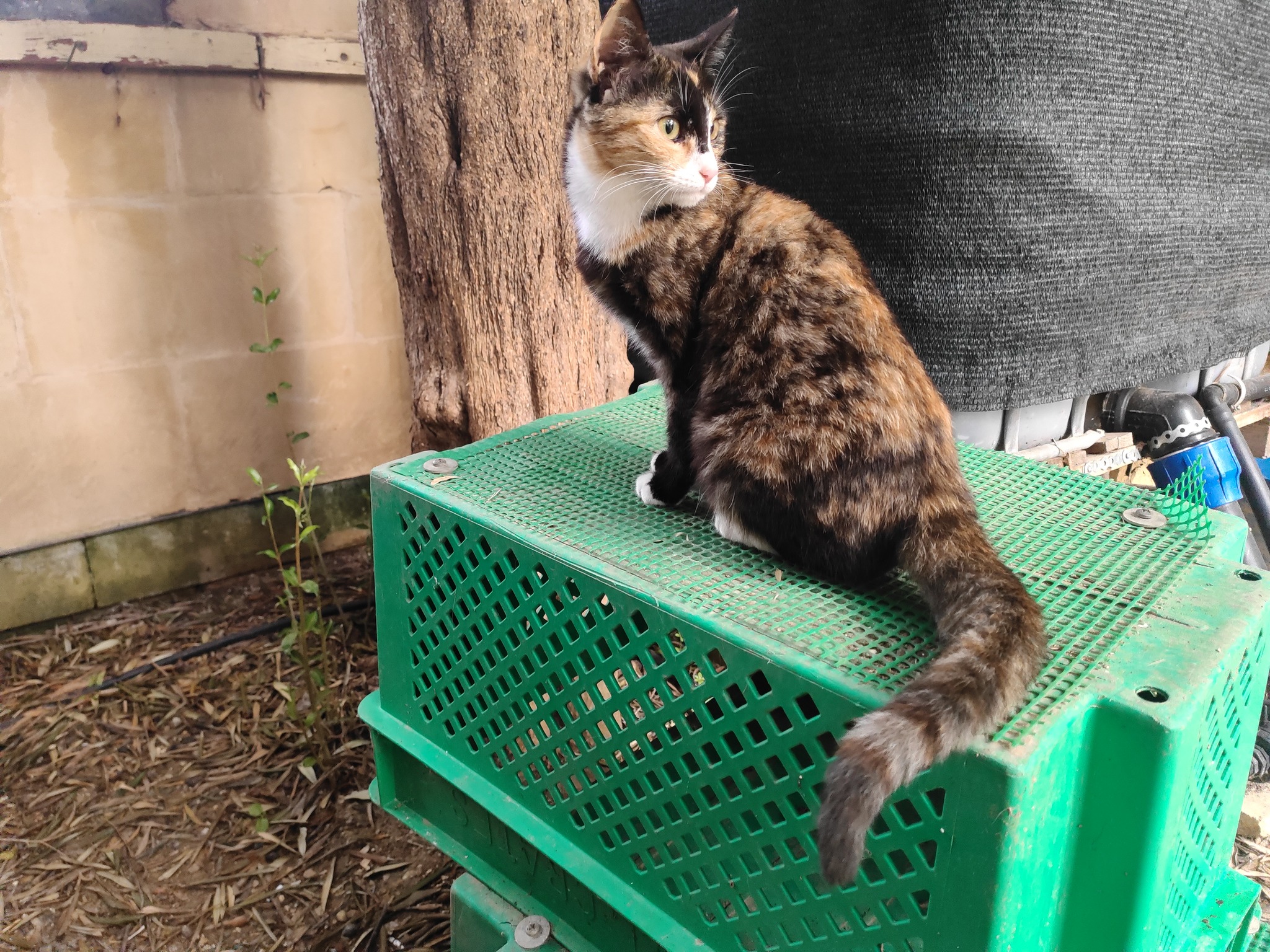
Both The Cat and Twilight also had calico daughters and it was these lighter colours together with white which seemed to be more common.
On The Cat’s islands, a tri-coloured tortoiseshell (with one colour being white) is commonly referred to as a Madonna cat (‘qattus tal-Madonna’), and of course there are regional variations in names for tortoiseshell cats, depending on where in the world you live.
 thecatisbusy