
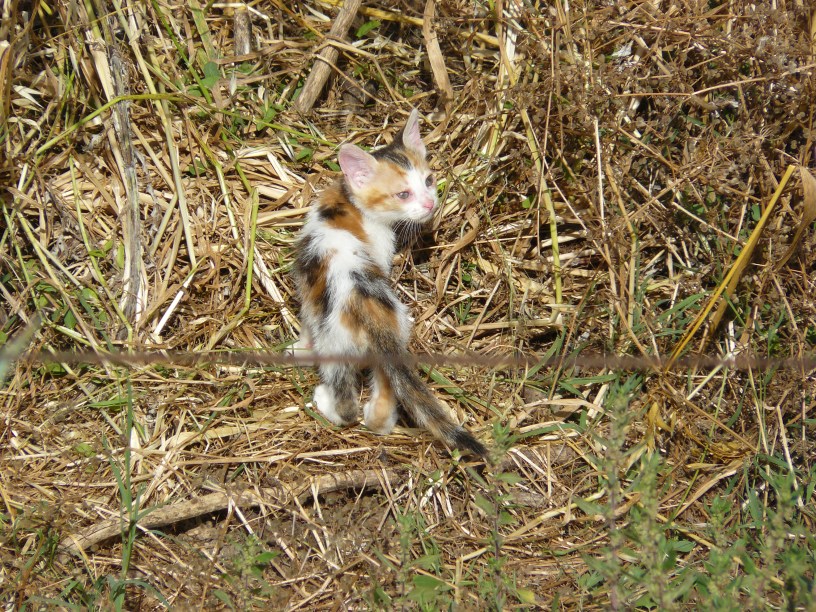
Eye problems were not uncommon in kittens. Sometimes they were due to a virus (eg herpes) which was passed to the kittens from the mother, sometimes due to eye injuries which they picked up playing with their littermates, and sometimes the result of seasonal irritations due to pollen in the fields.
In later years when the cats were accustomed to us, we would treat more persistent problems with topical or oral antibiotics, but in the early days there was nothing we could do.
The Cat’s daughter Sprocket was one such example. Born in the fields, her eyes were gummy and irritated from an early age (although littermates Pedal and Ratchet were relatively unaffected). Maybe the undergrowth and pollen was a factor; whatever the reason, her eyes looked pink from an early age.
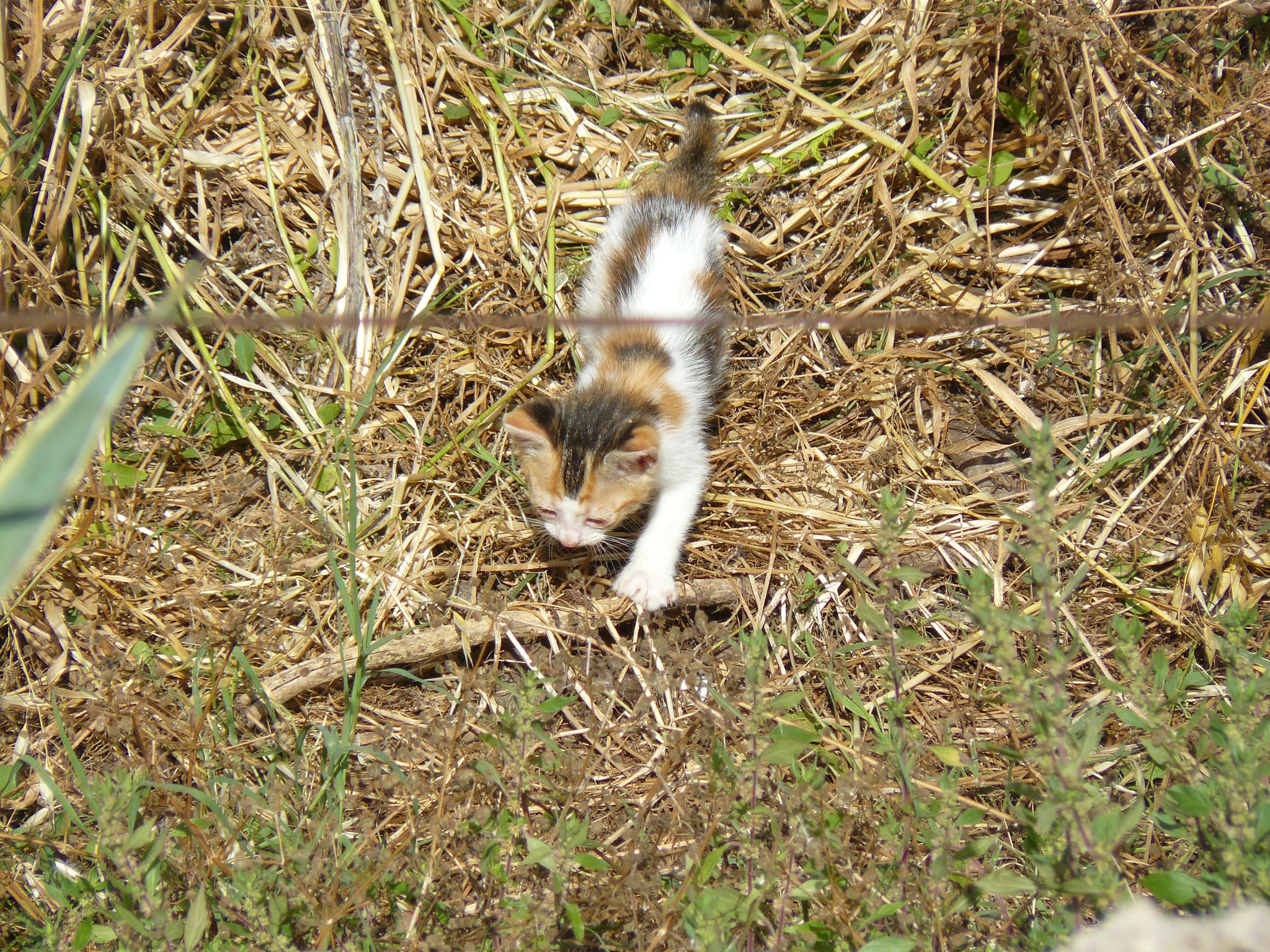
Once The Cat brought the kittens into the garden, it was plain to see how gunky Sprocket’s eyes looked.
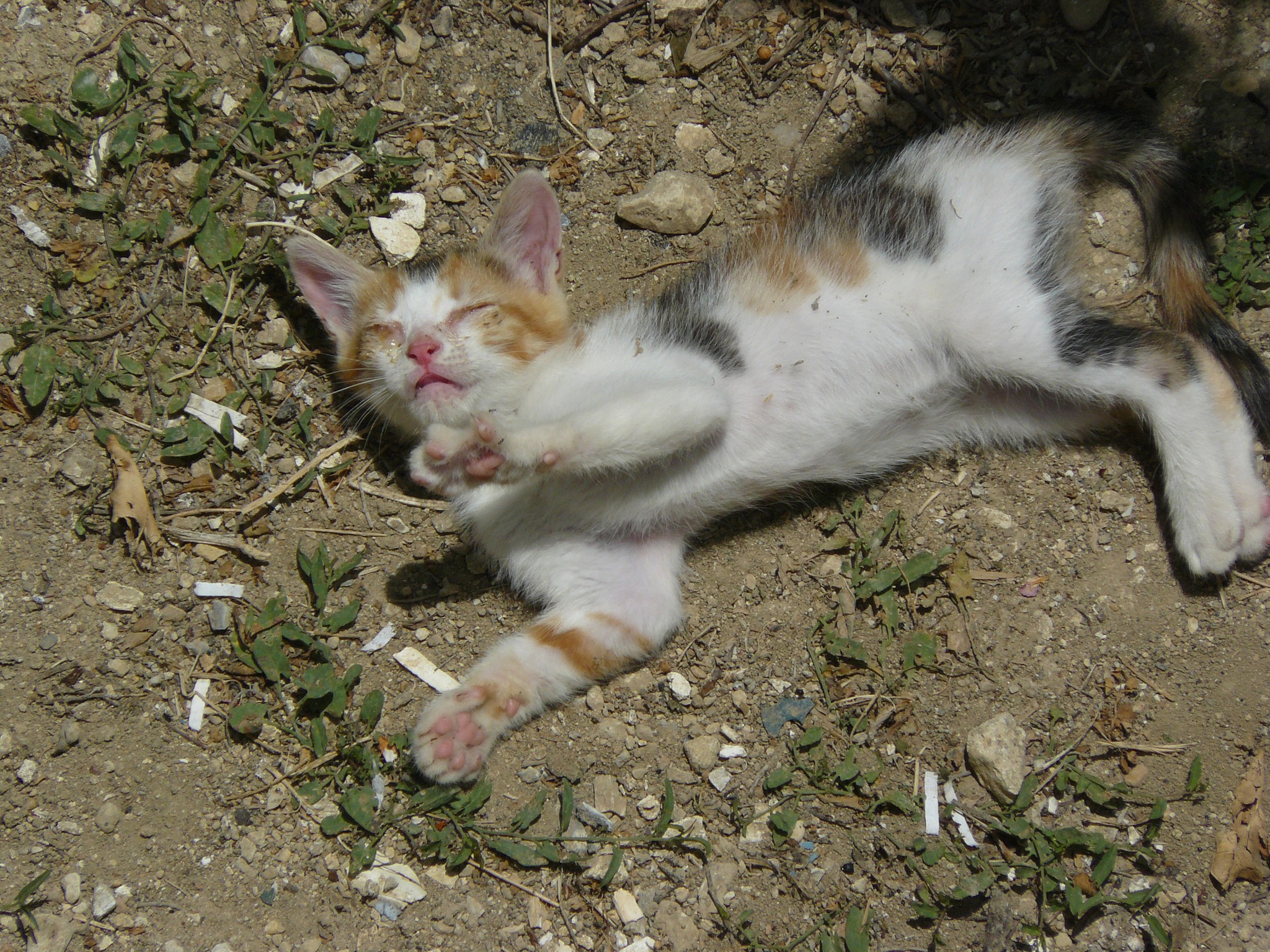
However, whenever The Cat was feeding the kittens, she would give them a quick wash and we could see that she was paying particular attention to Sprocket’s eyes, licking them repeatedly, opening them and cleaning them with her tongue.
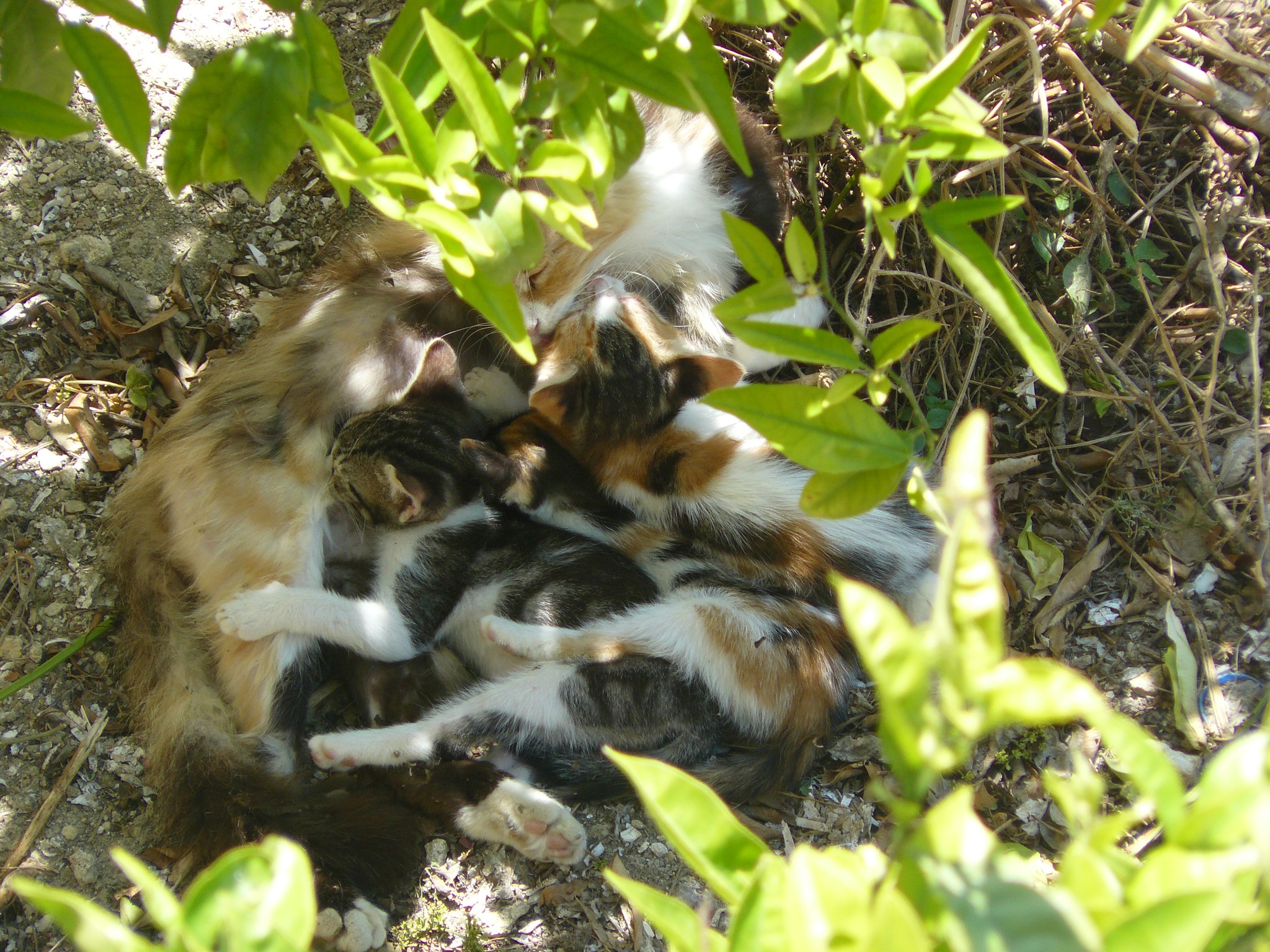
After cleaning, Sprocket’s eyes looked sore, the fur was worn away, and they were pink. But, had we been treating her with topical antibiotic eye ointment, she would have looked much the same, so whatever The Cat was doing was having much the same effect.
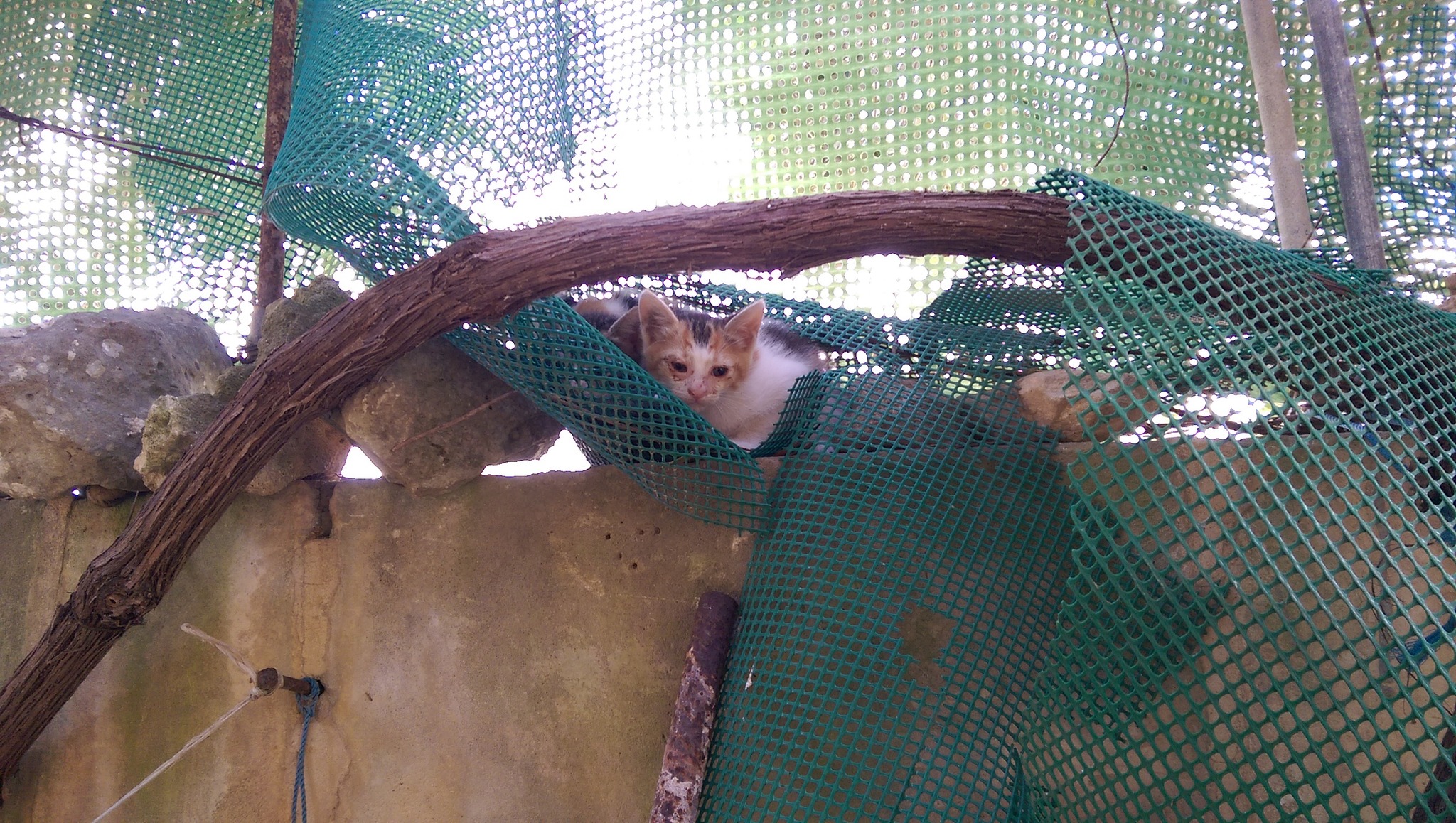
It did not take long to see signs of improvement, eyes open more than they were closed, and less discharge.
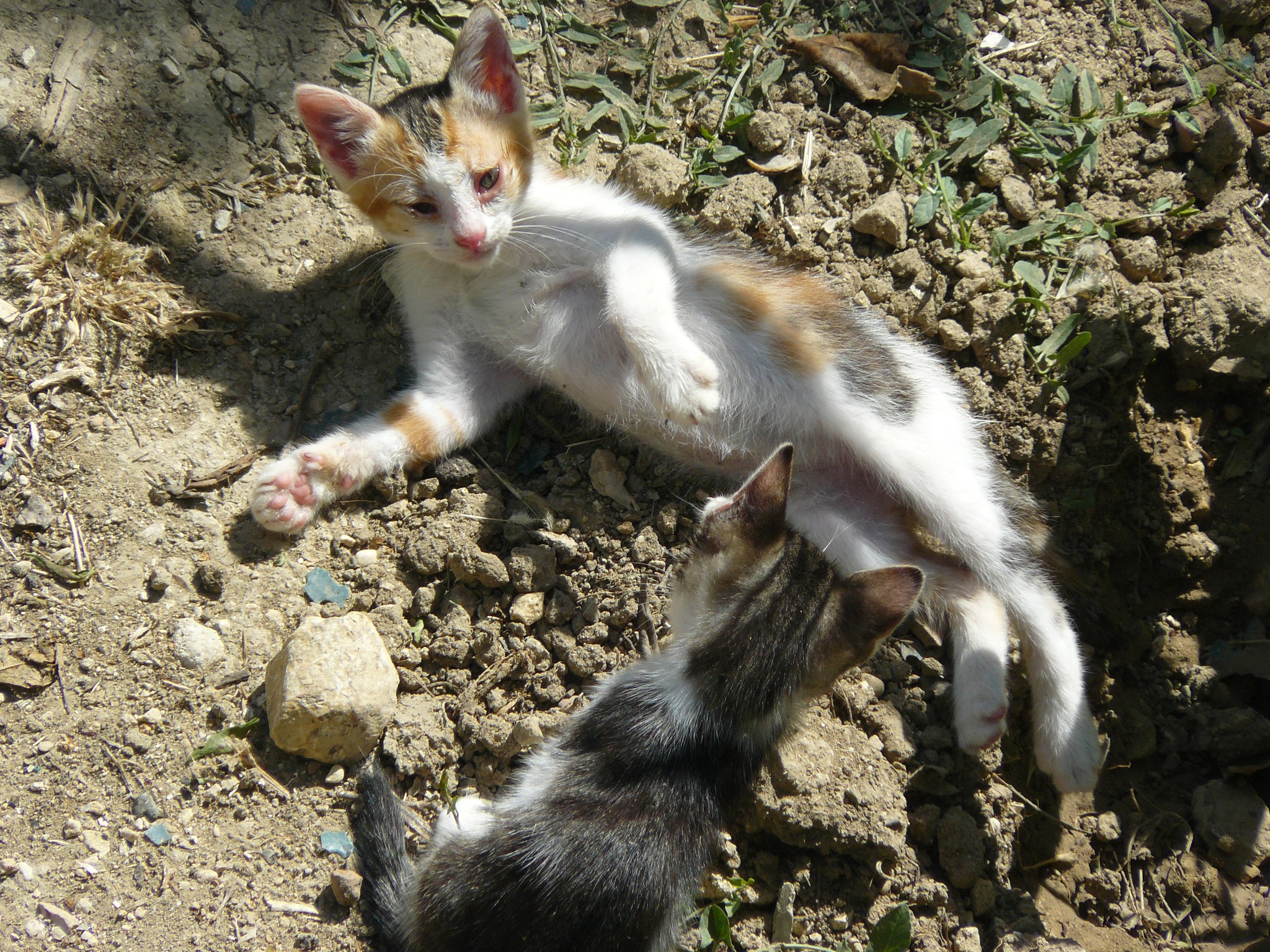
Over the course of eight weeks, thanks to The Cat’s regular cleaning of her daughter’s eyes, the infection cleared up. Somehow The Cat knew just what to do, guided by solid instincts and common sense.
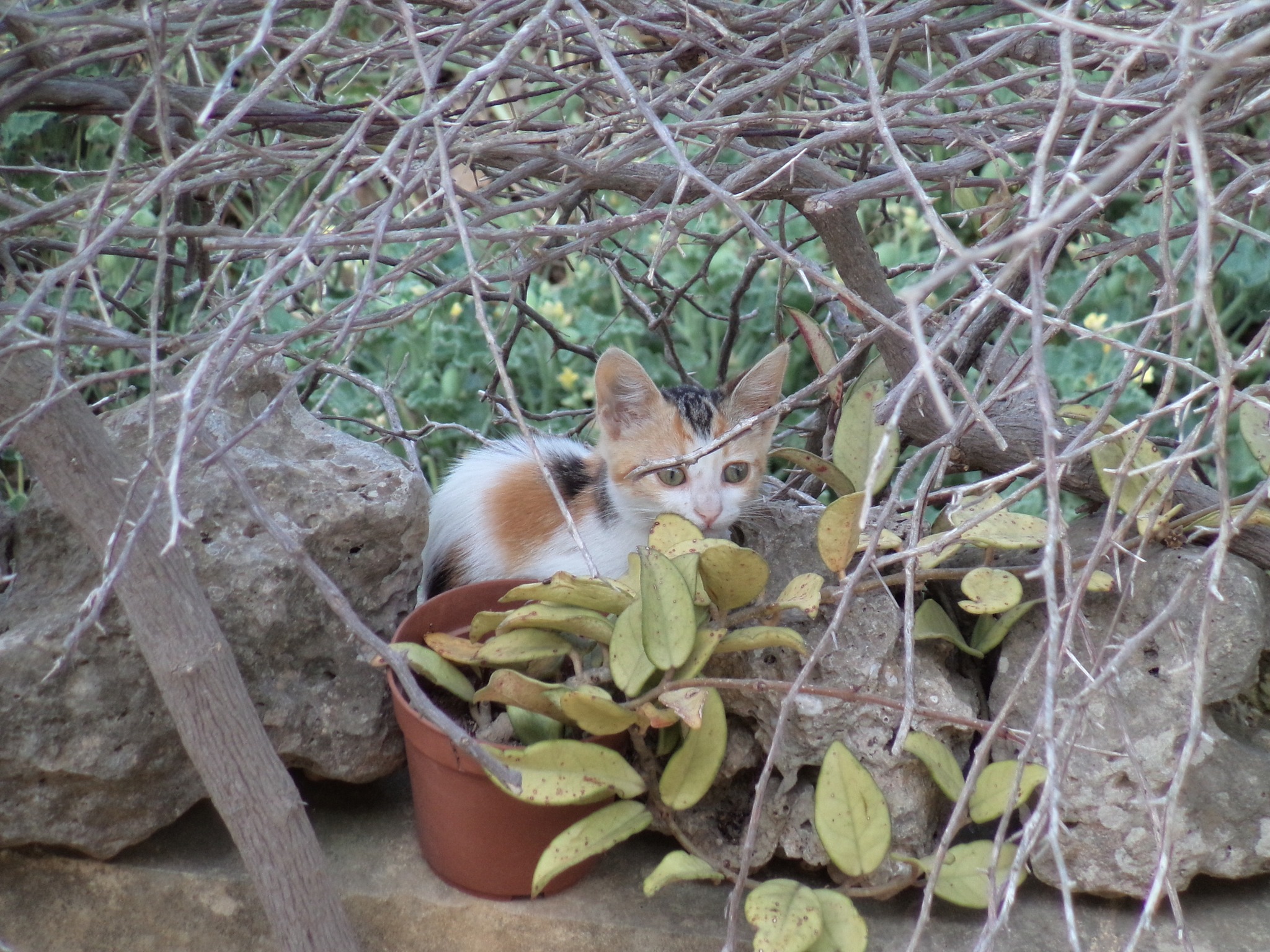
In later life, Sprocket’s eyes continued to be clear and bright – a testament to her mother’s care in those important early weeks.
 thecatisbusy