
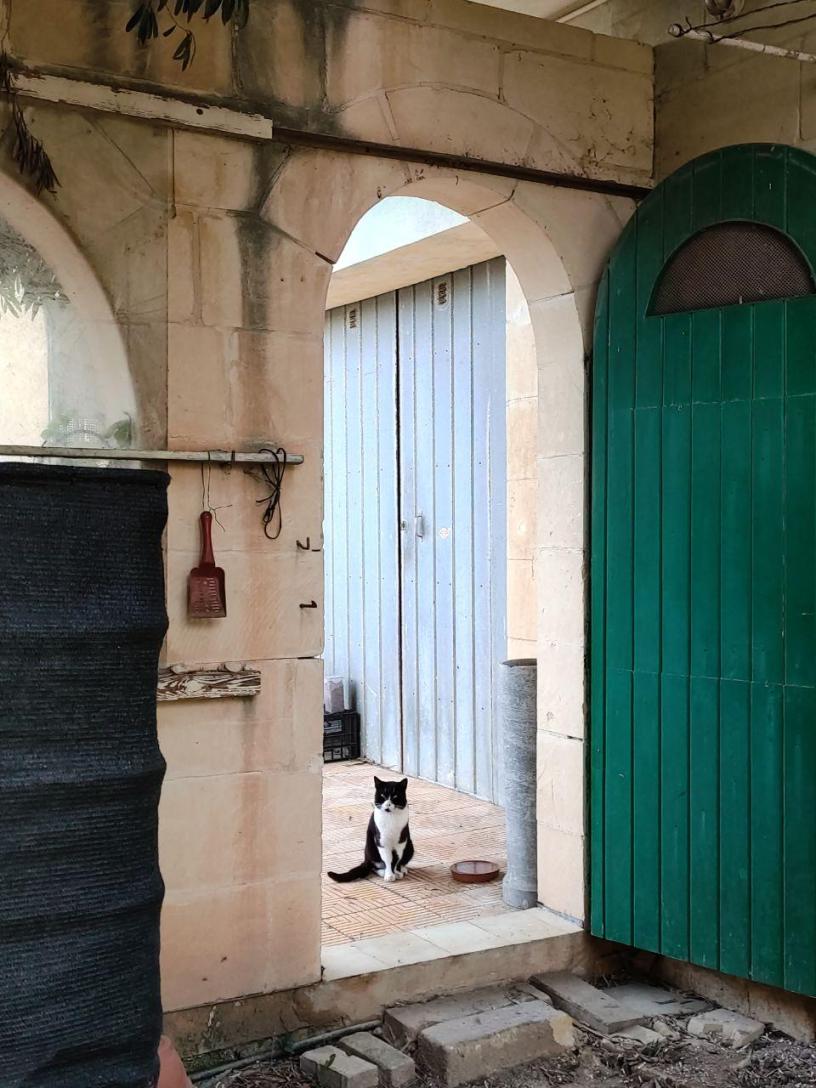
Six years ago this month, the COVID pandemic was advancing through the world. March saw the beginning of various shut-downs in this country and it came as no surprise that this marked the arrival of several new feline faces at the feeding bowls.
There are a lot of outdoor cats here; they are not necessarily abandoned, rather they are working cats, cats who are looked after in return for rodent-control services in domestic gardens and courtyards, on farmland, and in older buildings. Even the local government offices and hospital have working cats in their grounds who are looked after by members of staff.
Looking back through old photos, it is noticeable that the spring of 2020 brought an influx of cats, and all within a few weeks. These were adult cats, accustomed to being fed by humans (although not all friendly); some of them returned ‘home’ in later months, some stayed in the area around The Cat’s garden.
One of the first to arrive was Izit (full name Izambard the Italian ‘but you can call me Izit’). He was a confident, fully-grown feral male with dilute orange (peach) fur. He stayed for three months and then disappeared, but returned the following year. In between, he wasn’t seen in the neighbouring fields, so presumably he came from a little further away, maybe more distant fields.
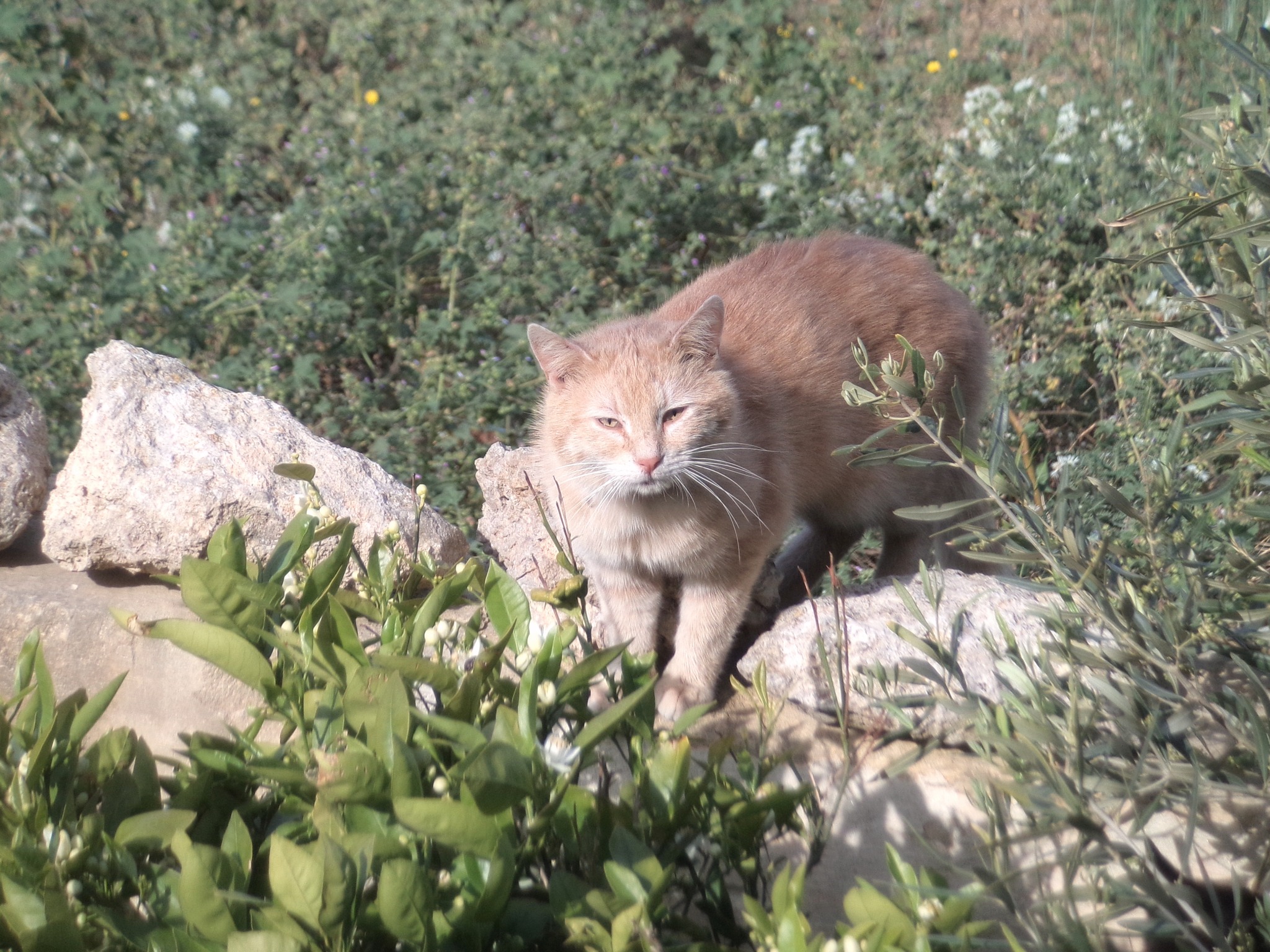
Then came AOK. His (or maybe that should be ‘her’ as we have no way of knowing) initials stood for Another Orange Kat, as there were quite a few in the area at that time. S/he only visited for a couple of months that spring and was never friendly although there was something about his (or her) expression that made you think s/he should have been.
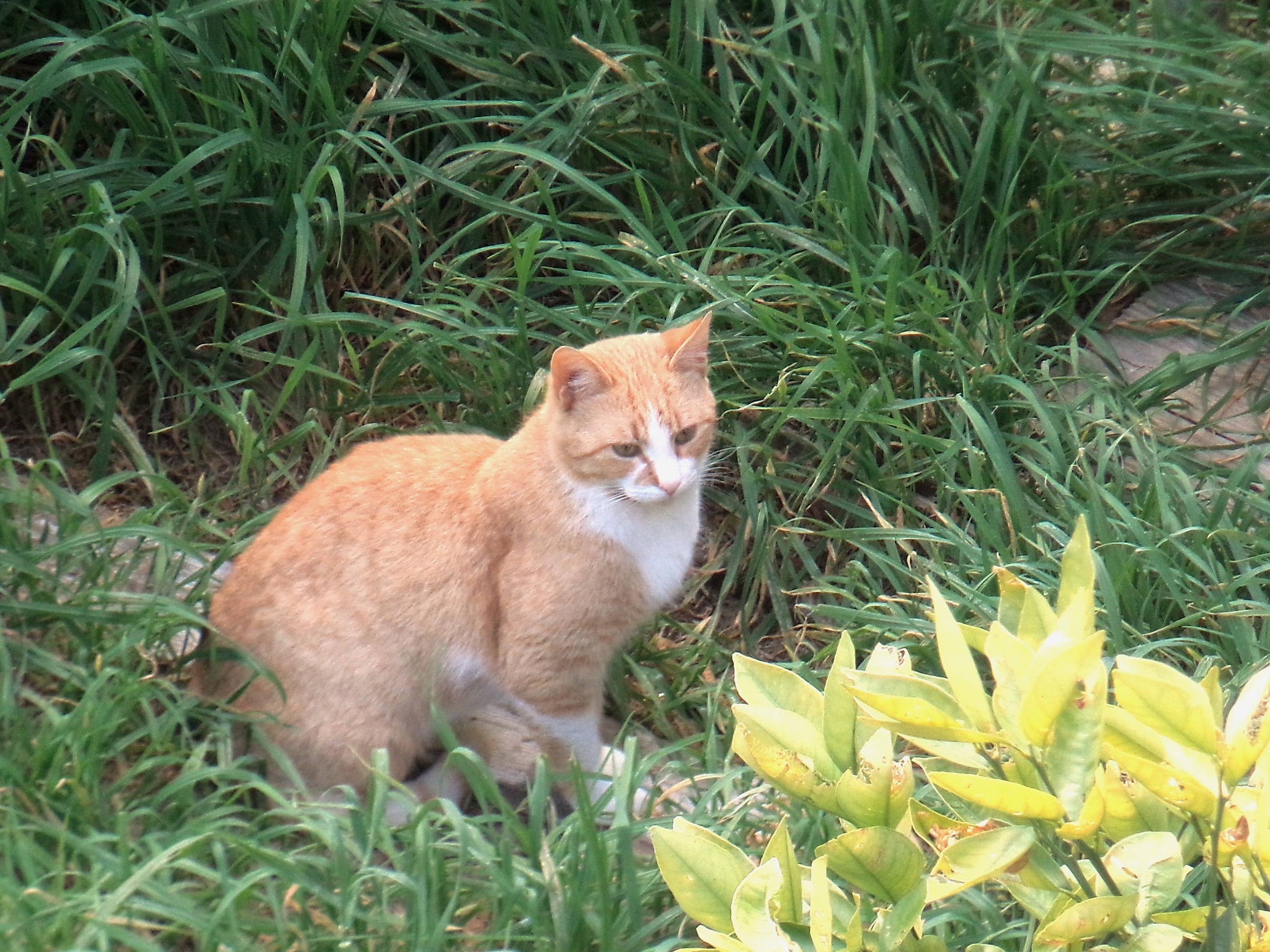
Gypsy was an orange-and-white adult female with quite a fluffy coat; she was used to humans and might have been a garden cat for a house or home. A month or two after she arrived, she disappeared, only to return a few days later with a damaged tail which later dropped off, leaving a stump. Gypsy loved being around humans and other cats, and chose to spend the rest of her life in and around the garden, drive and front path.
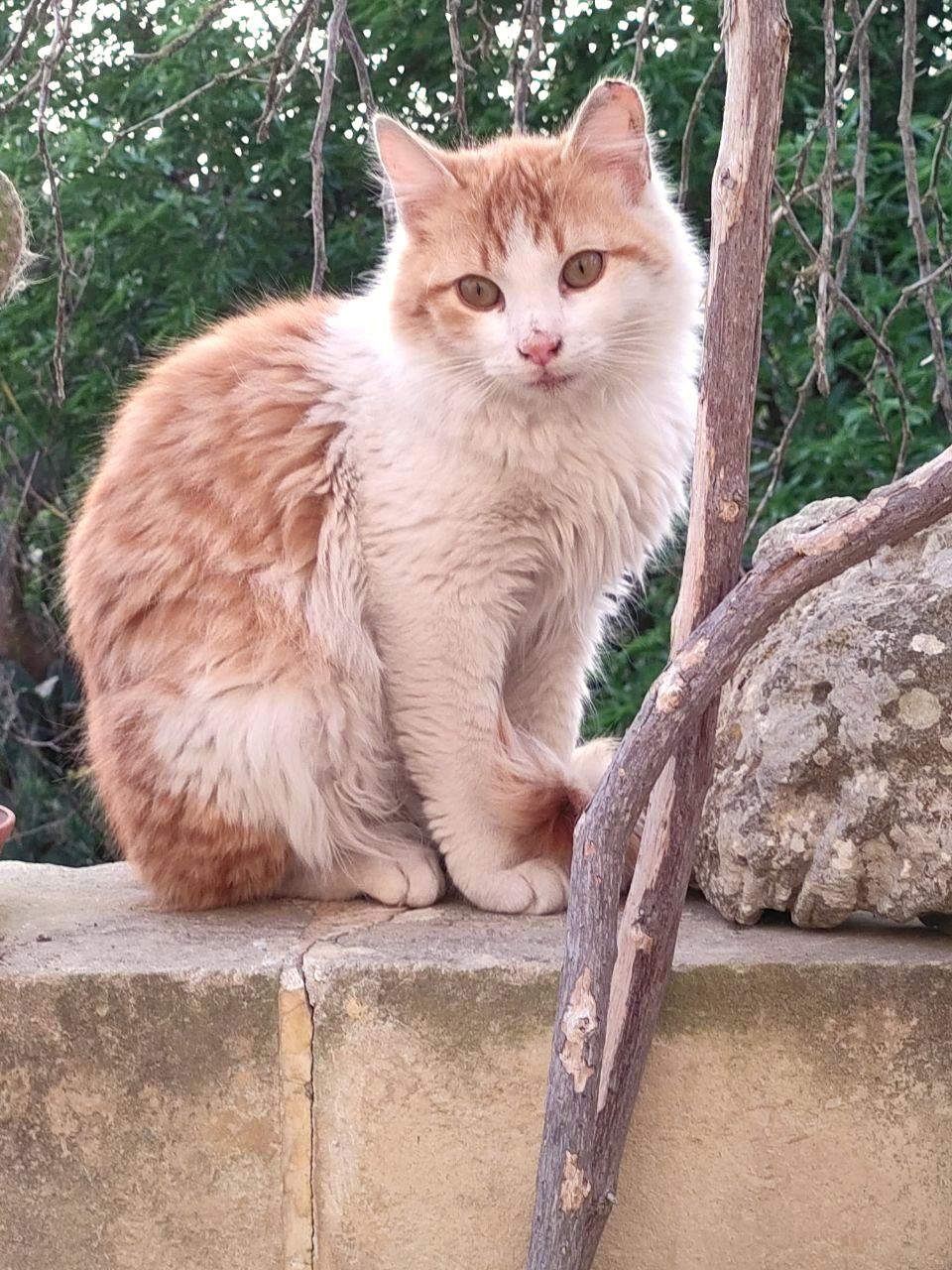
Boomerang was so-named because he kept disappearing, and then coming back. He wasn’t completely friendly inasmuch as he did not allow humans close enough to touch him, but he was used to having humans around and was probably going back to check if his original feeder was back yet. It seemed as though he had been part of a colony as he was a patient cat and knew to sit back and wait for the more dominant cats to be fed first, rather than court trouble. (Boomerang is featured in the header photo.)
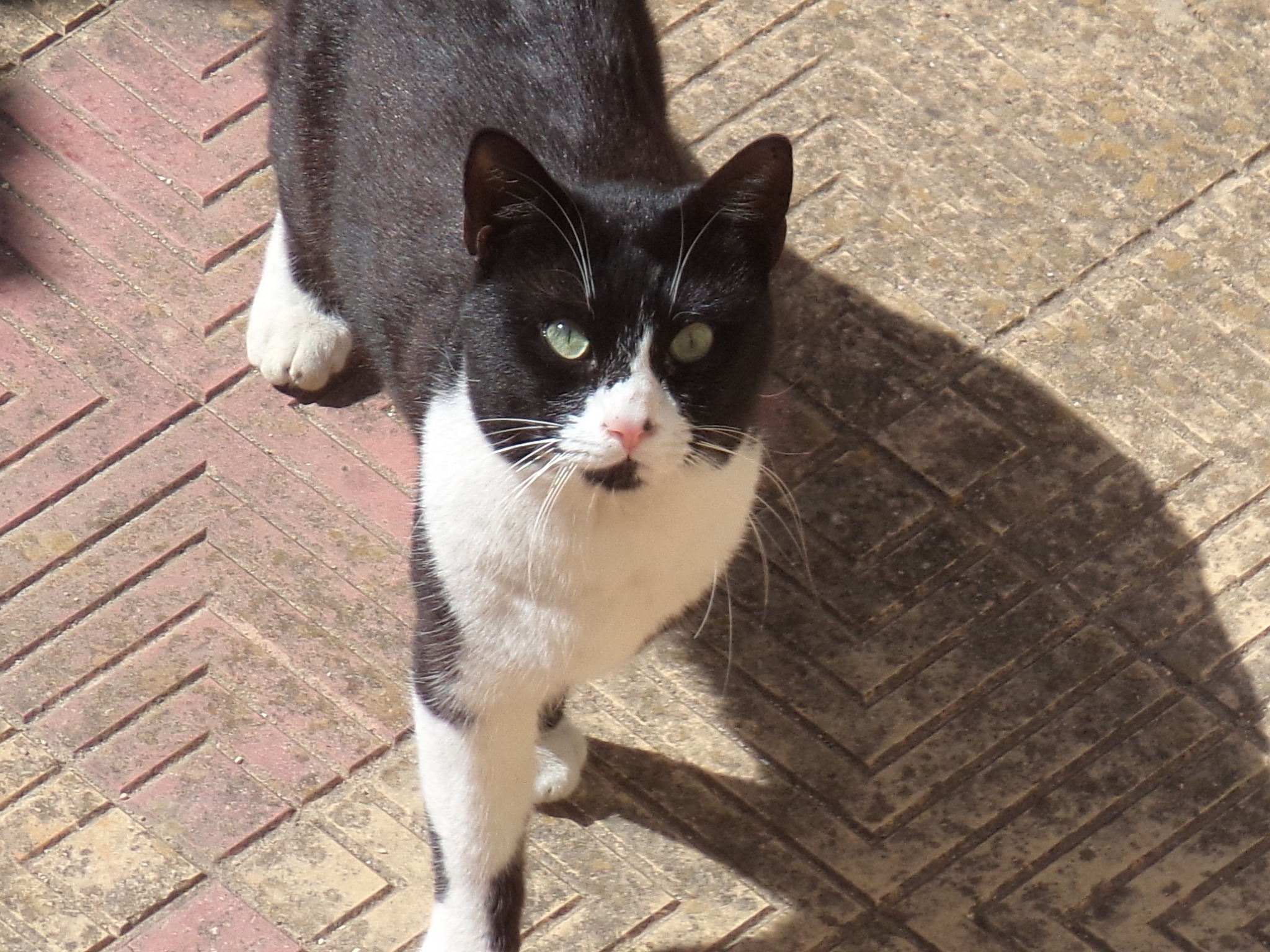
Roma was a feral female from somewhere on the other side of the road. She stayed for six months and became more friendly during that time, raising a family in the front path, before disappearing back into the fields never to be seen again.
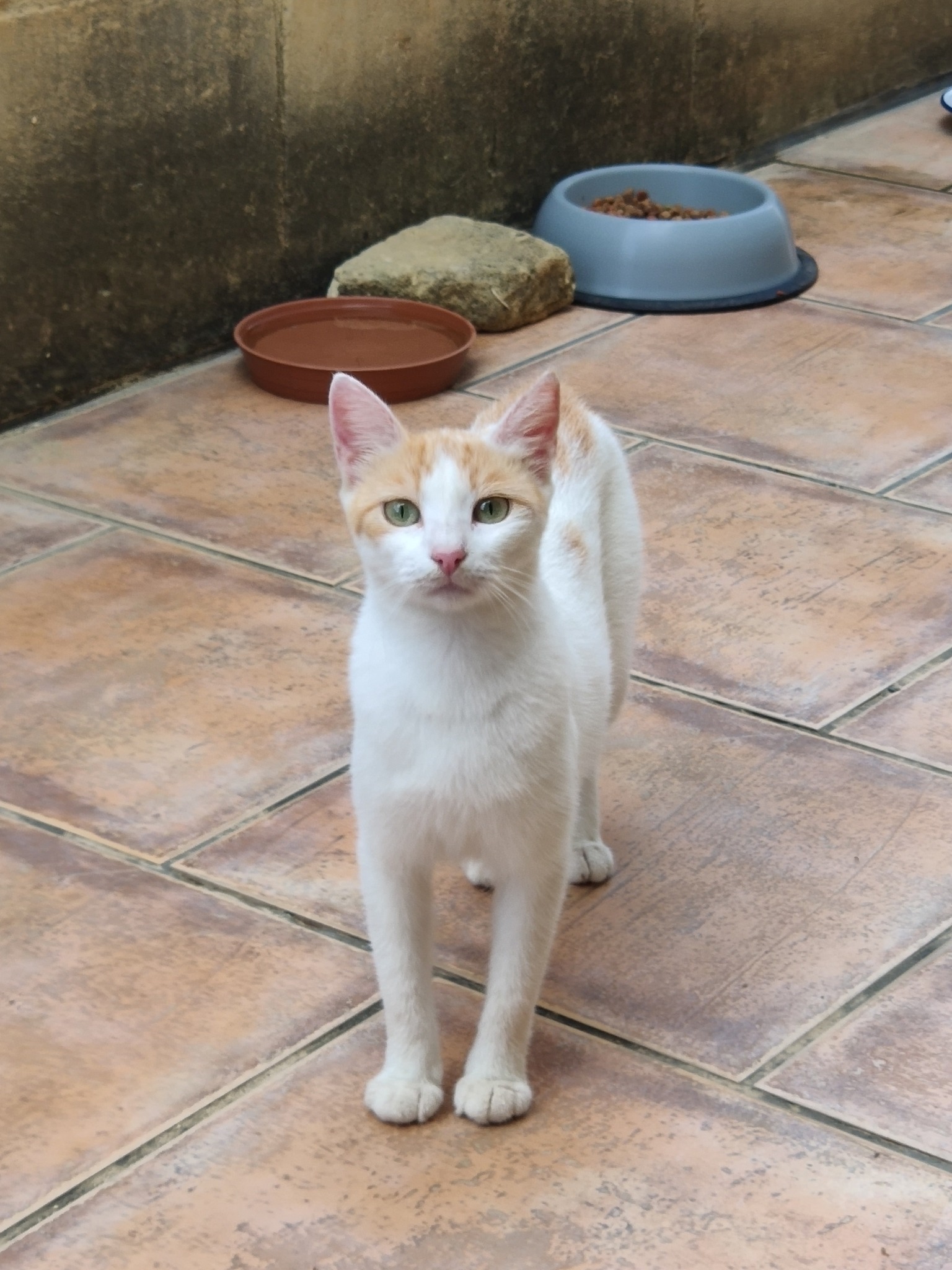
Il-Ħadd 2.0 was so-named because of his resemblance to the original il-Ħadd. He was feral, and came to eat for six months before disappearing, but returned the following spring. He would have liked to have been one of the alpha-males, which made us think that maybe he had occupied that position wherever he had come from.
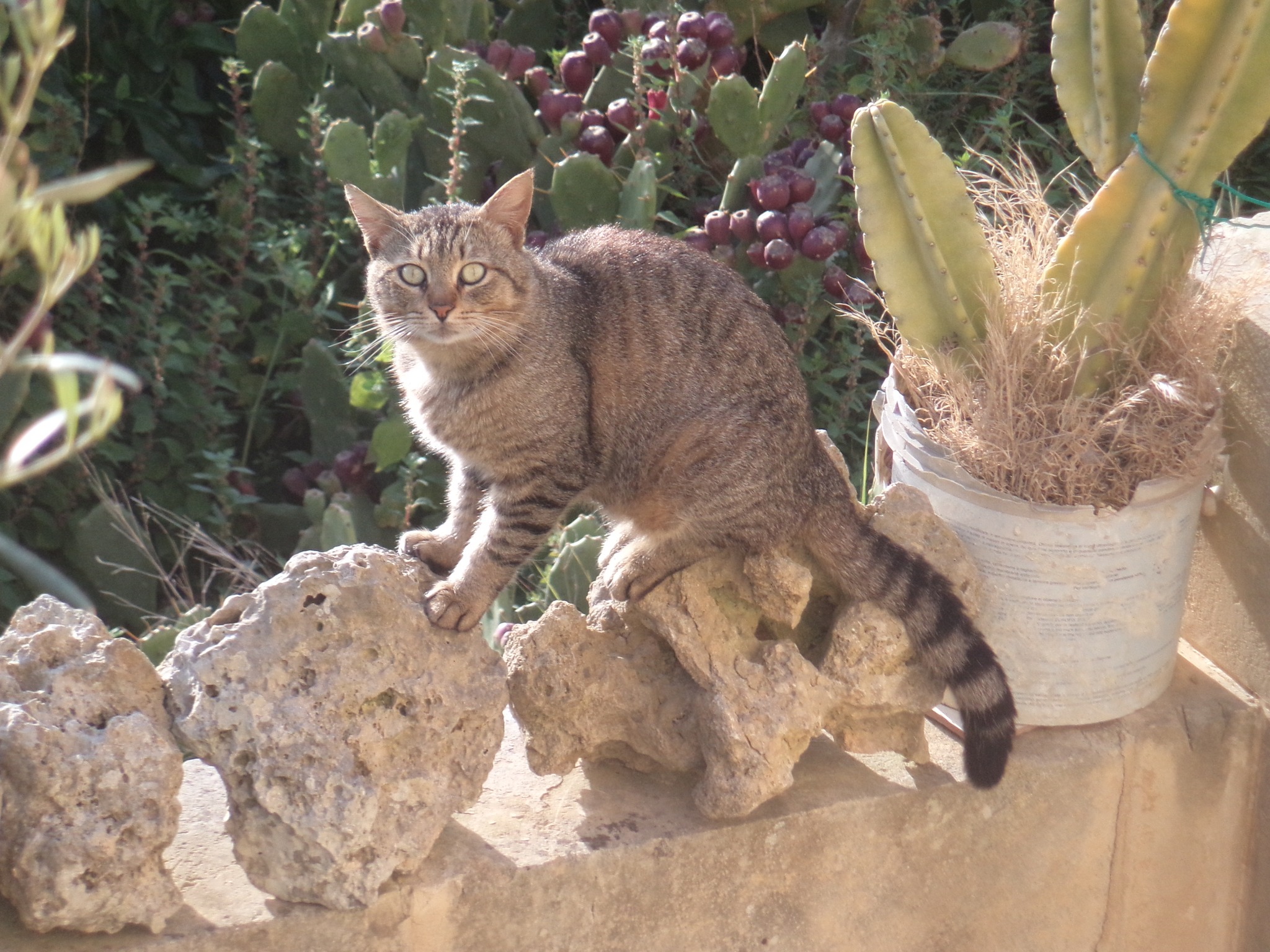
There may well have been more occasional visitors during the pandemic period, but these are the ones who we saw and could document. Food and water was available 24/7 in the garden, drive and front path, and it was likely that there were cats who we never spotted, coming at night or waiting until there were no humans around. In any case, they were all welcome to eat and drink as much as they liked before heading back to their busy lives.
 thecatisbusy