
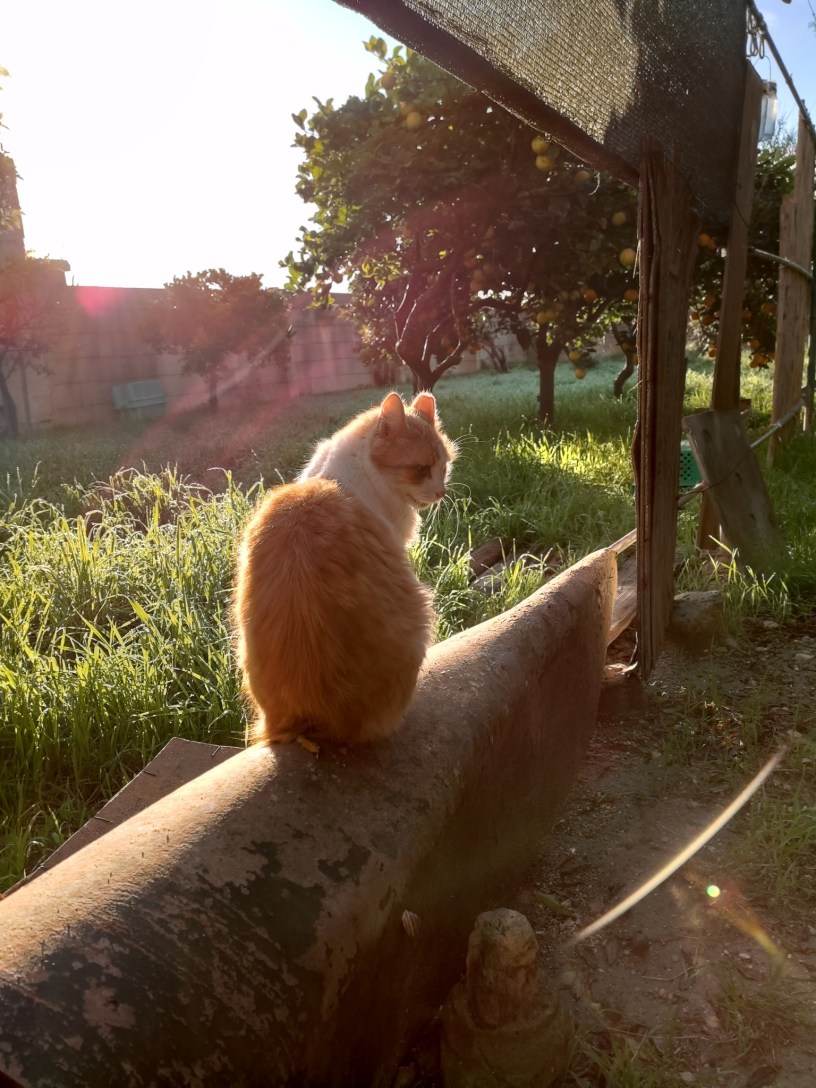
Gypsy arrived early in the year of the pandemic. She was obviously accustomed to being around humans and she was neutered, as we could tell immediately from her ear-tip. She played as though she was a kitten – maybe she had been a companion cat with someone elderly who couldn’t play with her – in so many ways she seemed youthful, and loved to play with the kittens’ balls in the garden.

A few months later, she disappeared for a week and when she returned, her tail was damaged and hanging limply. We could only guess what might have happened, and try and help her heal (which was a lengthy process during the summer months when there were so many flies around).
Gypsy’s docile disposition meant she got on well with the other cats and she struck up close friendships with Kiwi and Phantom, both solitary feral females. They would meet up in the front path or the drive and eat together, wash, and take a nap, with all three of them lying on the wall.
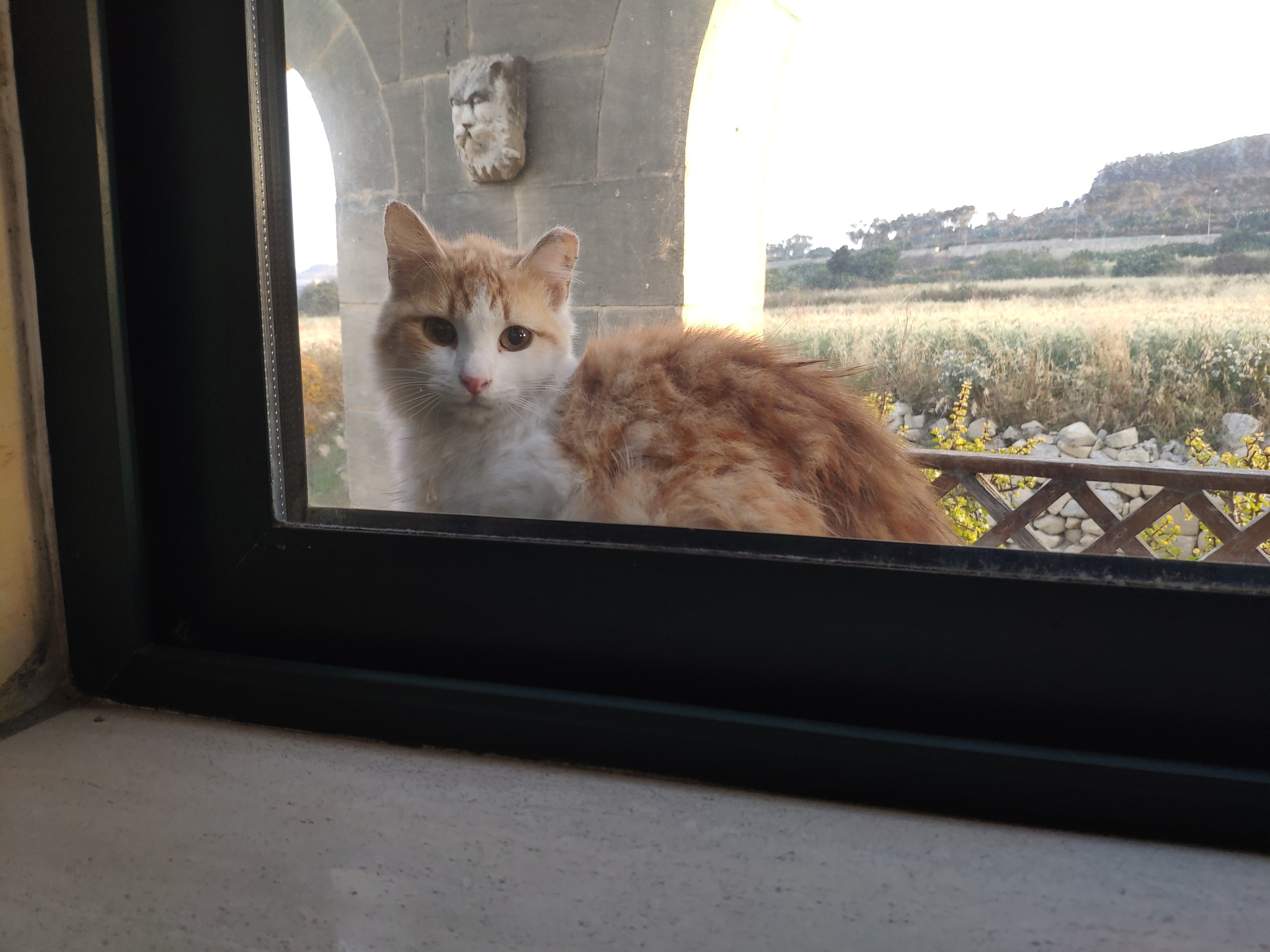
Gypsy seemed accustomed to being around the house; she seemed to know the purpose of a front door and a window and would often sit on the windowsill, staring in at us in the house.
As her first year with us passed, we realised that she was older than we had first thought. She had persistent digestive problems which made her messy, and there was more and more cleaning up to be done. Maybe she was no longer welcome in her original home for this reason and had either been either excluded or dumped.
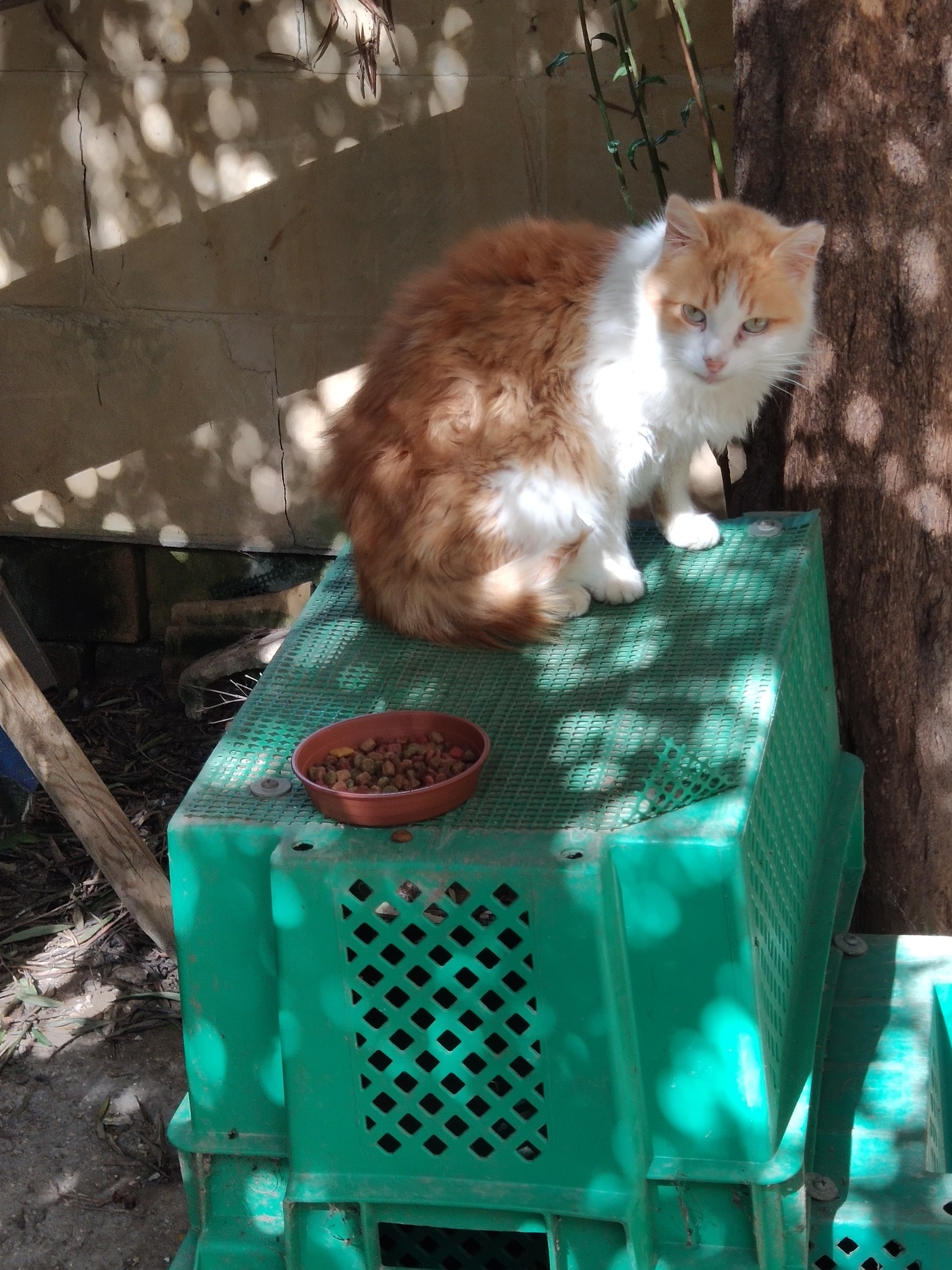
Over the last few months before the summer virus which took her and so many of the garden cats, she started to show her age.
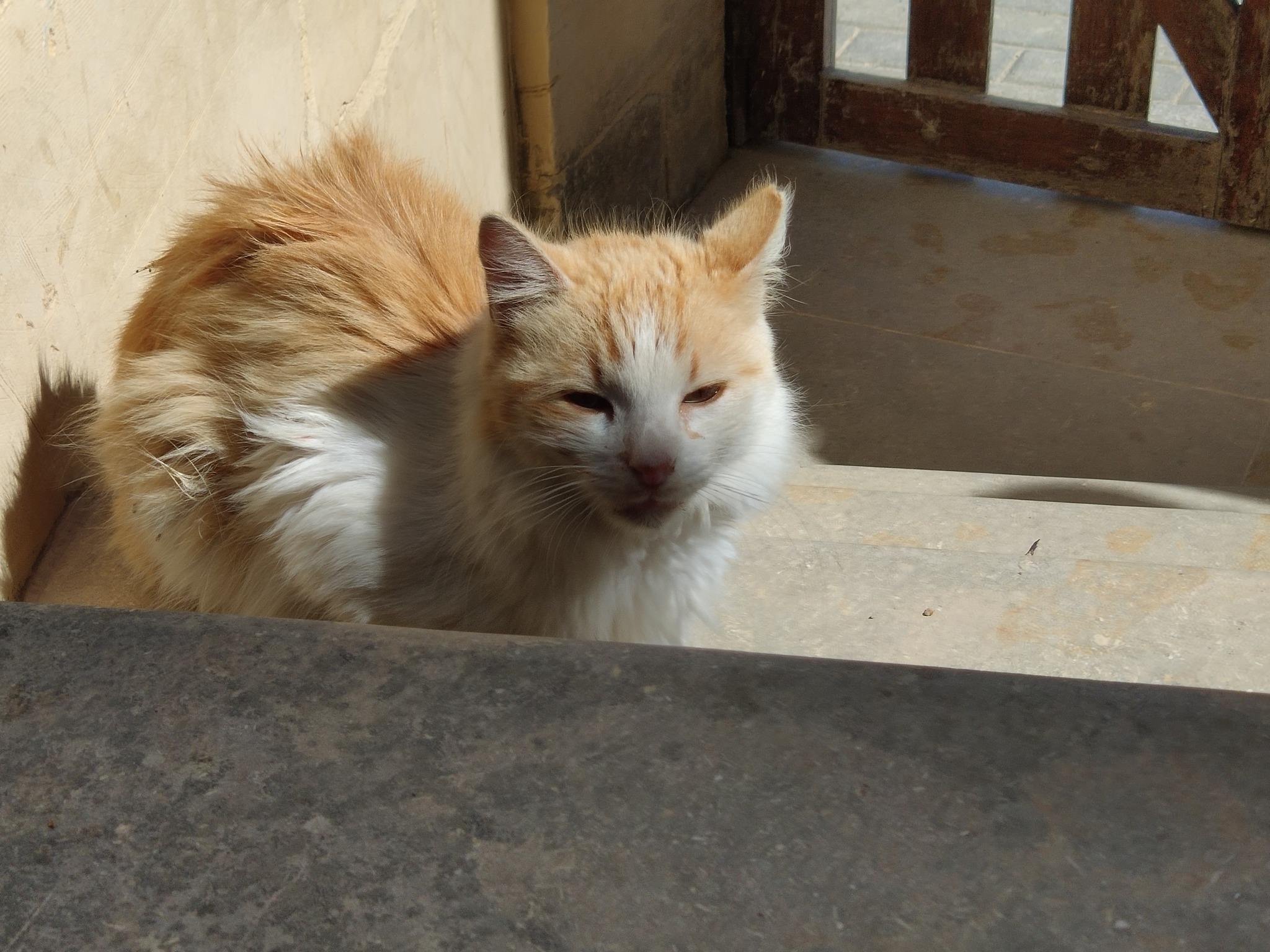
She was thinner and her fur lacked its previous lustre; she looked like an elderly cat in many respects (although she never lost the ability to eat around her tablets, however small they were broken up, and however well hidden in dishes of the most delicious food).
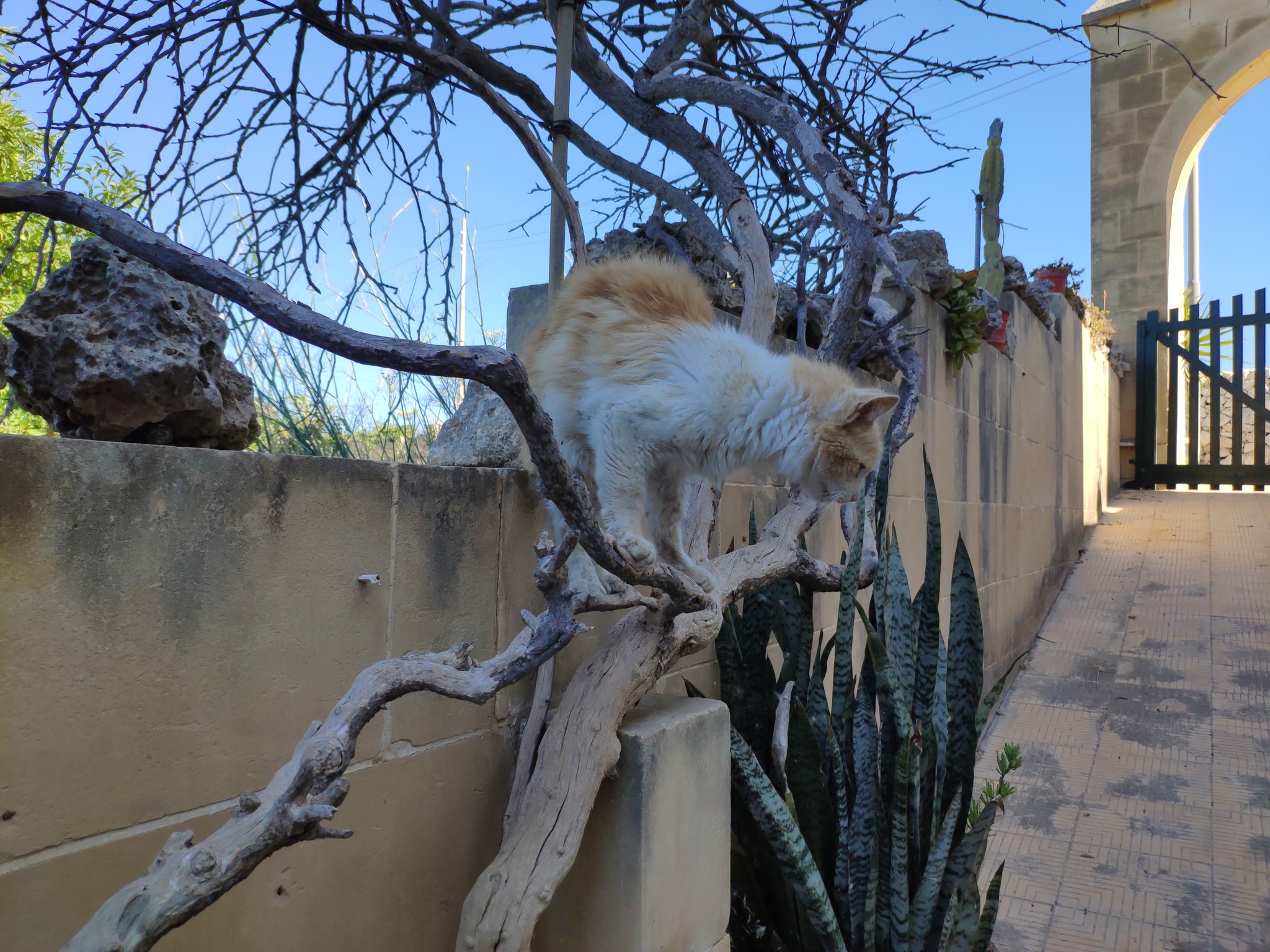
In the end, she was only with us for 18 months, but she spent them happily, living life as she pleased and on her own terms. Everyone loved Gypsy, and Gypsy loved everyone.
 thecatisbusy