
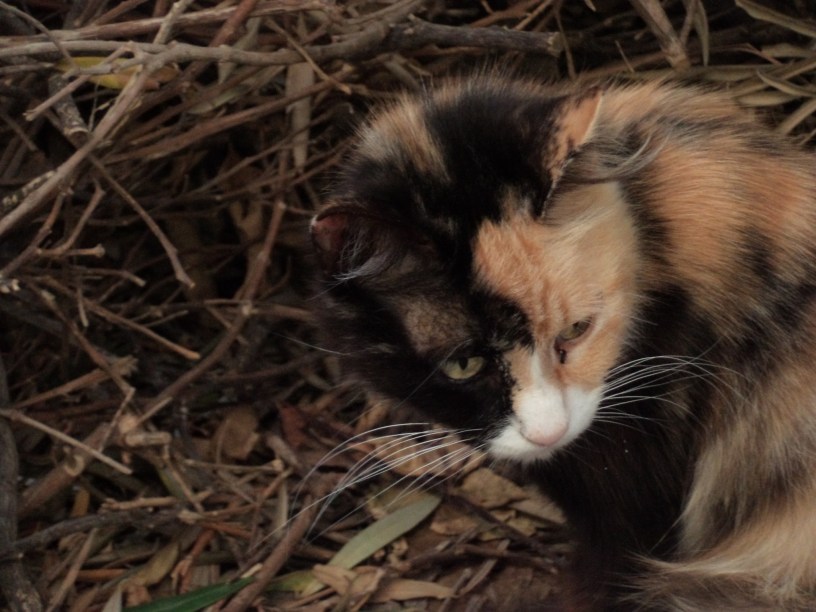
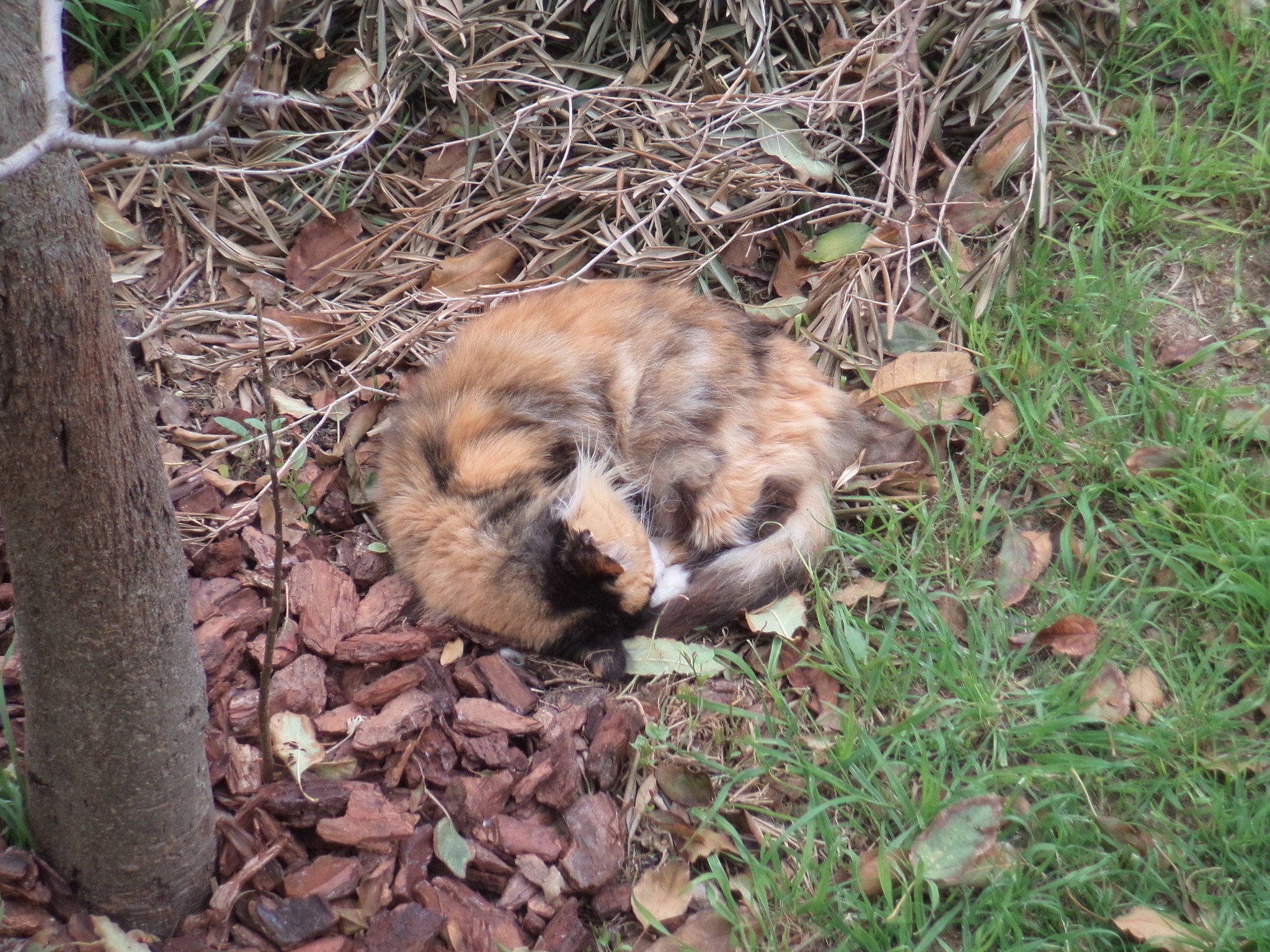
The Cat suited her surroundings. Her tortoiseshell colours were orange, white and brown although sometimes brown looked more black, and sometimes ginger looked more tawny. Either way, she blended in well with the dry olive leaves, with the limestone walls, with the bark of the fruit trees, and fallen branches and twigs – all everyday things in and around her garden and the surrounding fields.
The garden consisted mostly of fruit trees (citrus, soft fruit and apple), plus an olive and a pomegranate tree. The Cat liked to lie under the trees, either pressed against the trunk or, in the less hot and dry months, in the long grass.
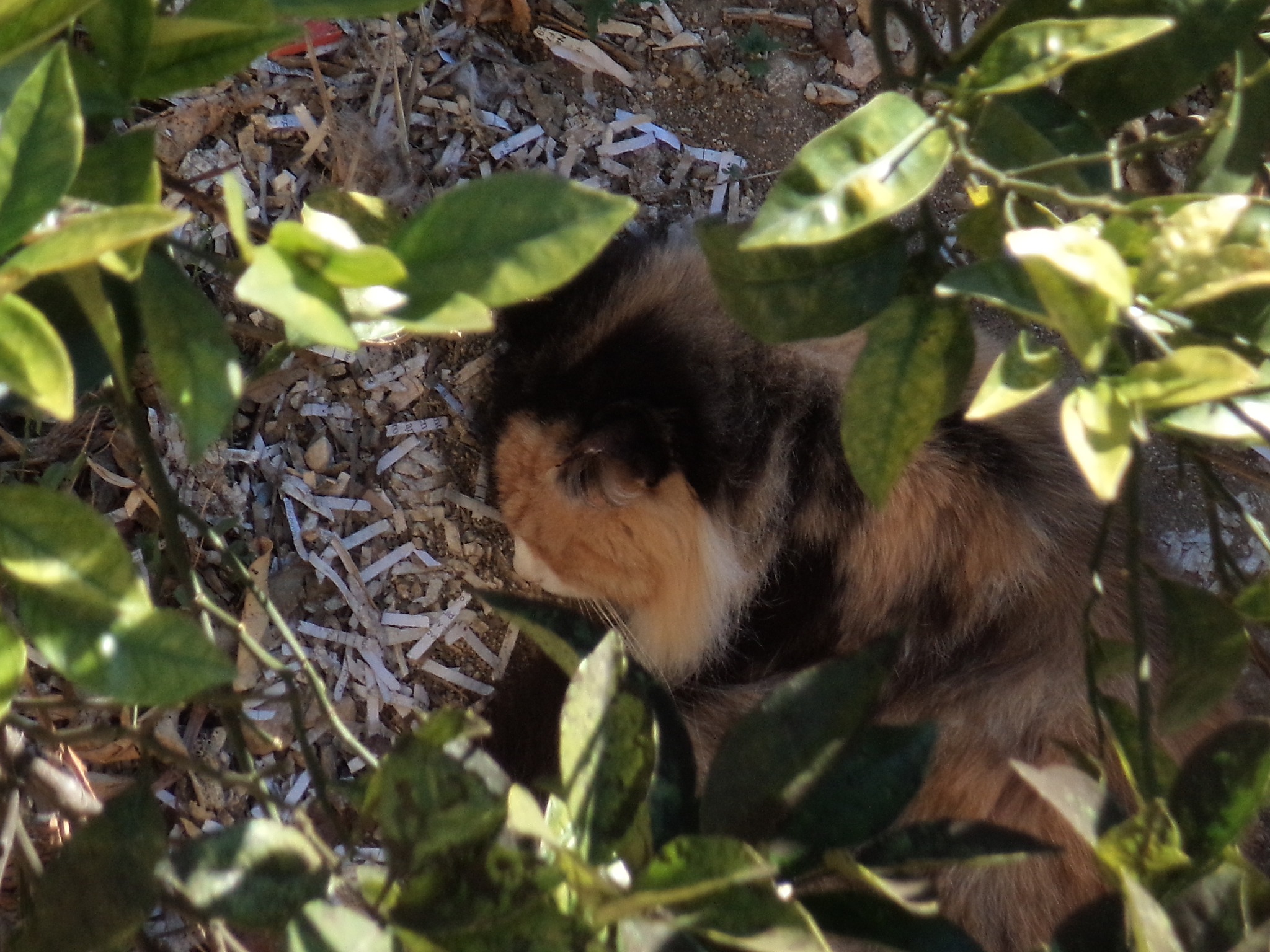
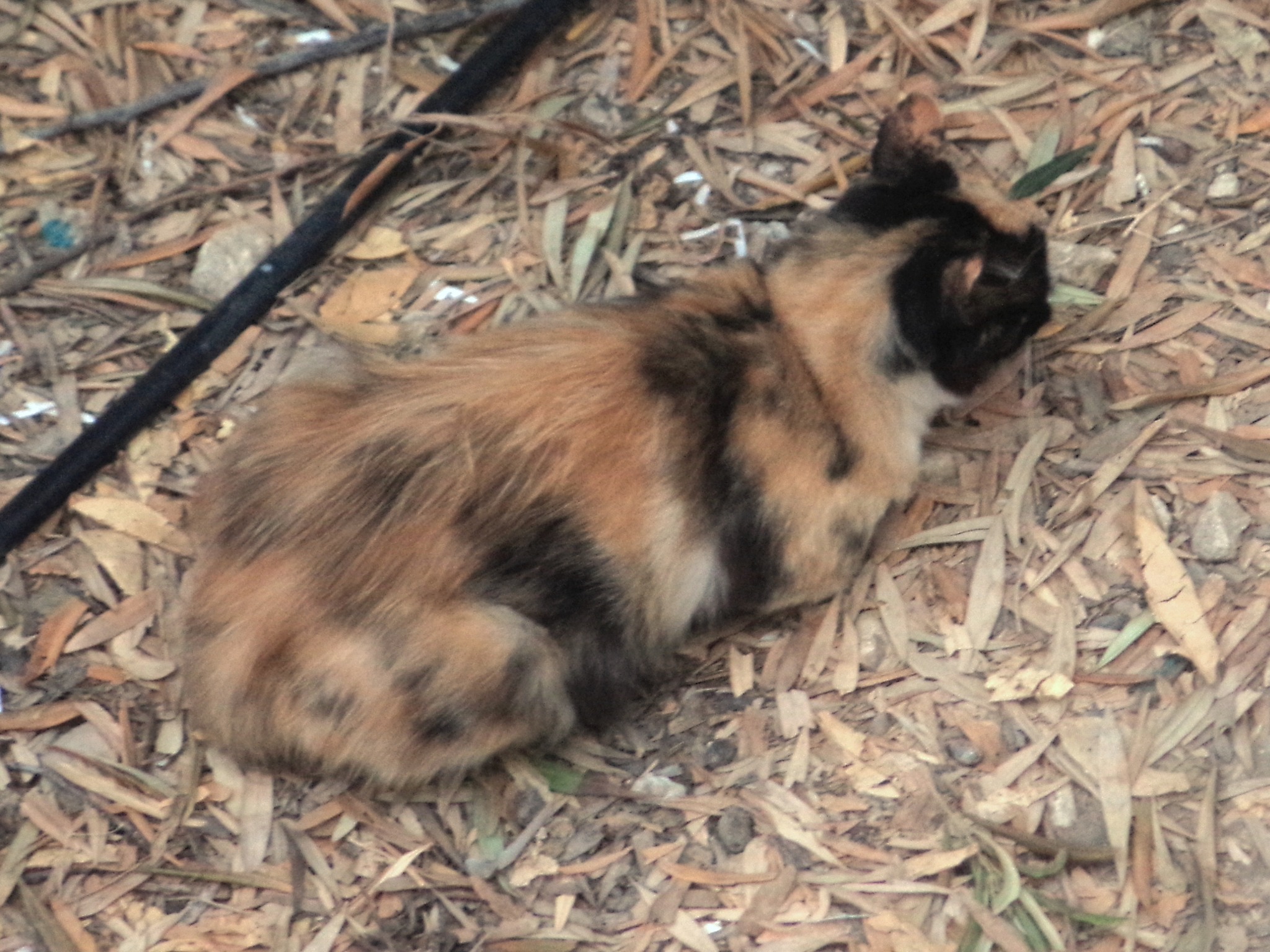
The dried olive leaves were the very colours of her coat and she seemed to enjoy their crisp texture; the layer of dry leaves under the tree formed an insulating layer from the damp earth beneath for weather when the long grass would have been too damp for a lady with a surprisingly fluffy coat.
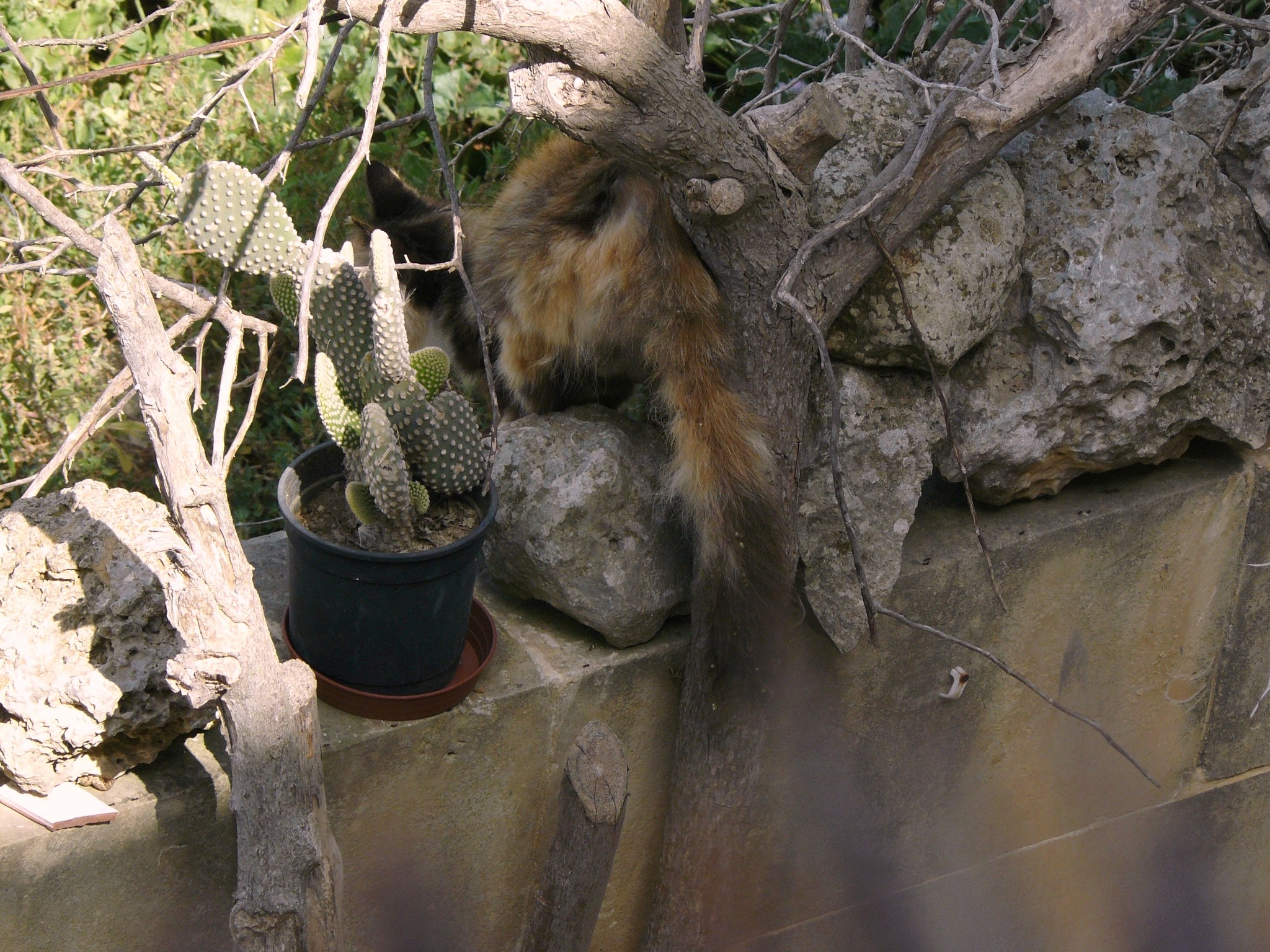
She even blended in with the weathered, limestone rocks, sitting chameleon-like atop the wall between the drive and field to survey the field, spot the kittens she had left playing there earlier, or see which other cats were approaching.
Even with chunks of bark scattered under the trees, The Cat still liked to lie close to the trees. Maybe the inherent warmth of the bark appealed to her – it was definitely a drier surface than the longer grass, and she was a cat who preferred the heat of the summer to the cold and damp of the winter.
The first time The Cat managed to find her way into the house, she ran under the dining table and then hid under a kitchen cupboard before dashing back out, and the second time she sat behind the door, looked around, then turned on her heel and marched out. Poor humans, she must have thought, living in this barren wasteland with no trees or grass.
The outdoors was where she belonged, where she was at one with her natural environment.
 thecatisbusy