

Caring for ill and injured feral cats, cats of whose history we knew almost nothing and who were not friendly or approachable, was a challenge and could be frustrating as their feral natures would not allow us near to them.
But if the cat was accustomed to humans or even friendly, the job of the humans was made easier. Sometimes diagnosing the problem was a big part of the challenge, and quite often certain injuries healed in their own time without any intervention.
Case Study Number 1 – Mr Tiffin
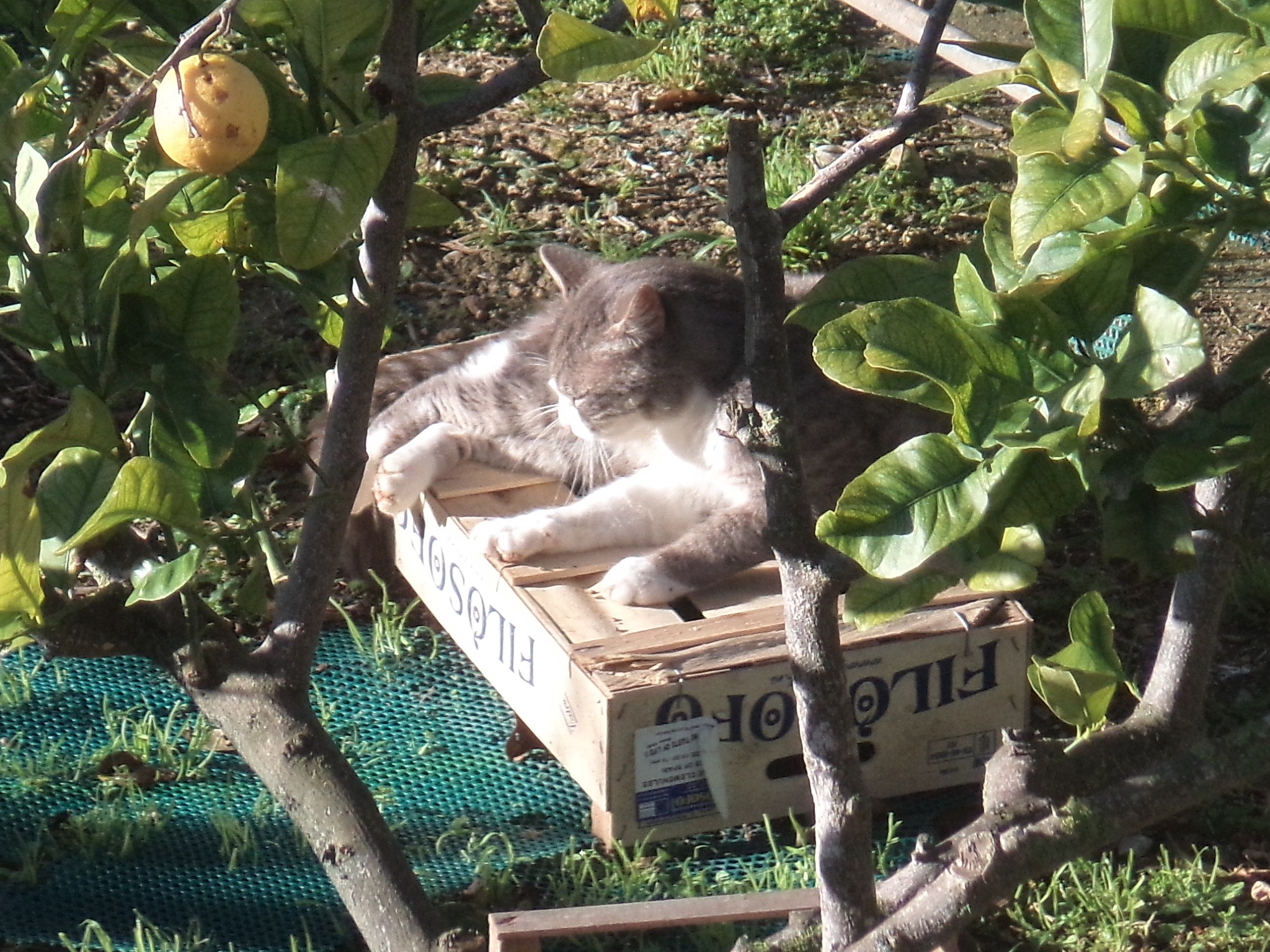
Mr Tiffin was a feral cat from the fields who visited The Cat’s garden for food and water, but, due to his feral nature, generally at times when the humans were not there. One day he arrived to eat, hopping and limping with his back leg. We were not able to approach him, but from observing him walking and trying to jump, we suspected he had dislocated his hip. Despite being in pain, he managed well (almost as though it was not the first time this had happened) and after a day or two, he started to gingerly put weight on his bad leg.
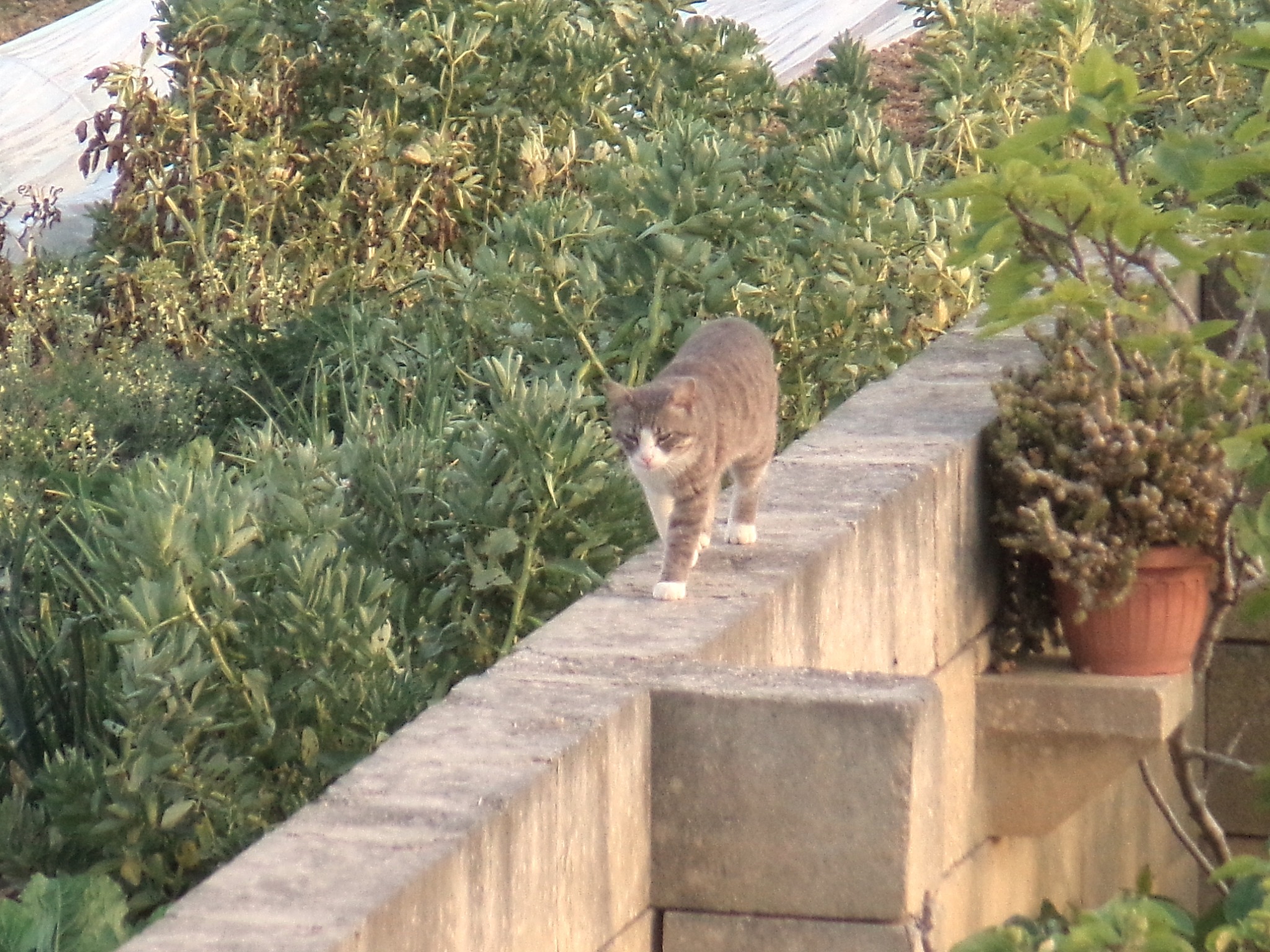
He walked awkwardly for a while and the injury recurred a year or so later, but he coped as he could jump from just one back leg and then use his extra-strong front legs to haul himself up onto the wall. We were happy to see that he had adapted to survive.
Case Study Number 2 – Dinky
Dinky was a friendly cat who had been dumped in the fields and came looking for food. One particular day he arrived walking awkwardly. After eating, he went to wash as usual and we noticed that he was unable to sit down – instead, he stood with his back to the wall and tried (unsuccessfully) to slide his back end down the wall to the ground. Obviously in pain, he took refuge in one of the pods, hiding at the back behind the netting which he piled up in the doorway so no one could see in. He was obviously very unhappy and, having observed him, we concluded that he had suffered a tail avulsion (aka tail pull or forceful pulling of the tail, causing soft tissue and nerve damage); our guess was that, cornered by another male in the field, Dinky turned round to run away (he wasn’t a fighter), and the other cat sunk his claws or teeth into Dinky’s tail, pulling it back as Dinky ran forward.
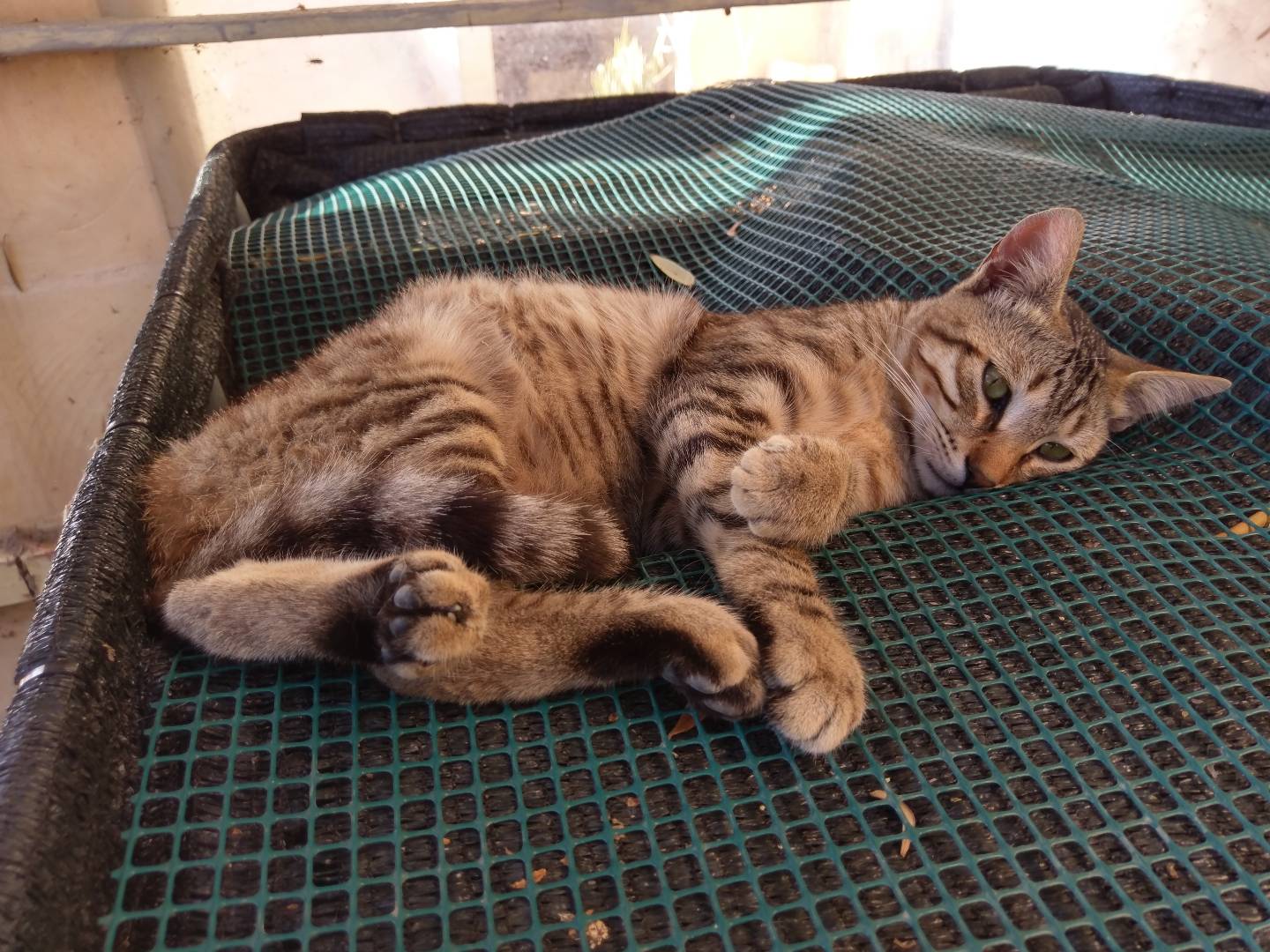
Once again, time was the best healer, Dinky had somewhere safe to stay, he had food and water and he was young and strong, and he made a full recovery.
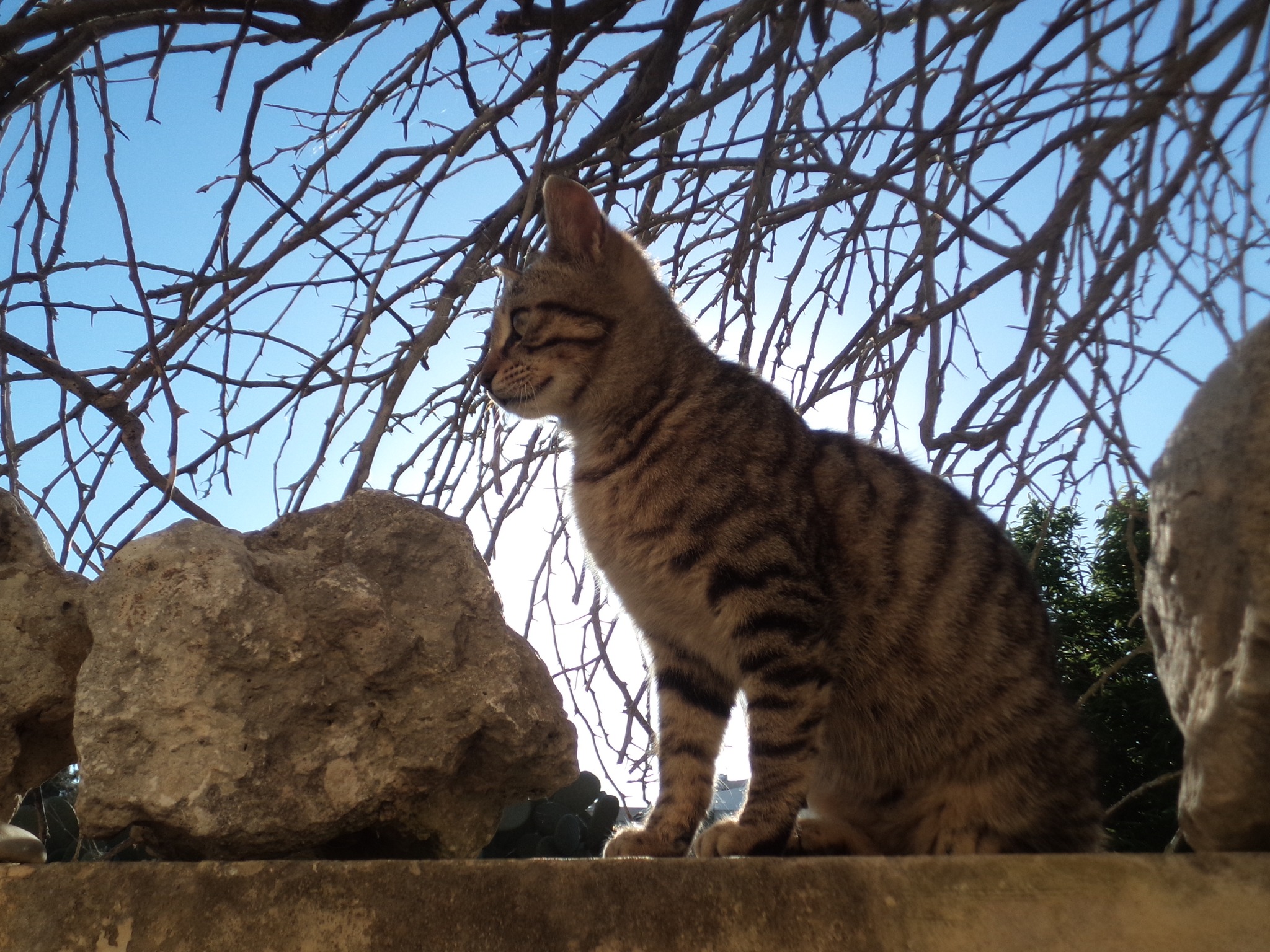
Many cats were not this lucky with their various injuries, but these two very different cats with very different injuries managed to adapt to their limitations for long enough for their bodies to heal themselves.
 thecatisbusy