
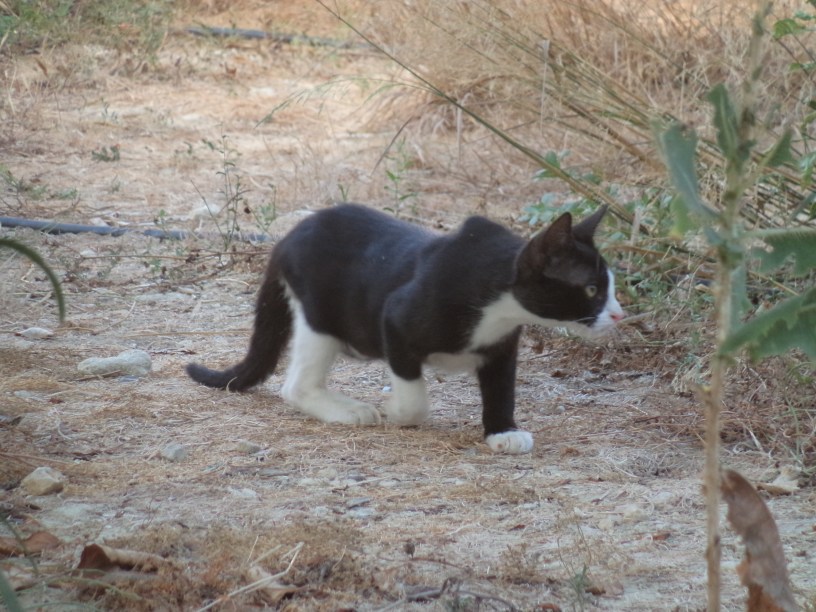
Hunting is something that comes naturally to cats, and the cats we cared for were no exception. There were bowls of food available 24/7, and yet the cats still hunted.
Watching kittens chasing butterflies and playing with beetles is all very cute, but they are simply honing their hunting skills, perfecting their eye-to-claw technique, and learning what’s tasty and what’s not. And for the feral mothers for whom we cared, bringing up a litter included teaching their kittens hunting skills (not to mention leaving generous gifts for the humans on the terrace, in the drive and front path).
The Cat brought her first litters up in the fields and she hunted for them. She was a good and efficient hunter, and her speciality was rats.
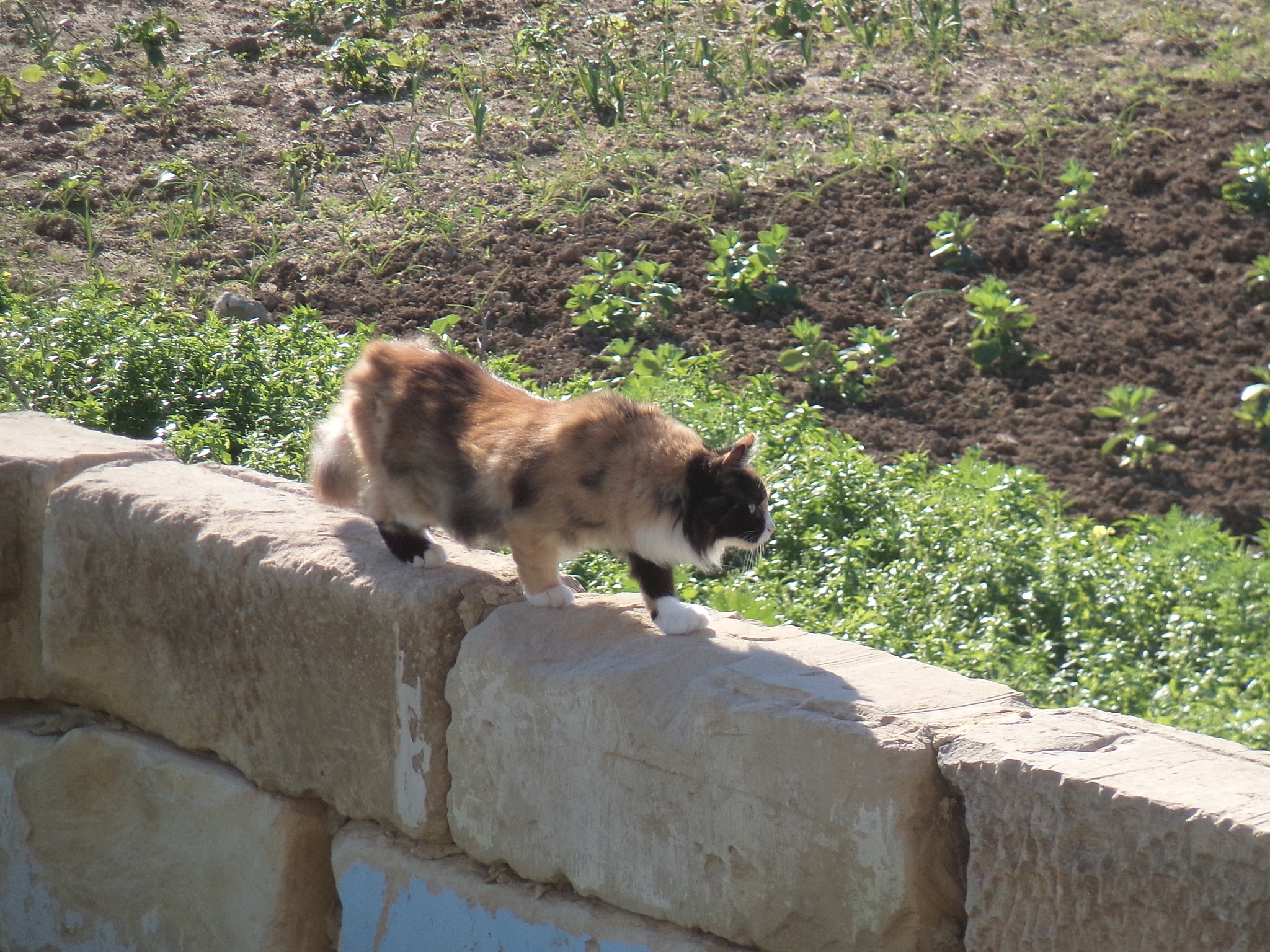
Later, when Sprocket and Pedal were a few months old and became seriously ill (probably due to ingesting poison in the fields), The Cat brought them a rat. It was her get-well-soon gift to them (although its lack of a head told us that she had already sampled it, just to make sure).
The Cat’s daughters Sprocket and Whitefur inherited their mother’s hunting instinct, honing their skills as young cats on locusts in the garden. Whether Sprocket actually caught this locust is a moot point, as the chase was as important as the catch (especially for a well-fed youngster).
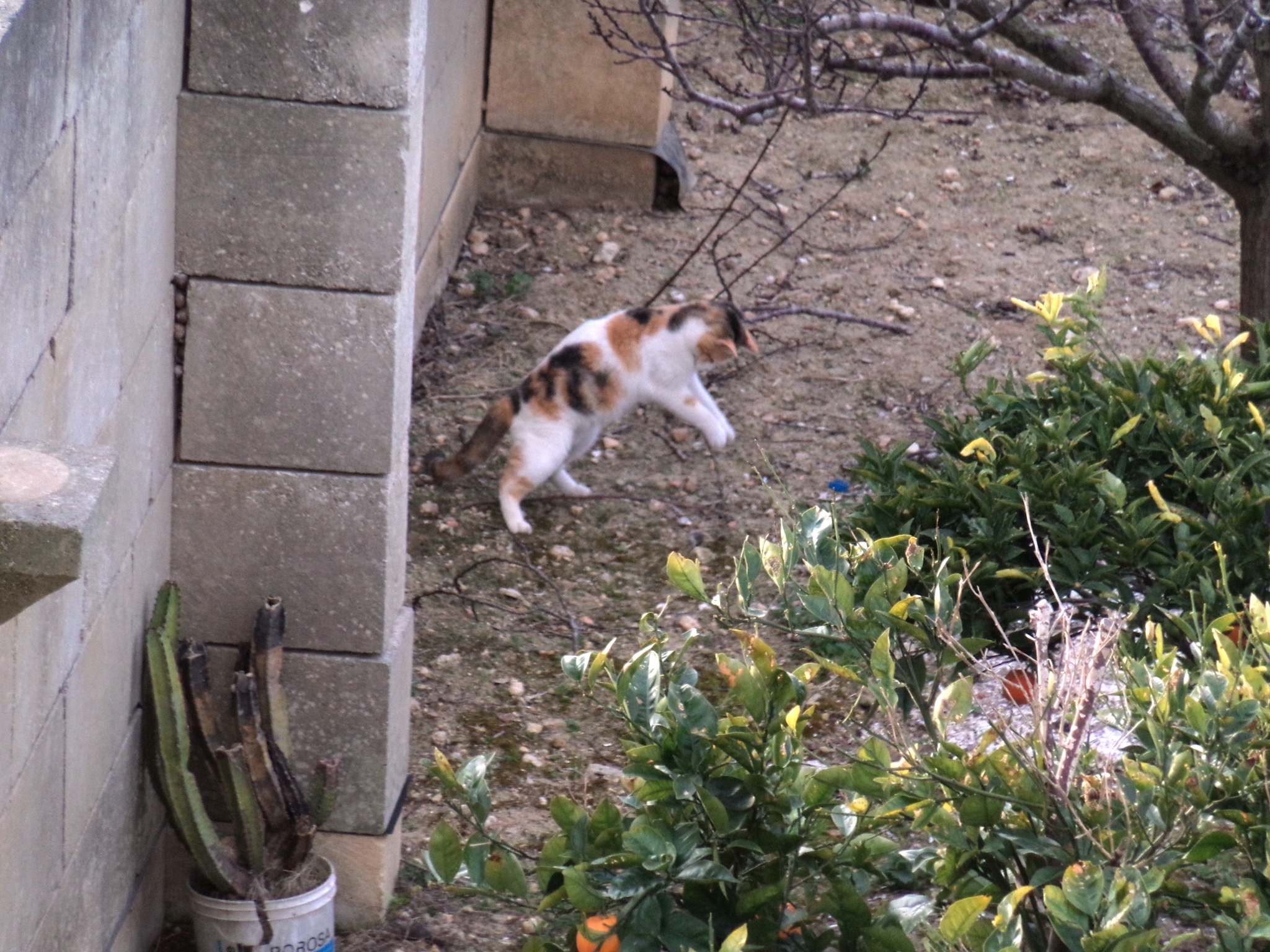
Whitefur had definitely overseen the demise of this locust – once again, she and her family were well-fed but this did not deter them from being driven by their hunting genes to do what comes naturally.
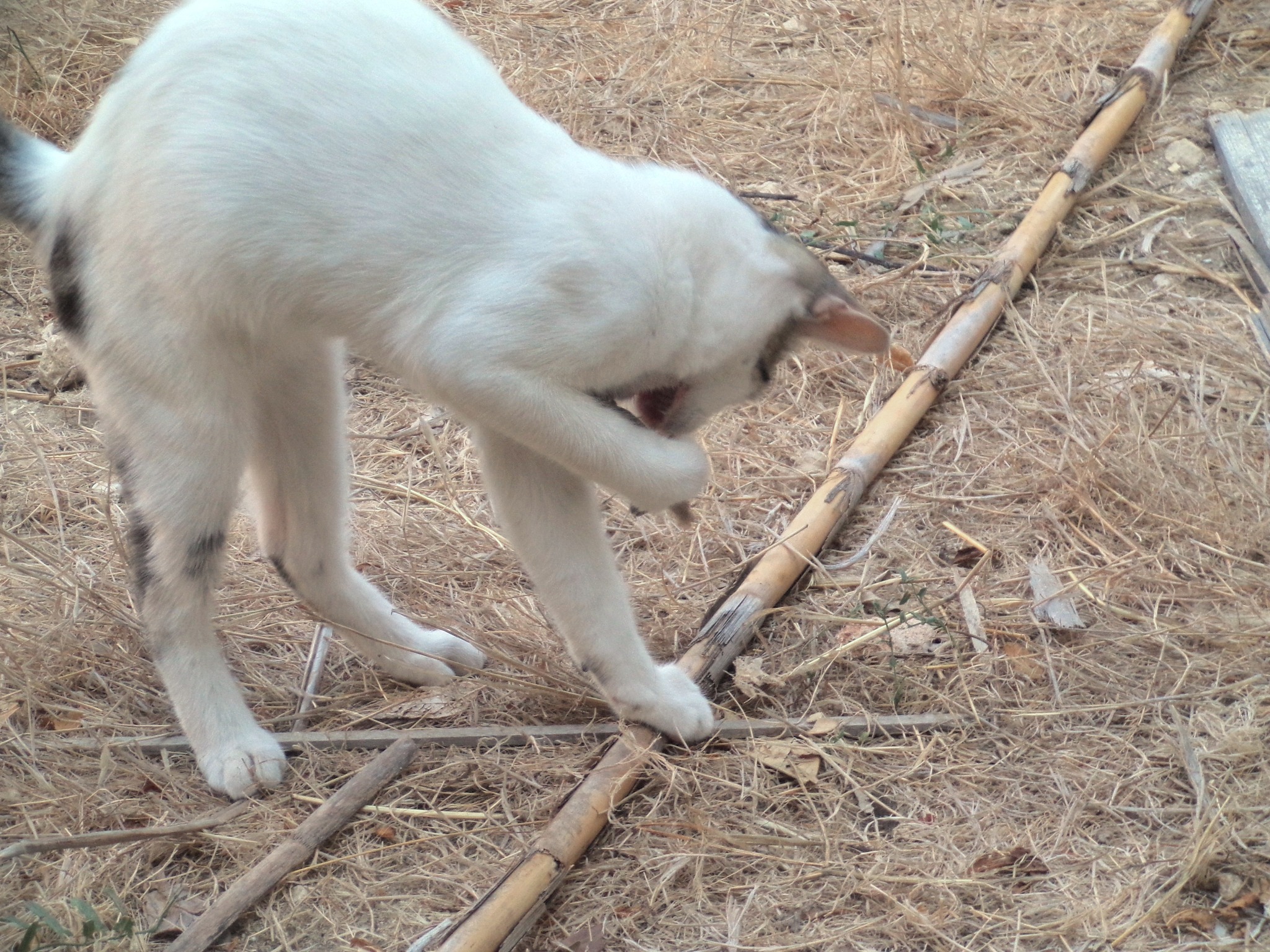
And when Whitefur’s brother Blackfur stole his sister’s prize locust and refused to give it back, Whitefur was most upset. But it was a smart move for Blackfur, whose sister had done all the hard work in catching the locust, only for him to steal it from her at minimal effort.
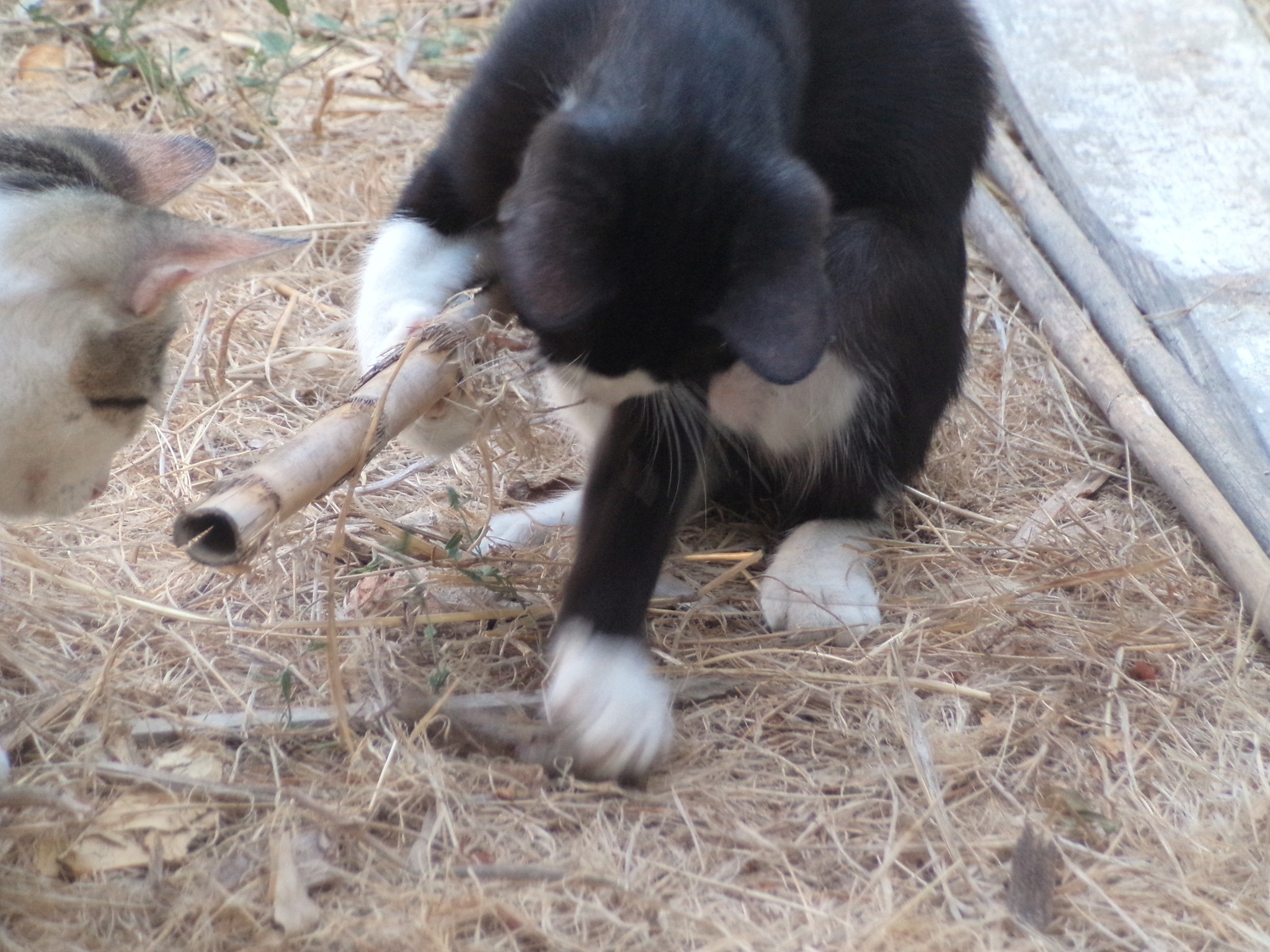
Sadly for the cats’ victims, it seemed that no amount of food bowls would prevent the cats from hunting – the genetic predisposition was just too strong.
 thecatisbusy