
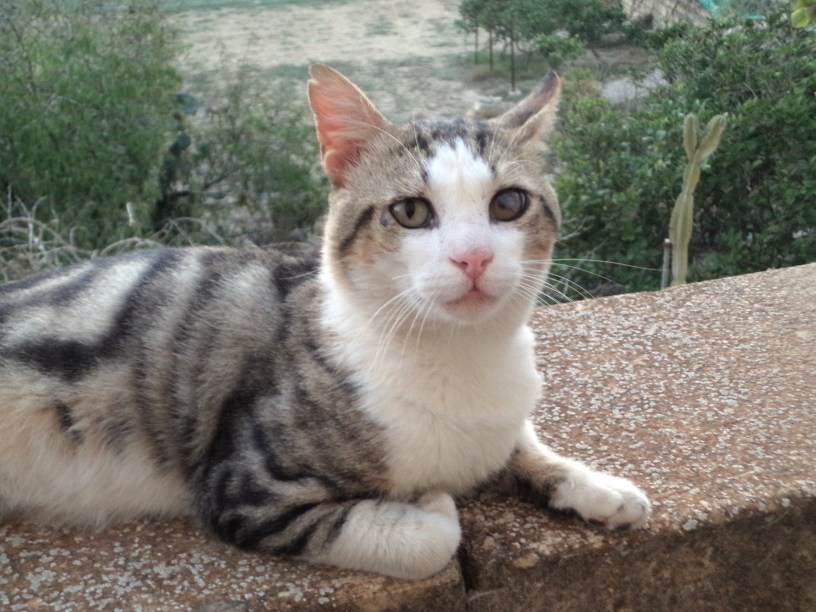
Eye problems are not unusual in feral cats. There are viruses to which kittens are especially vulnerable which can lead to partial or complete loss of sight, fighting injuries in adult cats (especially males), and the usual age-related eye problems such as cataracts, to which humans are also prone.
Not all kittens who contract viruses at an early age survive them, and, for those that pull through, sometimes the legacy is impaired vision.
When Dawn brought her kittens to the garden for weaning they were already very unwell and, having been born and raised in the fields, were not used to humans, which made it more challenging to treat them. Her son Cetti’s sight was never going to be perfect, but he managed well and was as adventurous as any of the other kittens. As he grew bigger, it became more difficult to catch him twice a day for his eye-cleaning and eyedrops routine as he quickly learnt that the high wall at the top of the olive tree was a safe place and somewhere that the humans would not be following him.
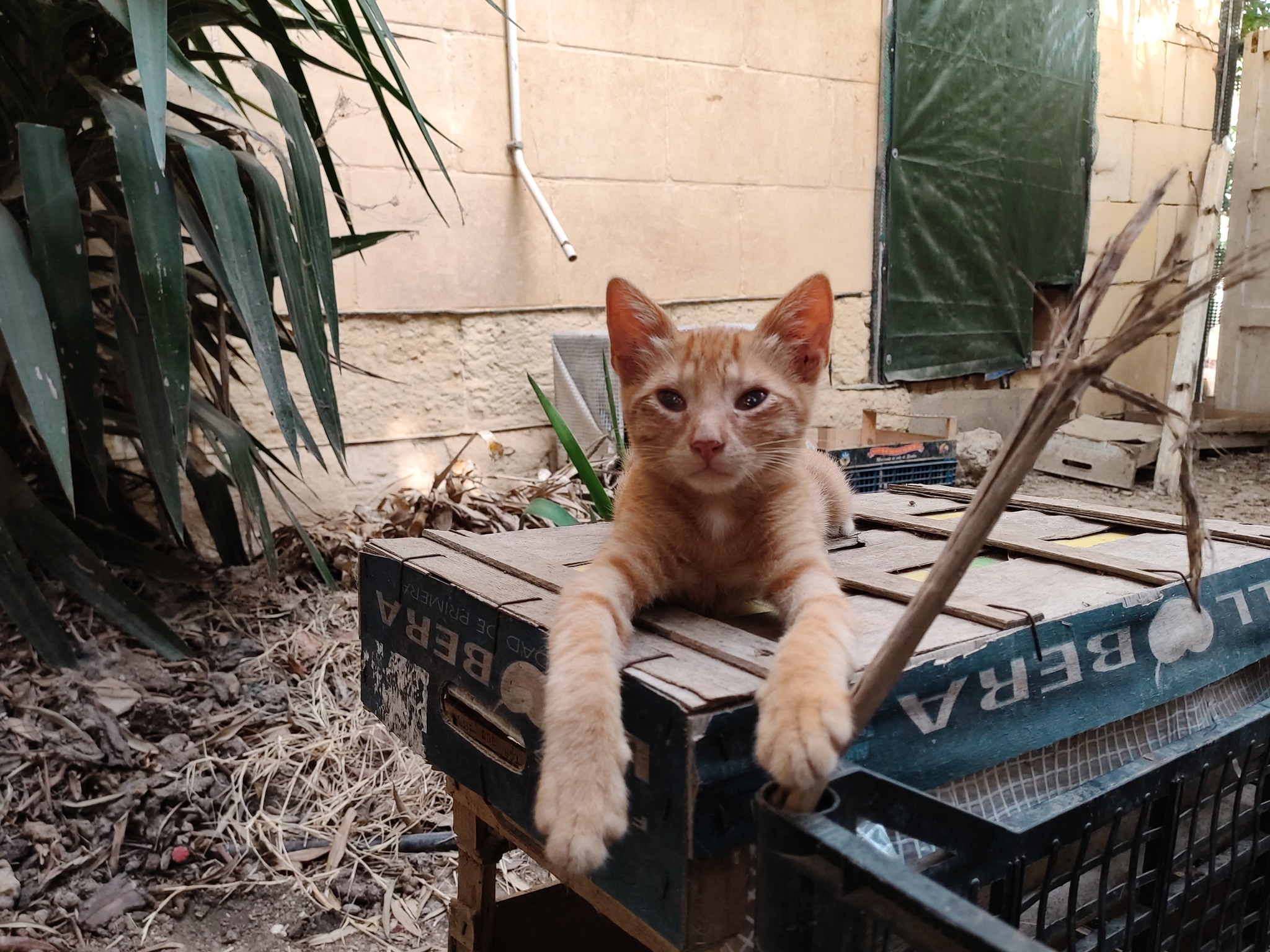
It took a while to encourage Linnet’s eyes to open as they were so firmly stuck closed. Once opened, it was obvious that they were clouded and she would be spending her life partially sighted; kittens with eye infections due to viruses were treated with antibiotics for the initial infection, and daily eye-cleaning and drops thereafter. Linnet enjoyed the twice-daily chase around the garden at eyedrops time; she would lead the humans a merry dance before graciously rolling onto her back and allowing herself to be picked up.
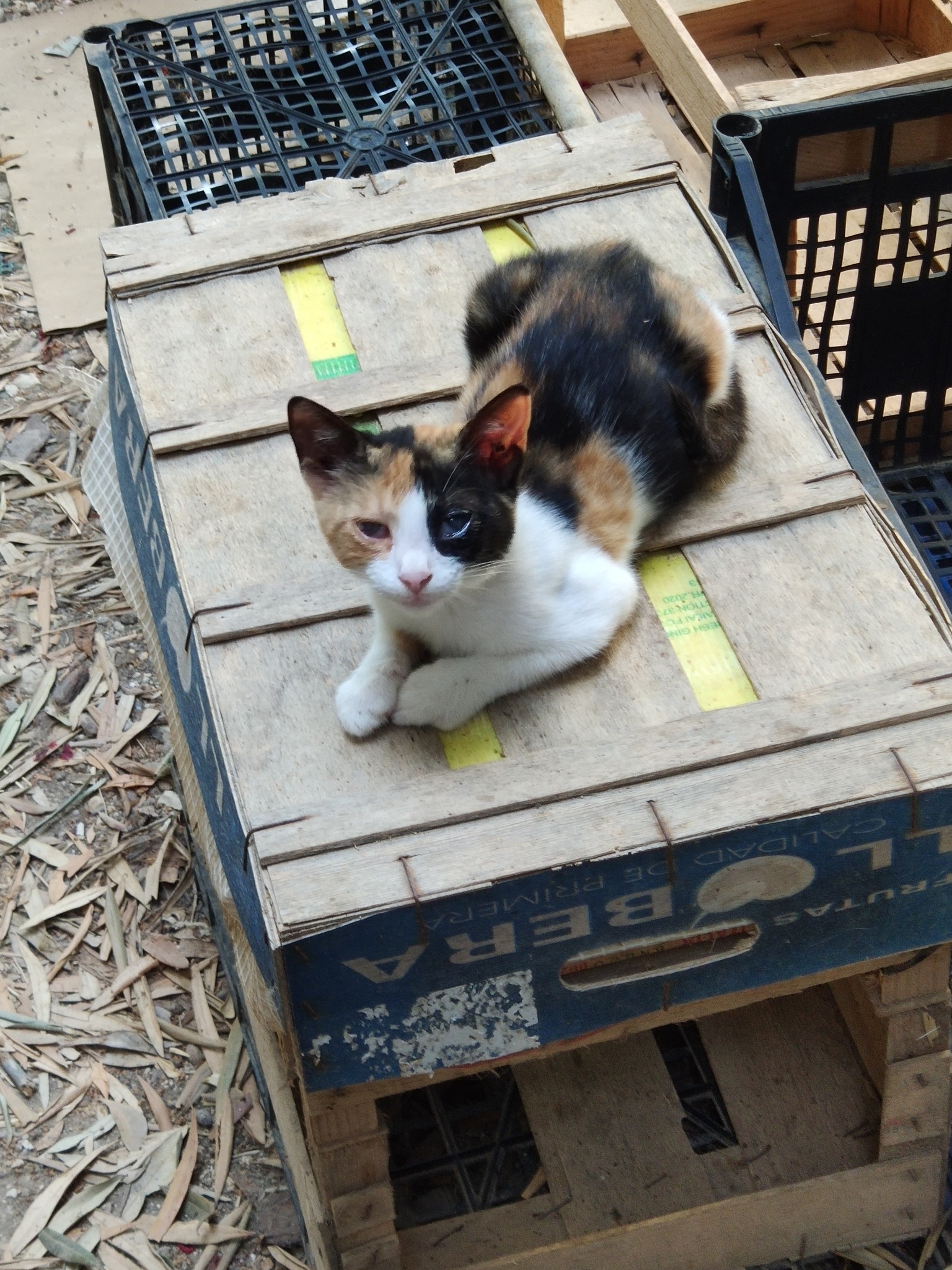
Pippin’s kittens Pascha and Pascal suffered from the same problem, probably due to the same virus as Cetti and Linnet. Their vision was more seriously impaired, but sometimes the best that can be done is to maintain the status quo with cleaning and eyedrops, and prevent any further loss of sight. Pascal was quite resigned to eye-cleaning and eyedrops, and enjoyed being caught after a chase round the garden twice a day.

His brother Pascha, on the other hand, hated eyedrops and, as he was growing into a big, strong cat, it became a daily battle which the humans could not always win.
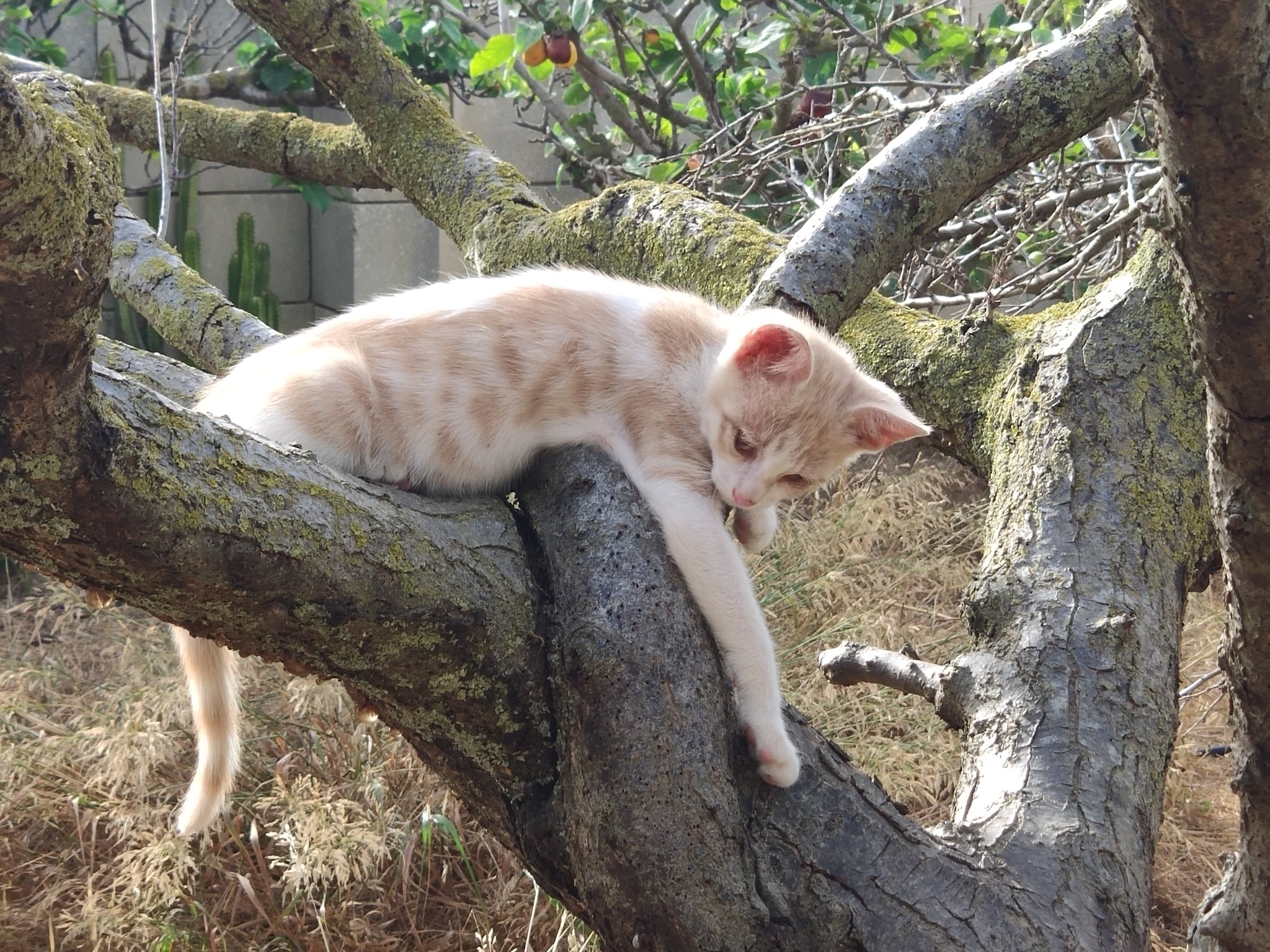
The first adult cat who arrived with partial sight was Pikabu who lived up the road. He had a clouded left eye and had lost some of his sight after being rescued as a small kitten.
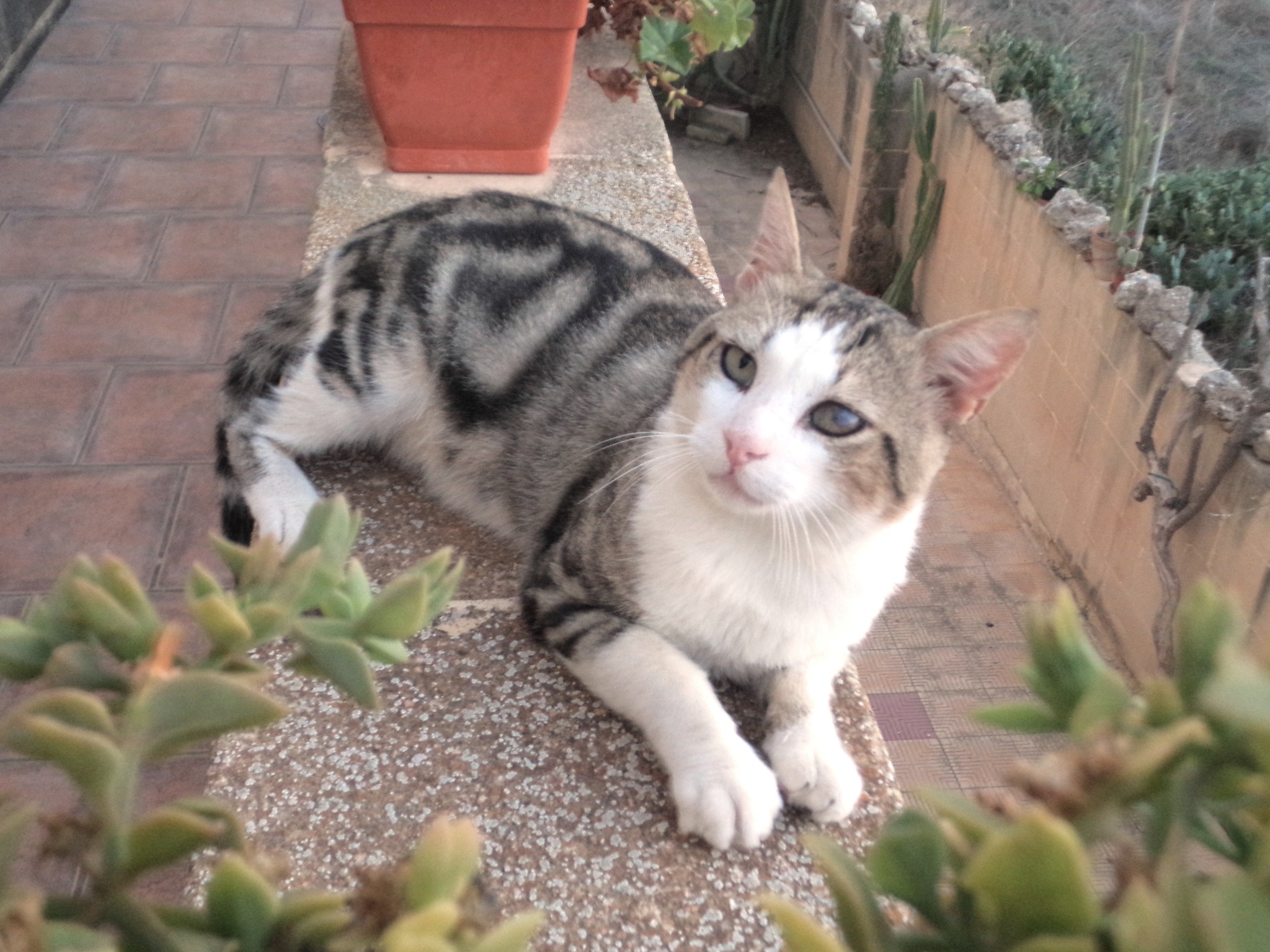
The clouding of his left eye is visible on the photo.
il-Ħadd 2.0 may or may not have been the original il-Ħadd who disappeared a year previously. If it was the same cat, he returned with what appeared to be only one working eye.
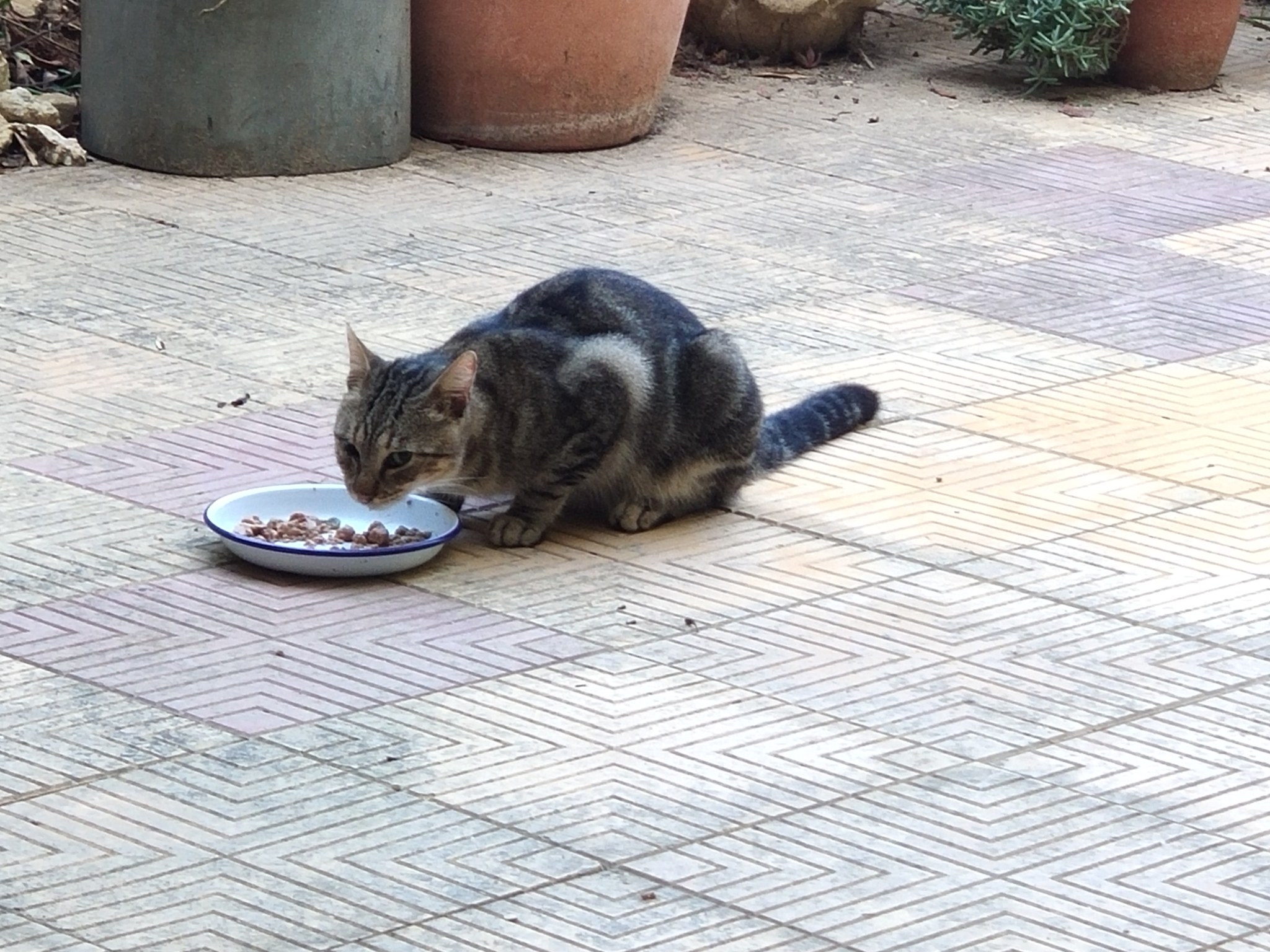
He was completely feral and it was impossible to get close enough to see what the problem was, so the best we could do was to keep him well fed and watered, which would allow him to live his life as he pleased.
And then there was Thundercat who came from a garden across the fields as a young adult. He had already lost some of the sight from his left eye, but had adapted well.
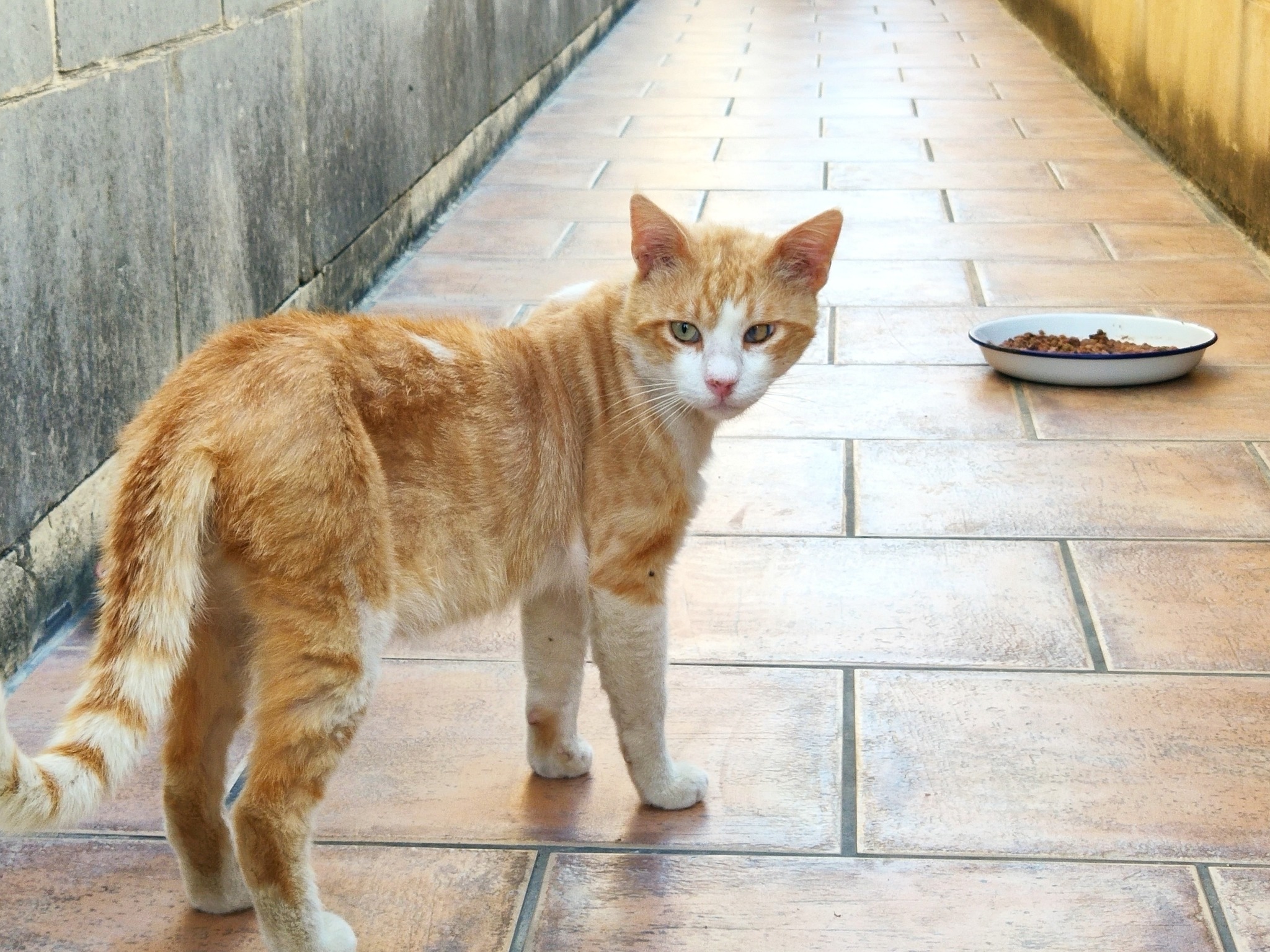
The humans were always careful not to approach him from his left side as he could be easily startled and, once again, the difference between his eyes is clear in the photo.
Cats are masters at adapting and, for those who had lost some of their sight as kittens, probably had no recollection of ever being fully sighted. They had no idea that the world as seen through other cats’ eyes was any different to their own world, and so they lived their lives happily despite what we might consider constraints or disabilities.
 thecatisbusy