
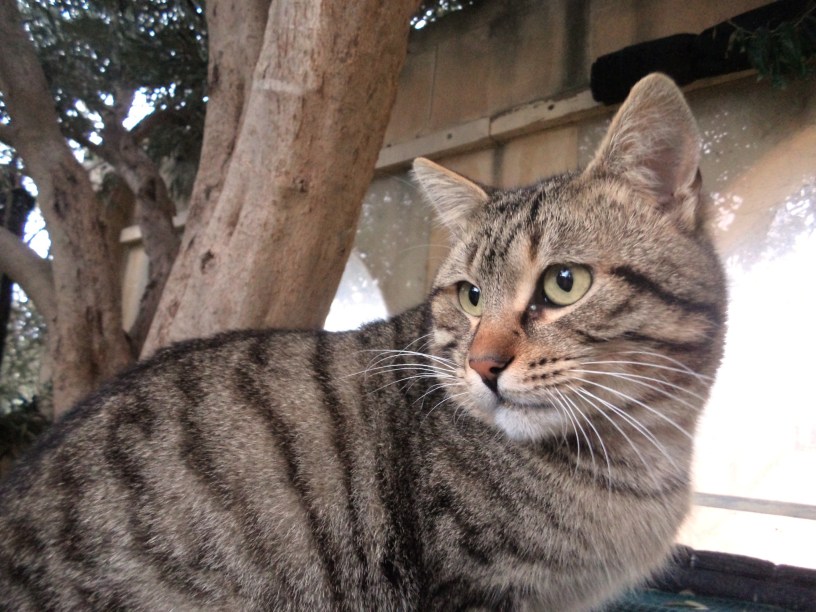
Dinky, for those who don’t know, was dumped in the fields in the early spring of one year. It was a favourite time for dumping unwanted pets as there was a big event on The Cat’s tiny island which would attract many people. It seems that some of them would arrive for the weekend with a dog or a cat, and depart without. This is a nasty habit which sadly persists to this day.
Dinky was a smart cat and, as he was used to humans (and, at only a few months old, still growing and permanently hungry), it was relatively easy to get close enough to take photos of him.
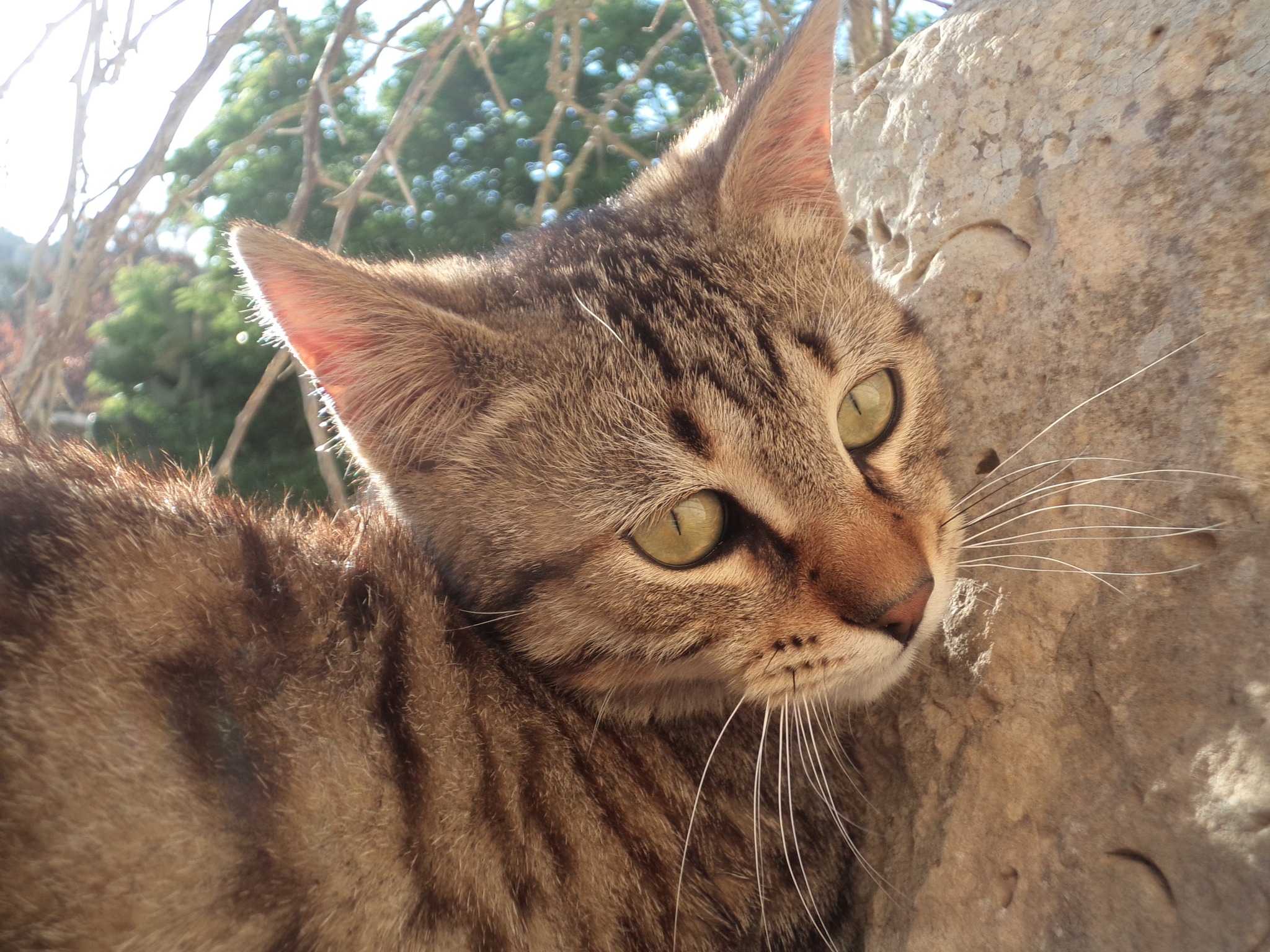
He was definitely the loudest new arrival we had ever had and Mystery, who he was following around the field, had a desperate look in her eye when she arrived with this small, persistent, incessantly vocal stranger in tow.
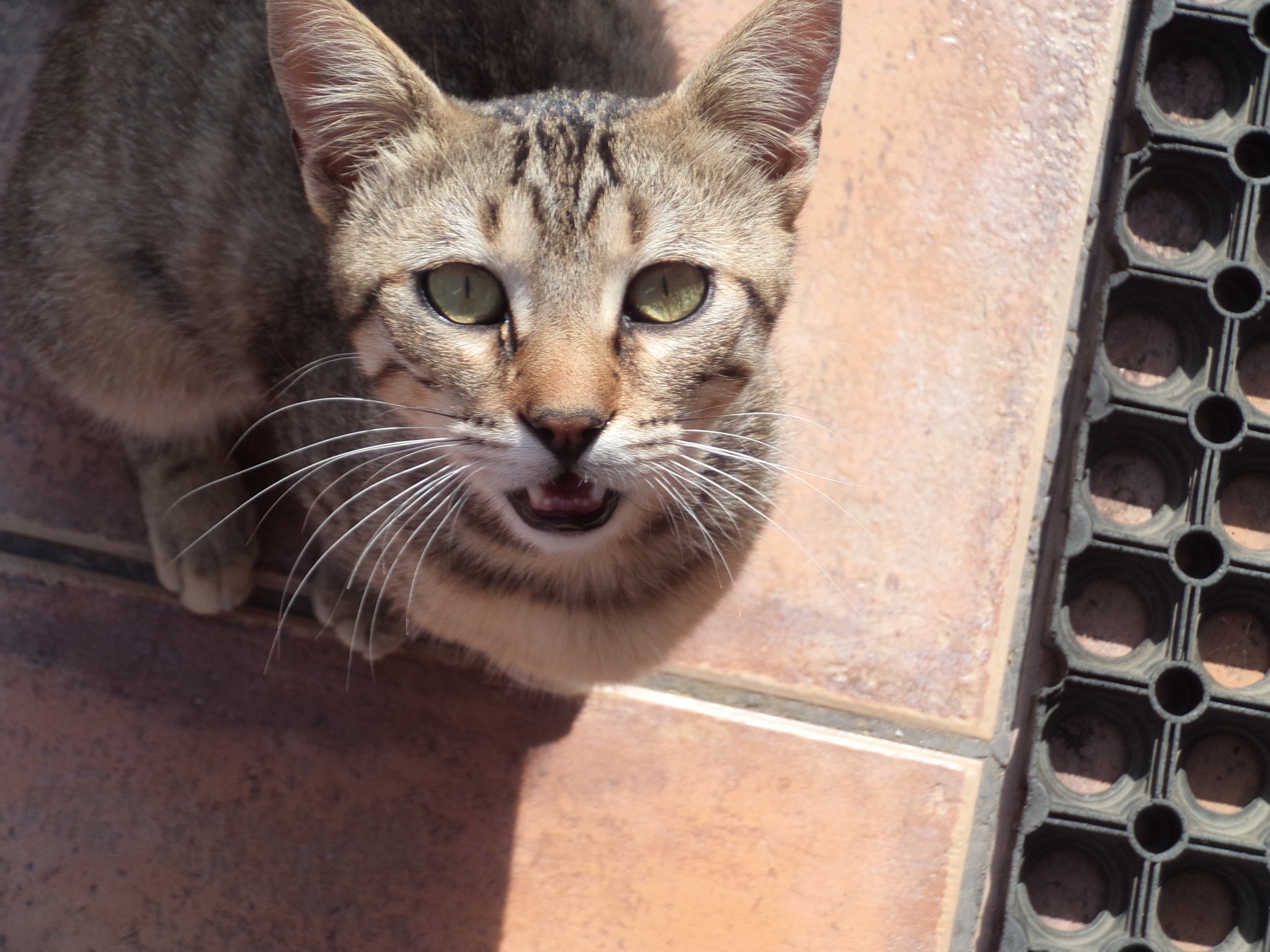
At least Dinky had a hearty appetite so the neighbourhood was at least assured some peace and quiet while he was busy eating.
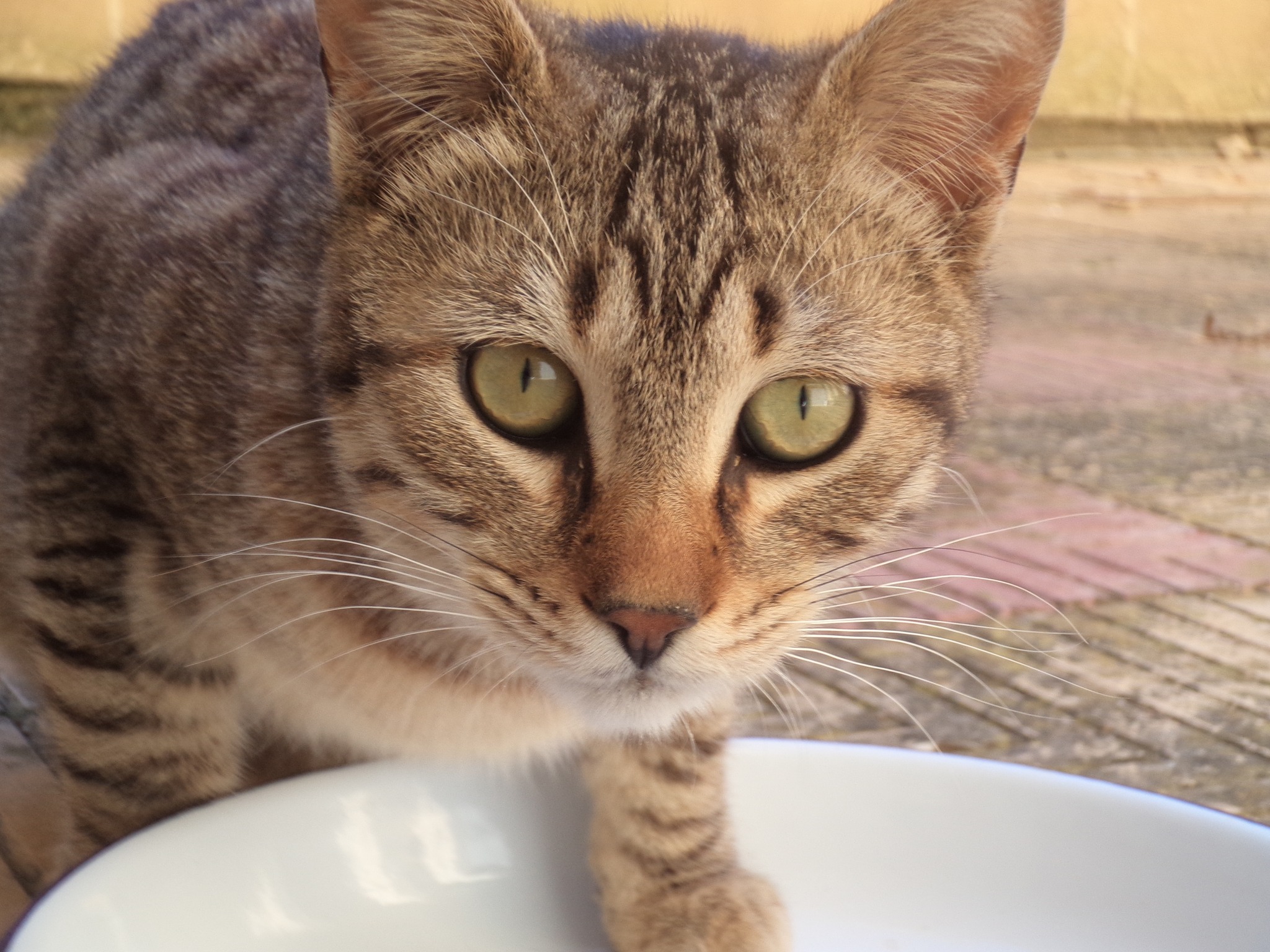
It wasn’t long before we realised that Dinky was a Bengal cat. He had all the usual characteristics – the ticked fur, the black pads, dark nose leather, muscular body, the long face and pointed chin, not to mention the wailing – a pretty comprehensive list except for one thing which we discovered over the following summer, which was that Dinky hated water.
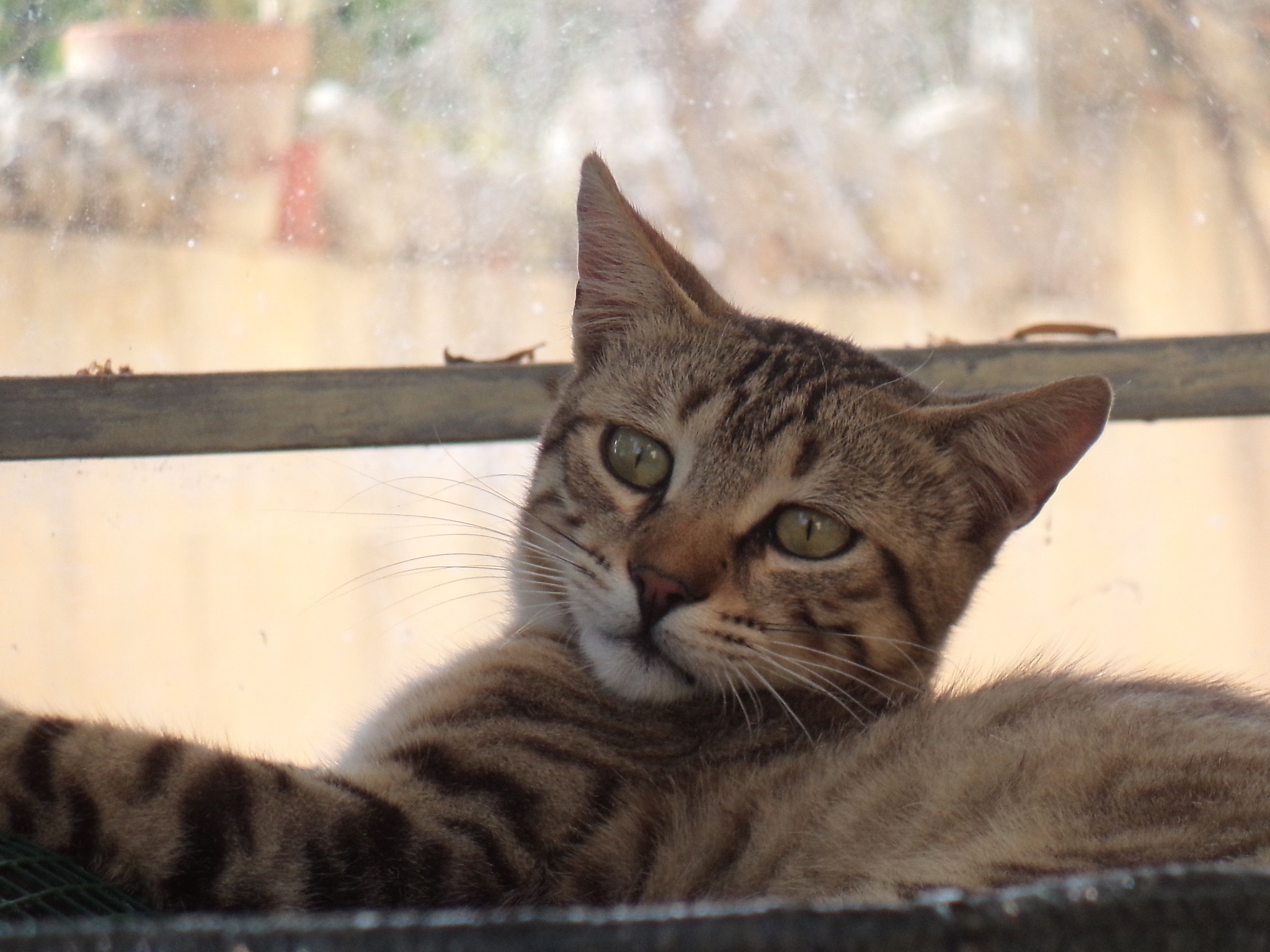
He had a wide variety of expressions (some comical), and impressive whiskers to match, and was one of the most overtly ‘dramatic’ cats for whom we have had the pleasure to care.
His typical boundless energy found an outlet when he buddied up with Lightning; a best friend who was a kitten was exactly what Dinky needed, and he was surprisingly gentle and understanding with little Lightning as they play-fought, ate, and napped together.
When Lightning left the garden, Dinky remained for a while. He had become a sensitive cat, quite an empath, and in later months was instrumental in guiding Kiwi and other needy cats to the garden.
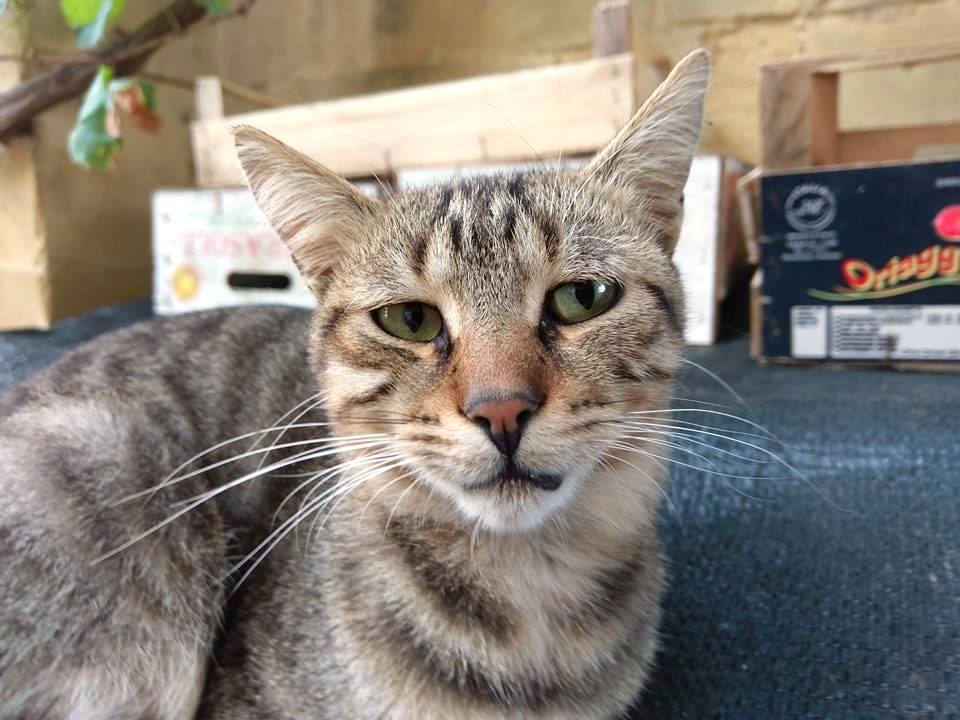
With his best friend gone, Dinky turned his attention to the front path where there was more activity involving both humans and feral cats from the fields. Dinky had exhausted the Garden Family; The Cat had been unimpressed when he first arrived and chased him out, but he had worn her down and she had gradually accepted him. But The Cat was not a demonstrative cat, and Dinky needed stimulation, he needed comings and goings, different faces, legs, feet and paws to keep himself occupied.
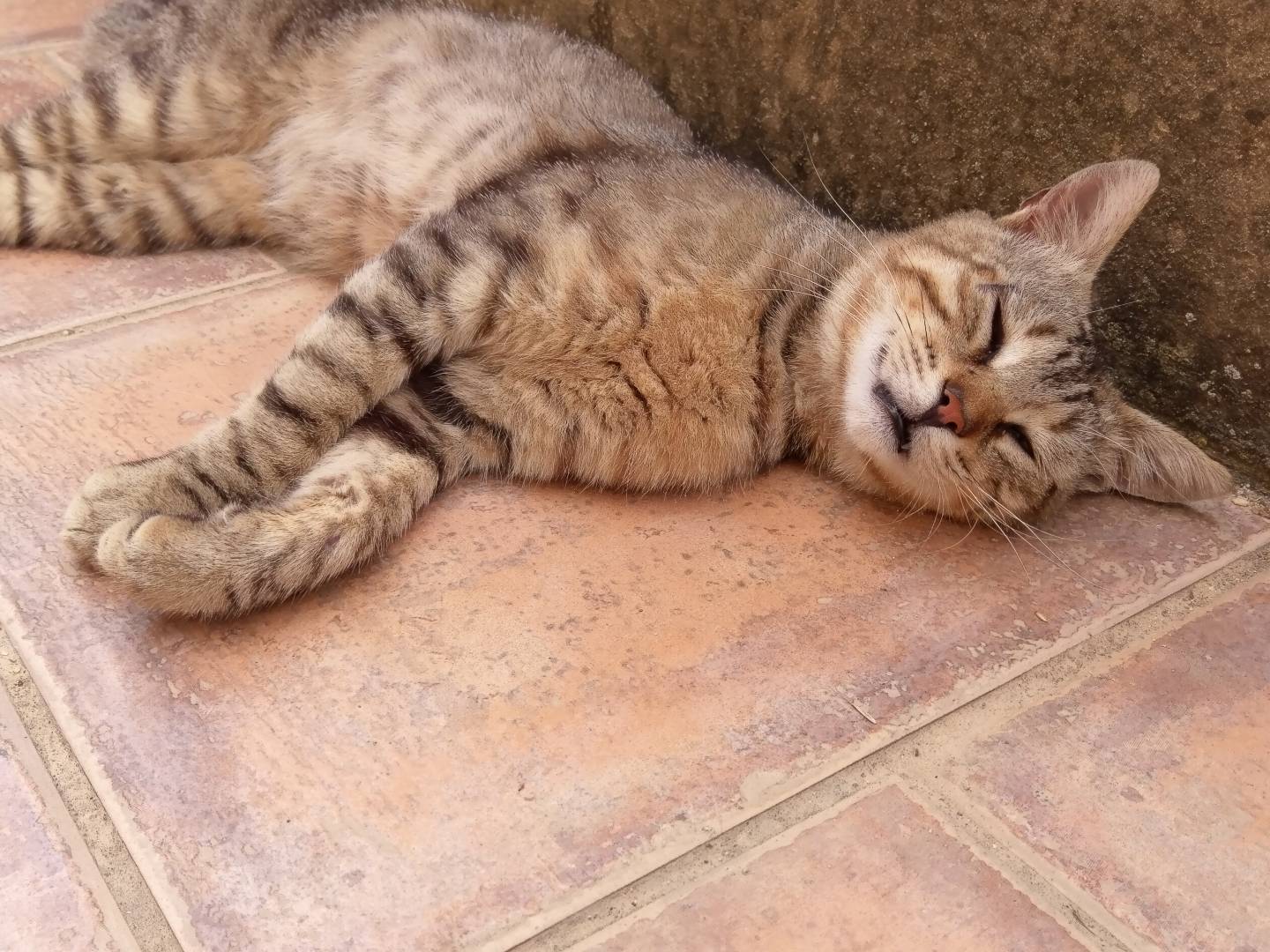
Dinky was one of the most sociable cats who we looked after; he was great company, and was gifted with the ability to make any normally simple tasks (such as washing the cats’ bowls or watering the plants) into a major and lengthy undertaking.
Such was life with a hyperactive Bengal cat.
 thecatisbusy