
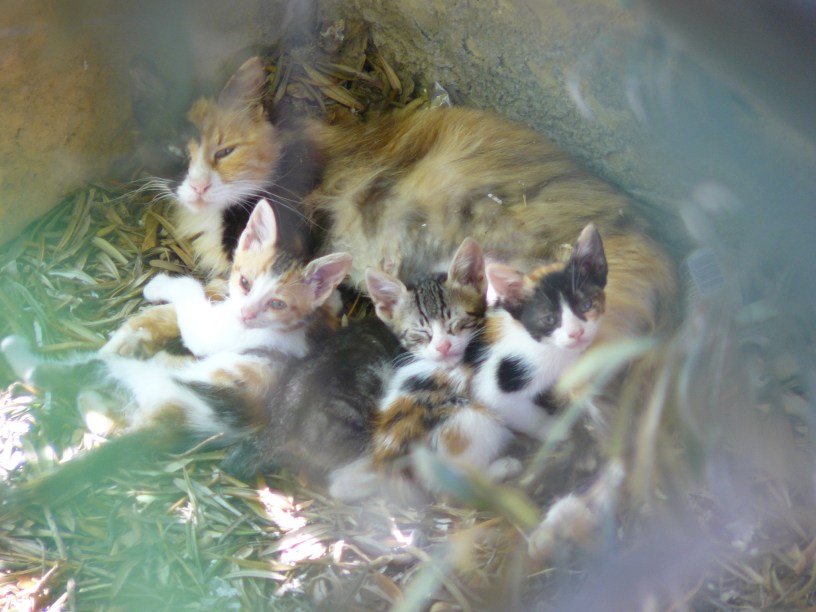
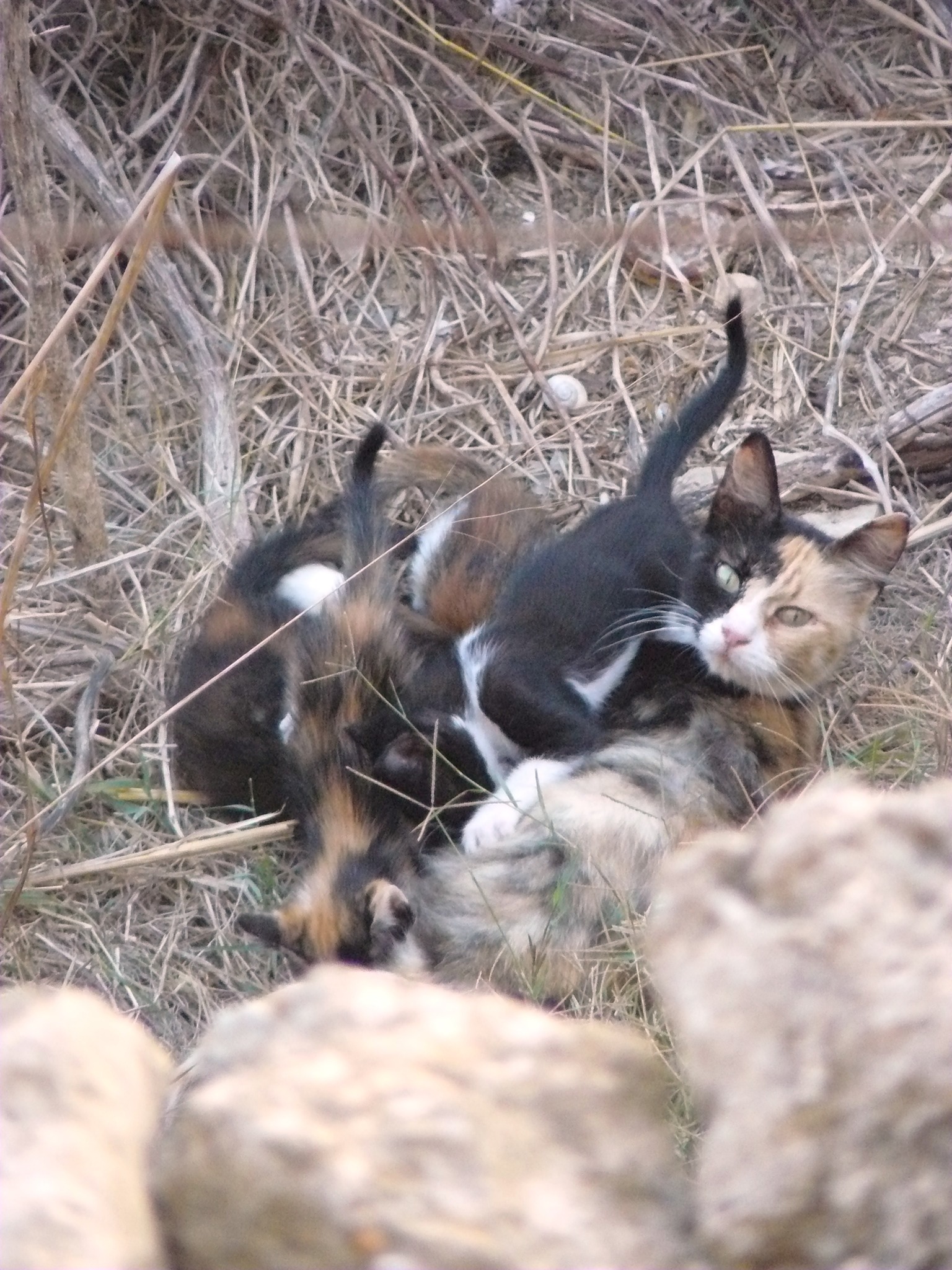
The Cat enjoyed motherhood. Every cat has her own way of raising her young, and some might say that The Cat could be aloof and distant with her kittens, and not always as attentive as some other feline mothers. But this was just The Cat’s way – her kittens were having a feral upbringing, making them resilient, self-sufficient and independent at an earlier age than kittens born into a more secure and safe environment. And they loved their mother, they remained close to her even as adults, loyal and deferential.
One of The Cat’s early litters was Fred (a smart tuxedo boy) and his sisters Fickle, Fleckle and Drip, were born in the adjacent field. They spent the first few weeks of their life there, and The Cat would come over the wall to the drive for food and water. Although The Cat was not socialised, she was keen for the humans to see what she was doing, and to admire her family.
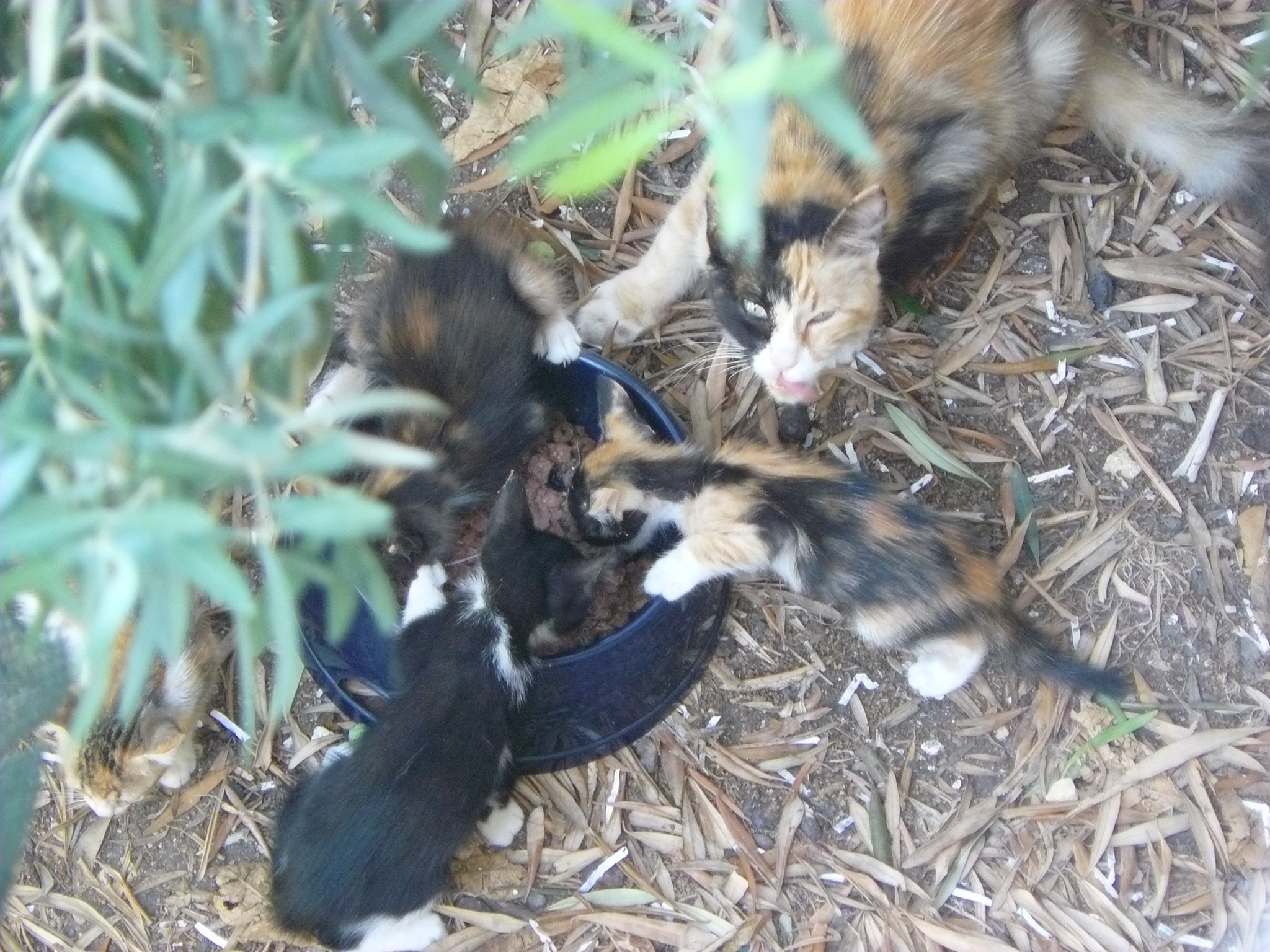
When it was time for weaning, The Cat brought her kittens to the drive and introduced them to solid food and water.
From there, they soon learnt to follow her up and over the high wall and into the garden. There they had a safe environment, food and water, and could explore the garden and the fields on either side. The Cat was a proud and contented mamma, and more relaxed now that her family was in the garden.
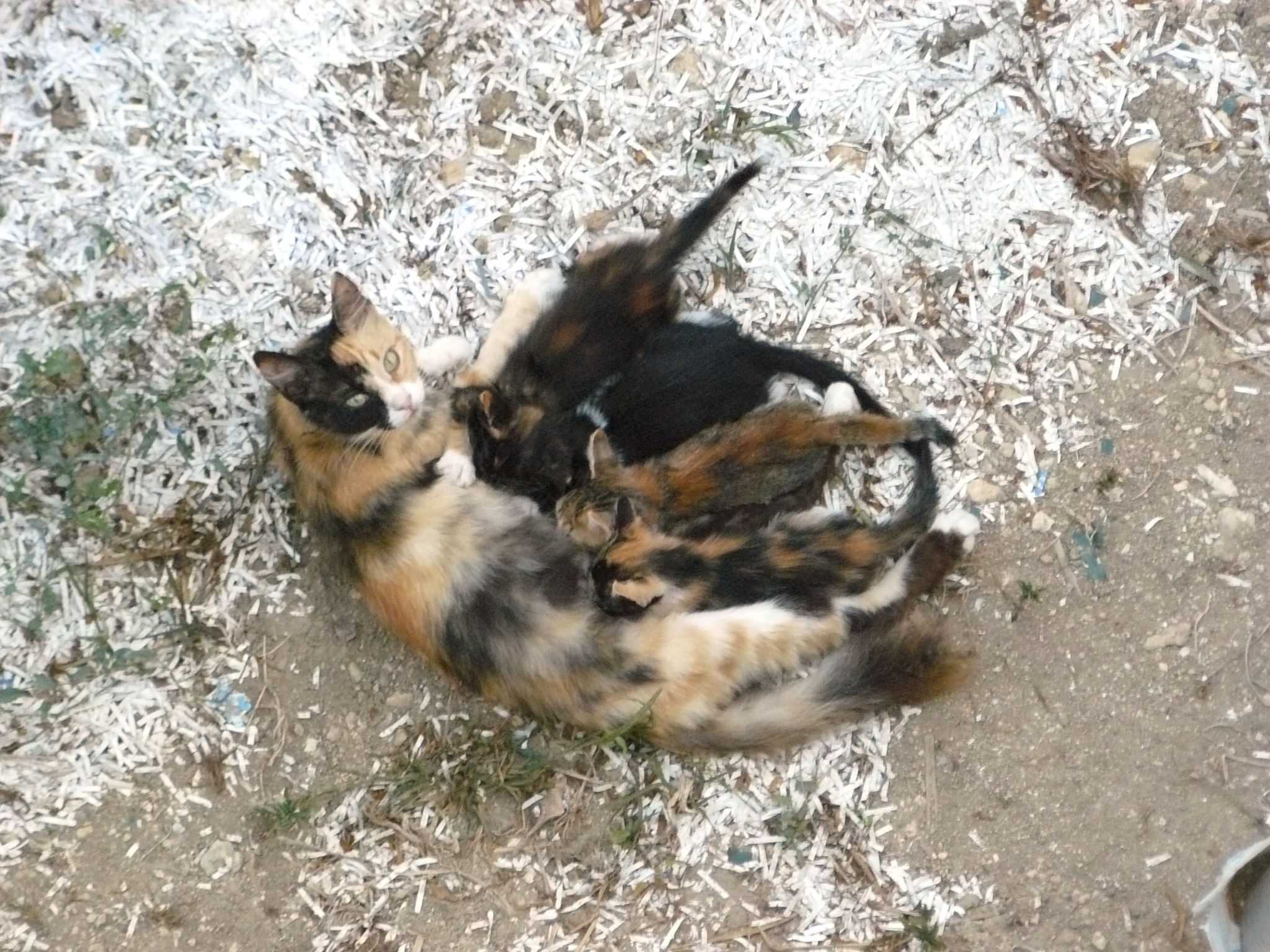
Another litter which The Cat gave birth to in the field was Ratchet (a calico girl), Sprocket (another calico girl, but with more dilute colours) and Pedal (a grey tabby boy). Once again, they spent their first few weeks in the fields until The Cat brought them to the garden for weaning.

They were a confident bunch but, sadly, Ratchet (who had always seemed frail by comparison with her brother and sister) stopped growing at a couple of months old and passed away a few weeks afterwards. Until then, she had been a happy girl and they had shared good times together.
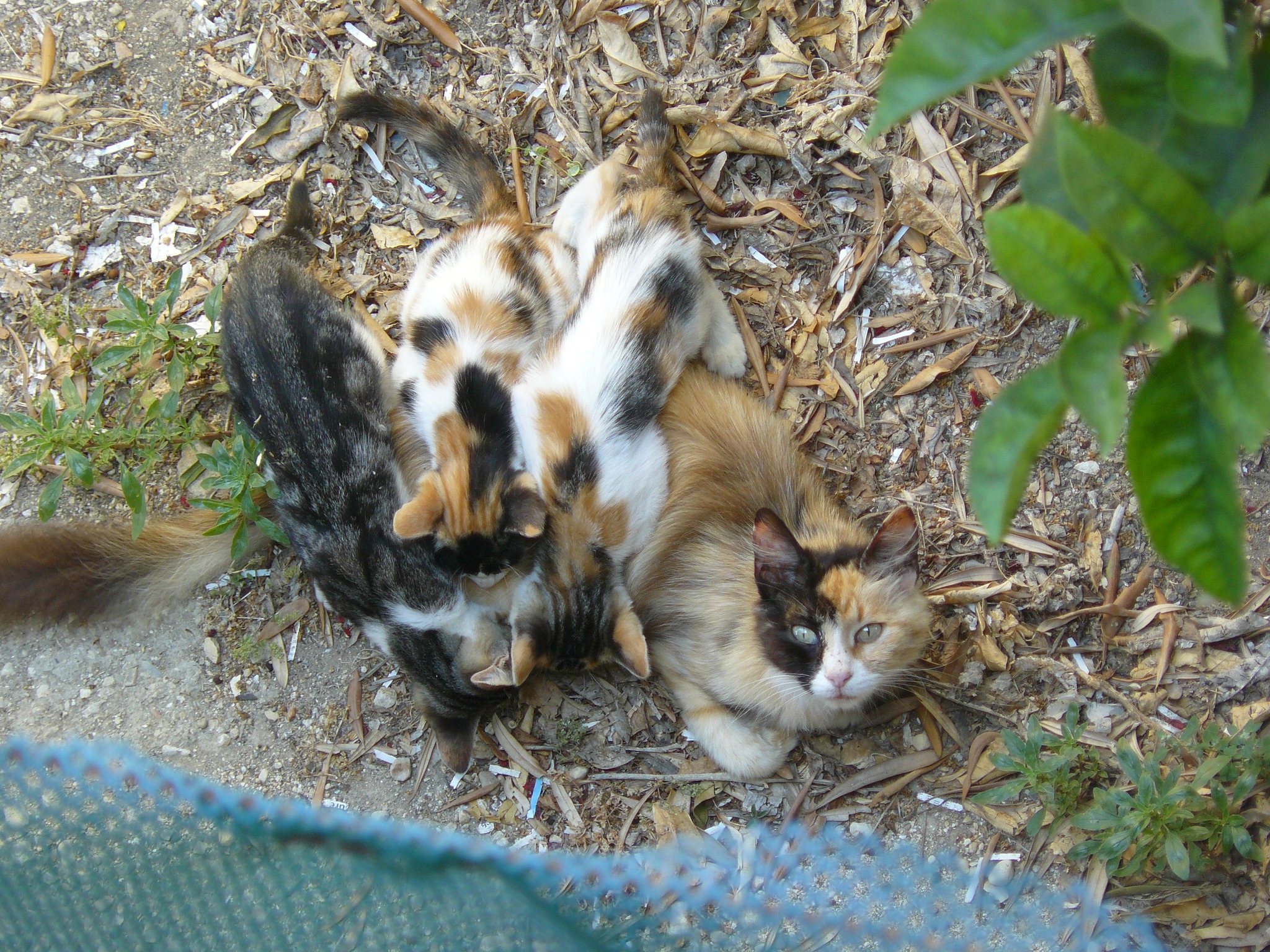
Sprocket and Pedal were closely bonded and remained so right through adulthood.
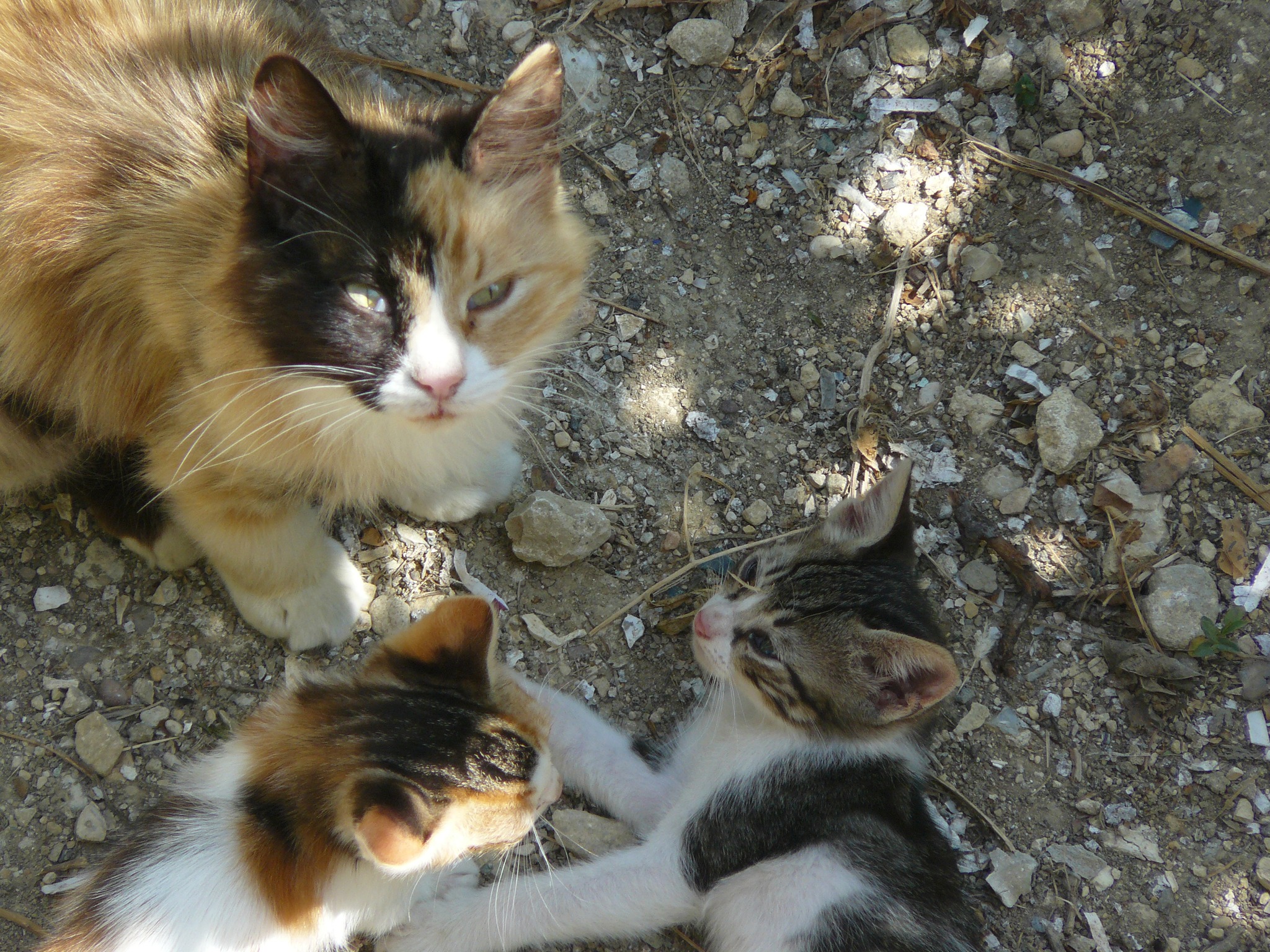
And sometimes The Cat would look up from caring for her kittens, catching the eye of one of the humans momentarily, as much as to say ‘I’ve done well, haven’t I?’
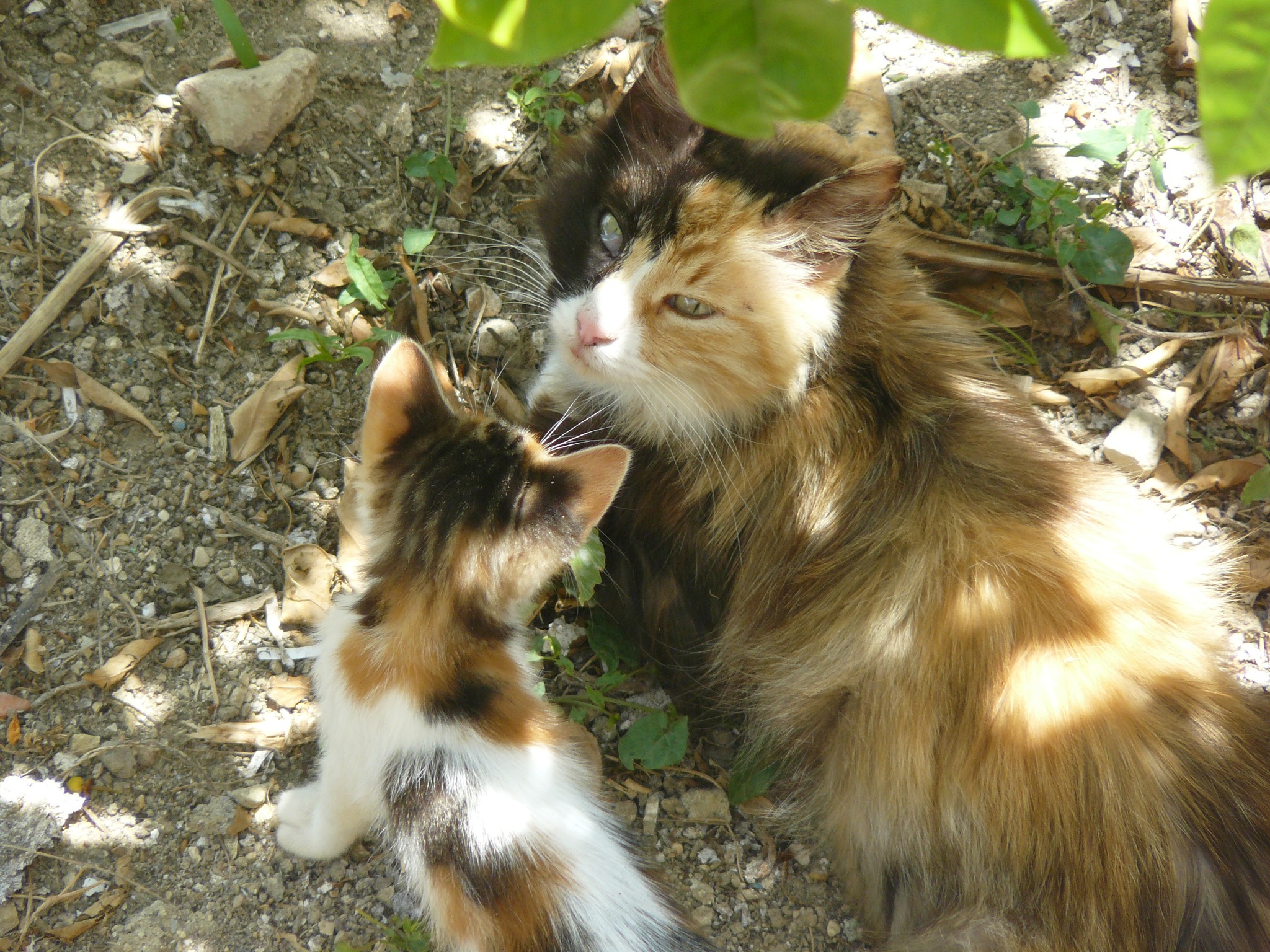
And we had to agree wholeheartedly that yes, she had done extraordinarily well.
 thecatisbusy