
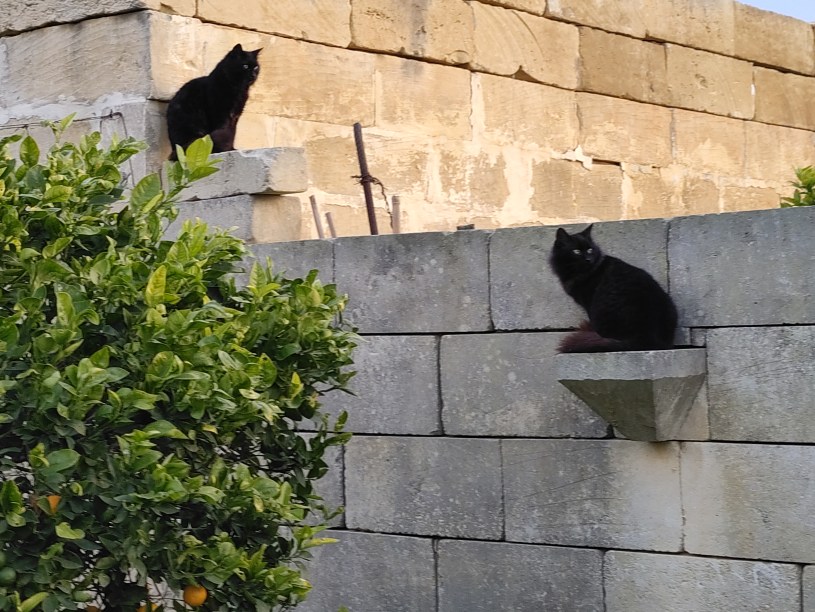
At a distance in the fields, it was quite often hard to tell which cat was which. But there were occasions on which, even close up to cats at feeding time in the garden or drive, it was really hard to tell who was who.
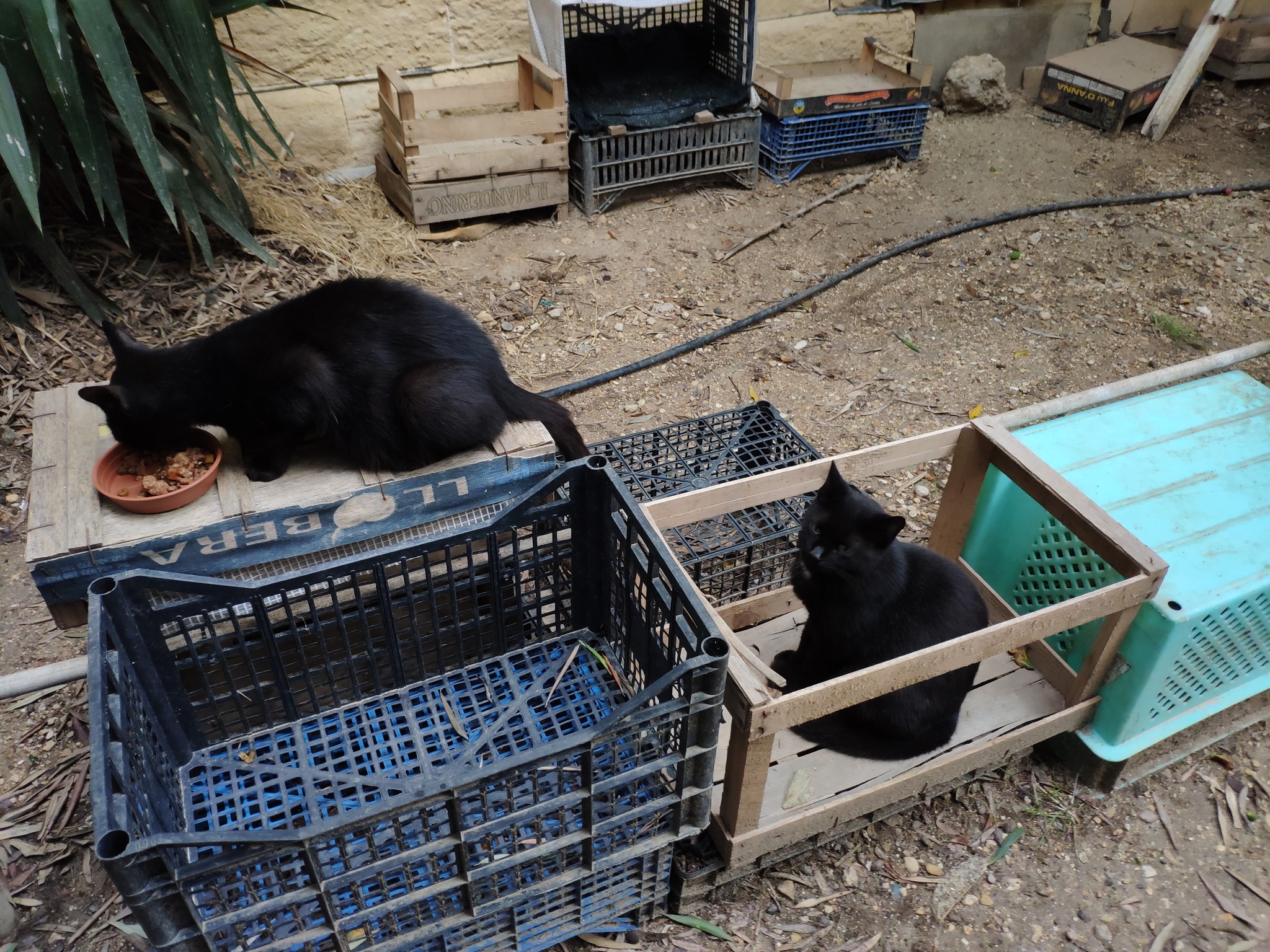
Some years ago, Visitor Cat, who had been chased out of the garden on numerous occasions by The Cat, had given birth to identical twin girls. They were both black with a tiny white patch under their chin, and we named them Cheese and Cracker. As they grew up, they became no less similar and, by the time they were adults, it was possible for only a trained eye to tell them apart physically, although in character they were quite different. They did not appear to be particularly strongly bonded, but would often appear simultaneously in the garden for meals, but coming from opposite directions.
Knowing who the father of each kitten was could be tricky as most litters were fathered by more than one male, and there could be quite a selection of colours and patterns when the kittens were born. But occasionally, there was such a strong similarity between father and offspring that there was no disputing the relationship.
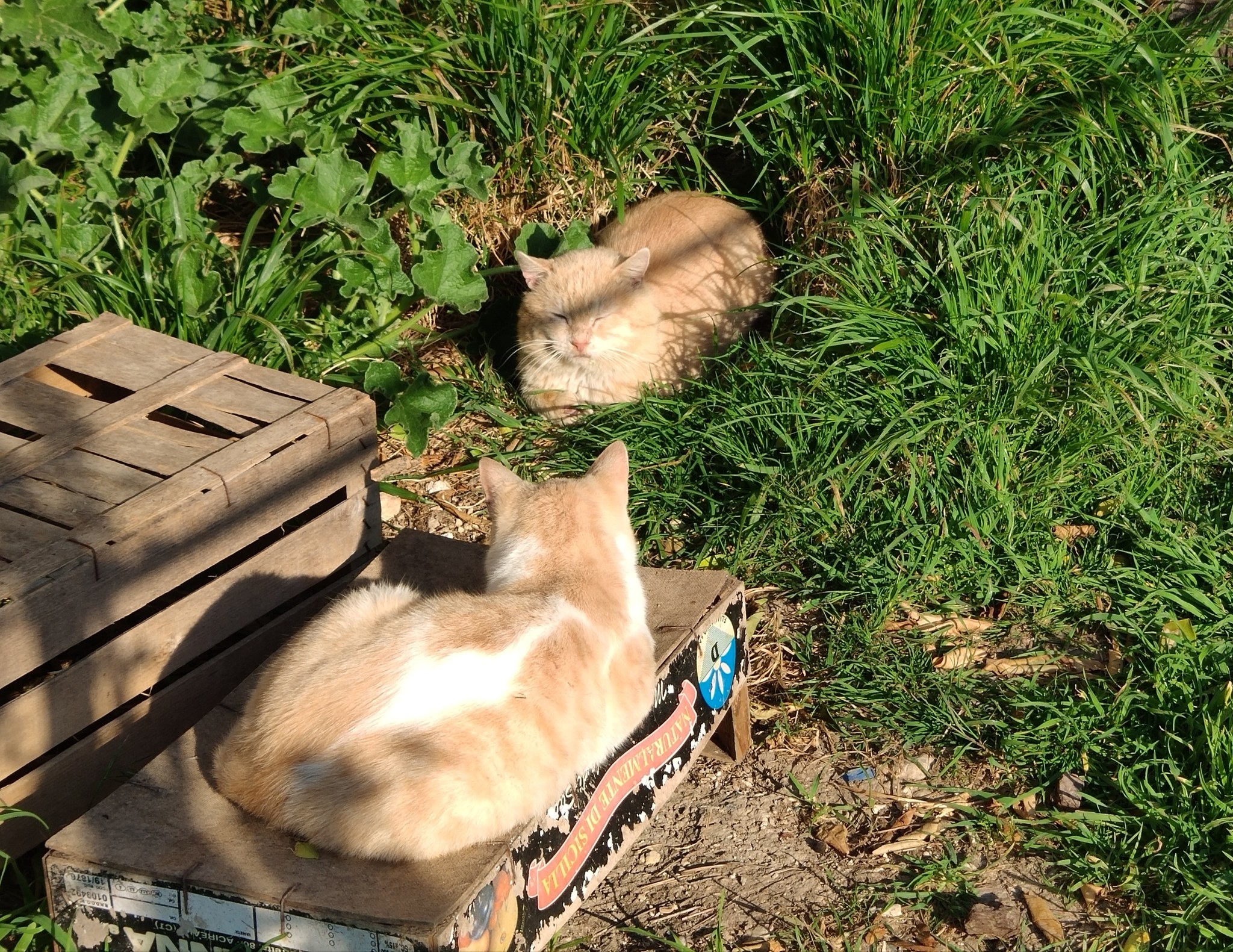
Somehow, fathers seemed to know which kittens were theirs and would seek them out, spending time with them and getting to know them. For instance, Izit knew that Pascha was his son and would spend time sitting with him in the garden. Pascha’s mother was Pippin who was a dilute calico (white/grey/peach) which accounted for Pascha’s white patches which were mixed in with Izit’s peach. Apart from his father’s colouring, Pascha had also inherited his sturdy build and grew into a big, robust cat.
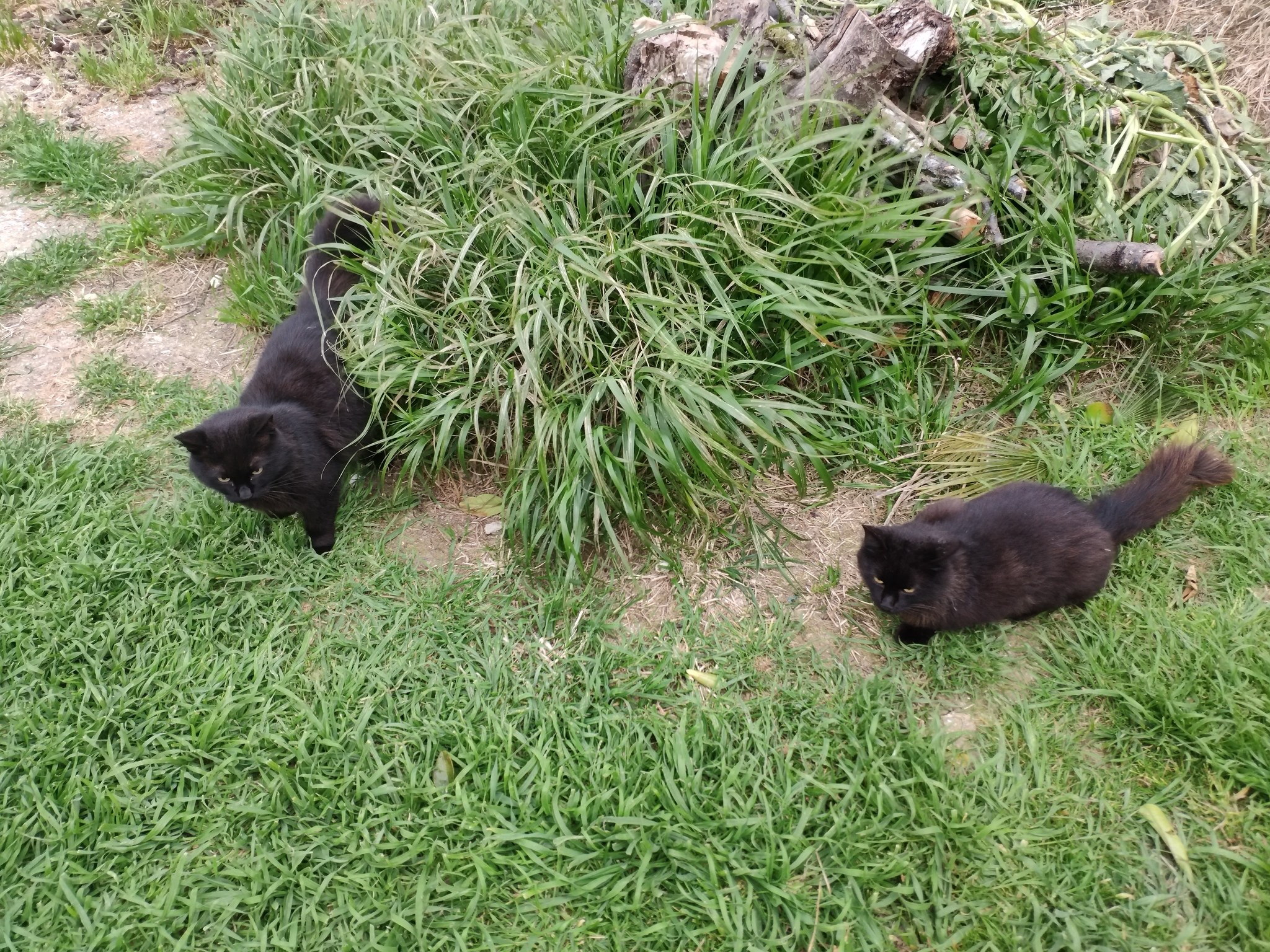
There was never any doubt that BBC (Big Black Cat) was the father of Raven, whose mother was Dawn, a calico cat. As Raven grew into a young adult, he developed a fine plume of a tail and an impressive coat and, as the months passed, it became more and more difficult to tell father and son apart (they are also pictured in the header photo). Luckily, Raven had a tiny pink patch under his bottom lip, so we could always call on that to tell the difference, if need be. Father and son were completely at ease and relaxed in each other’s company and enjoyed spending time together.
And, conversely, there was times when the kittens knew who their father was. They must have sensed some sort of bond, some attachment, and they would take to following a certain male around; Sherpa was almost definitely Thundercat’s son, and he would sit and stare at him quizzically, as though he really wanted to ask him ‘are you my dad?’
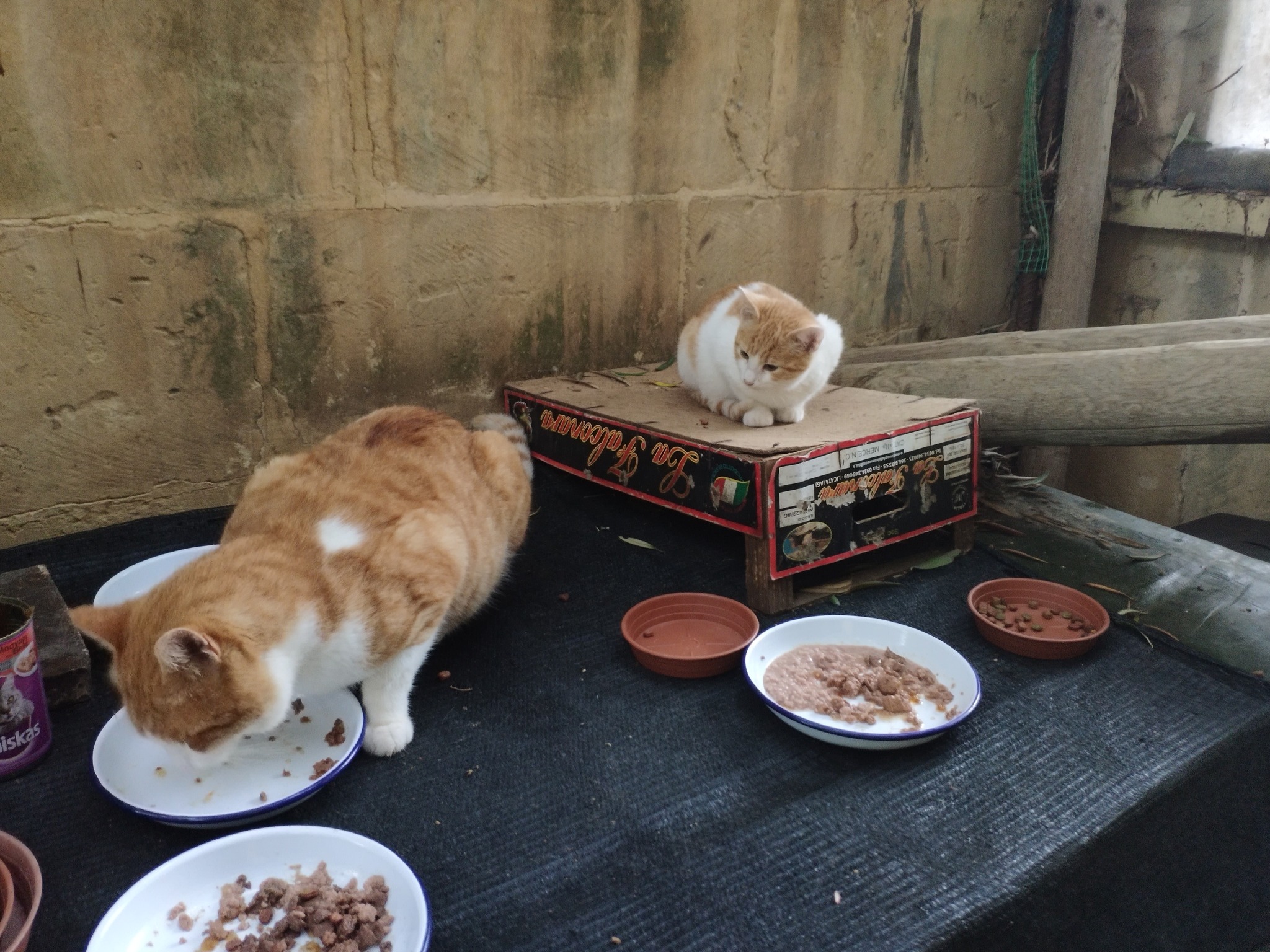
These similarities were not solely a father-and-son thing, as it happened (although not so often) with fathers and daughters, as demonstrated here by NVQ and his daughter Moonstruck. Many of NVQ’s offspring were easy to spot as they inherited the white flash on NVQ’s back, his black head and black tail. NVQ was a neighbourhood alpha-male, yet his behaviour with his male offspring was conciliatory and relaxed, which was very different from the aggressive attitude he would adopt with other young males.
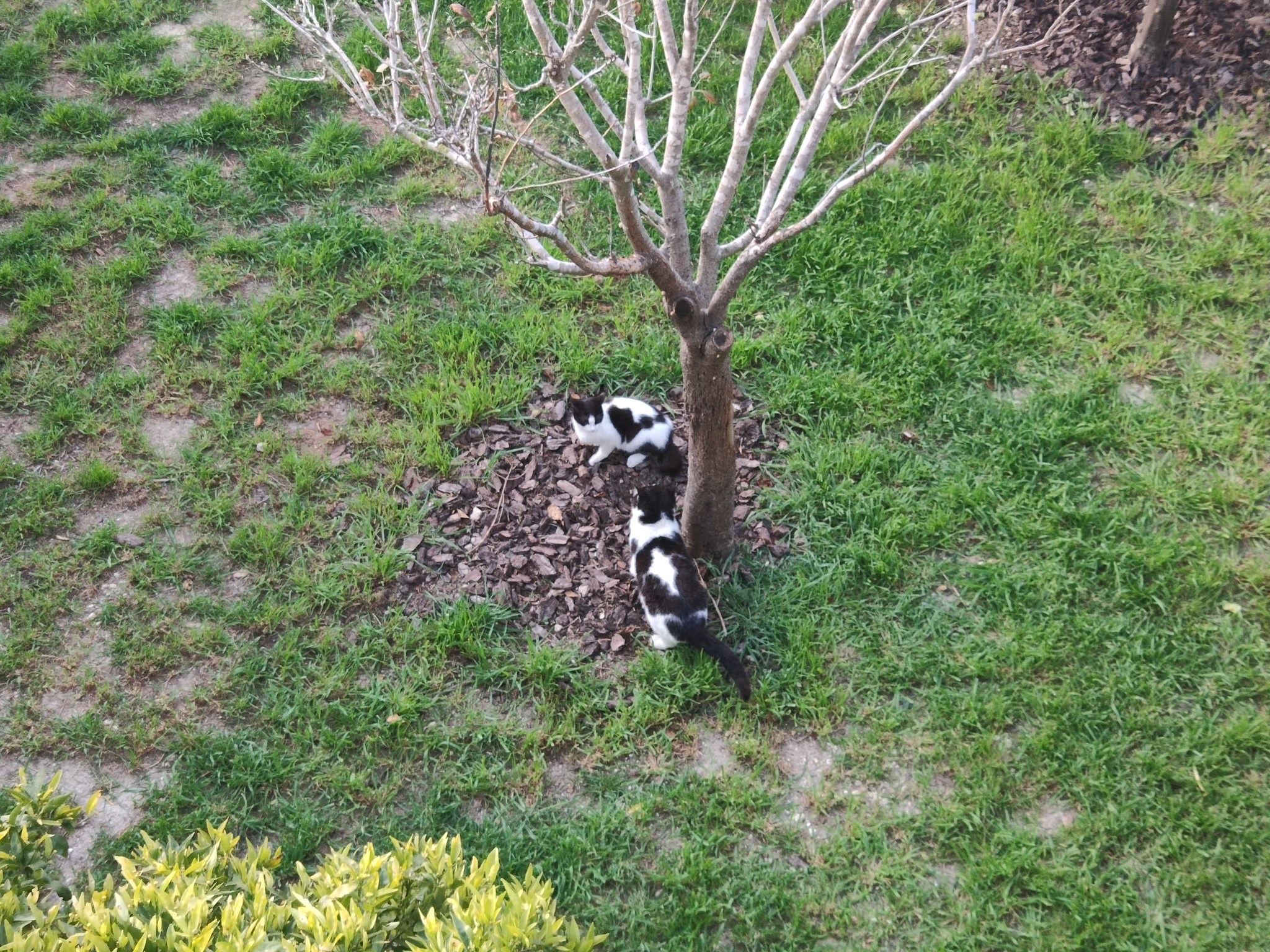
And of course there were also times when siblings, or mothers and their kittens, were so similar that it became difficult to tell them apart. Mini (on the right) and her younger sister Sundown were She-ba’s daughters. Luckily, Mini’s black was blacker, and Sundown’s colouring was more muted, which made telling them apart easier, but at a glance they could easily be mistaken for each other.

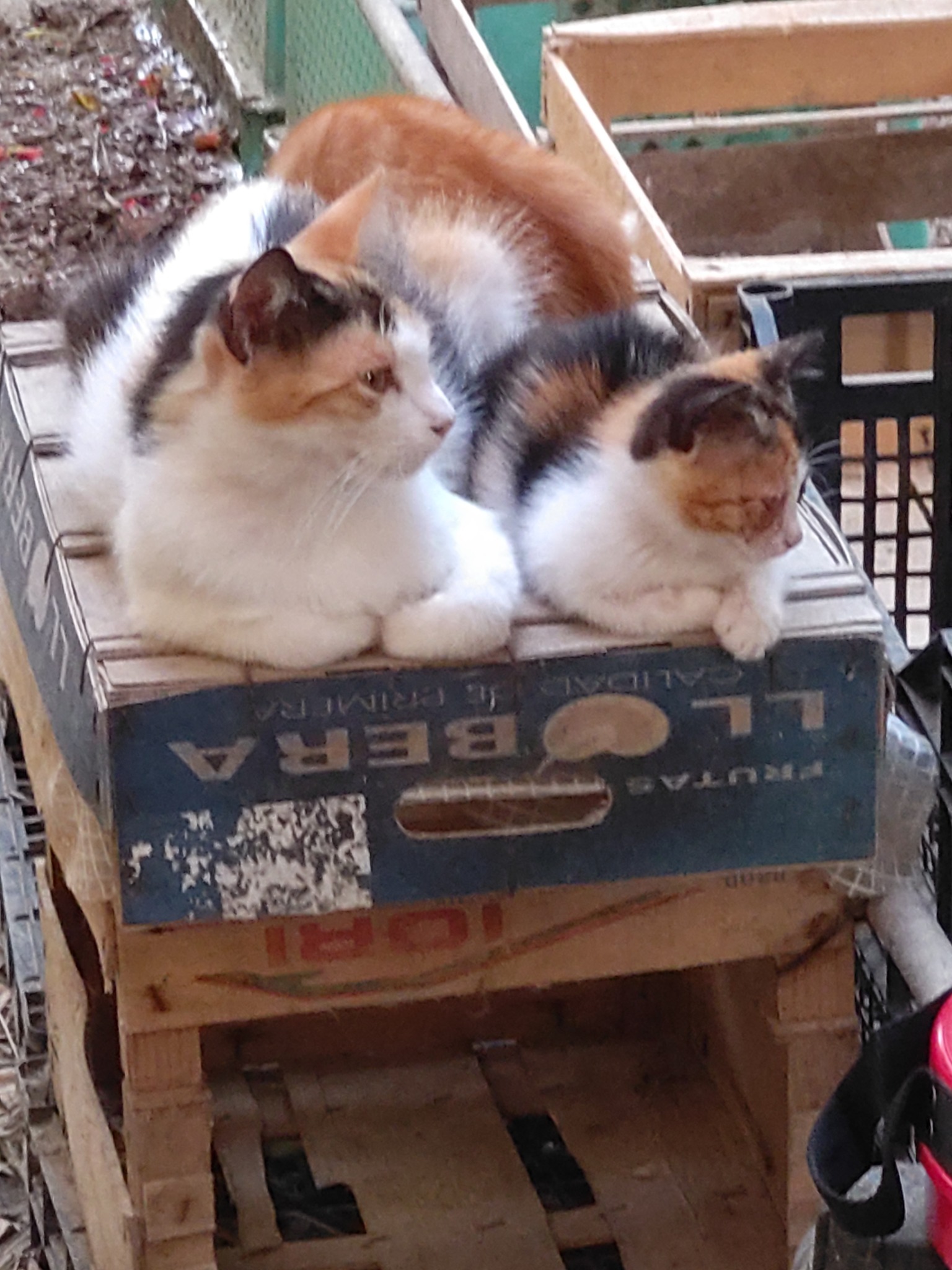
And, although Linnet had not inherited her mother Dawn’s exact markings, all Dawn’s mannerisms had definitely been passed down to her little daughter.
 thecatisbusy