
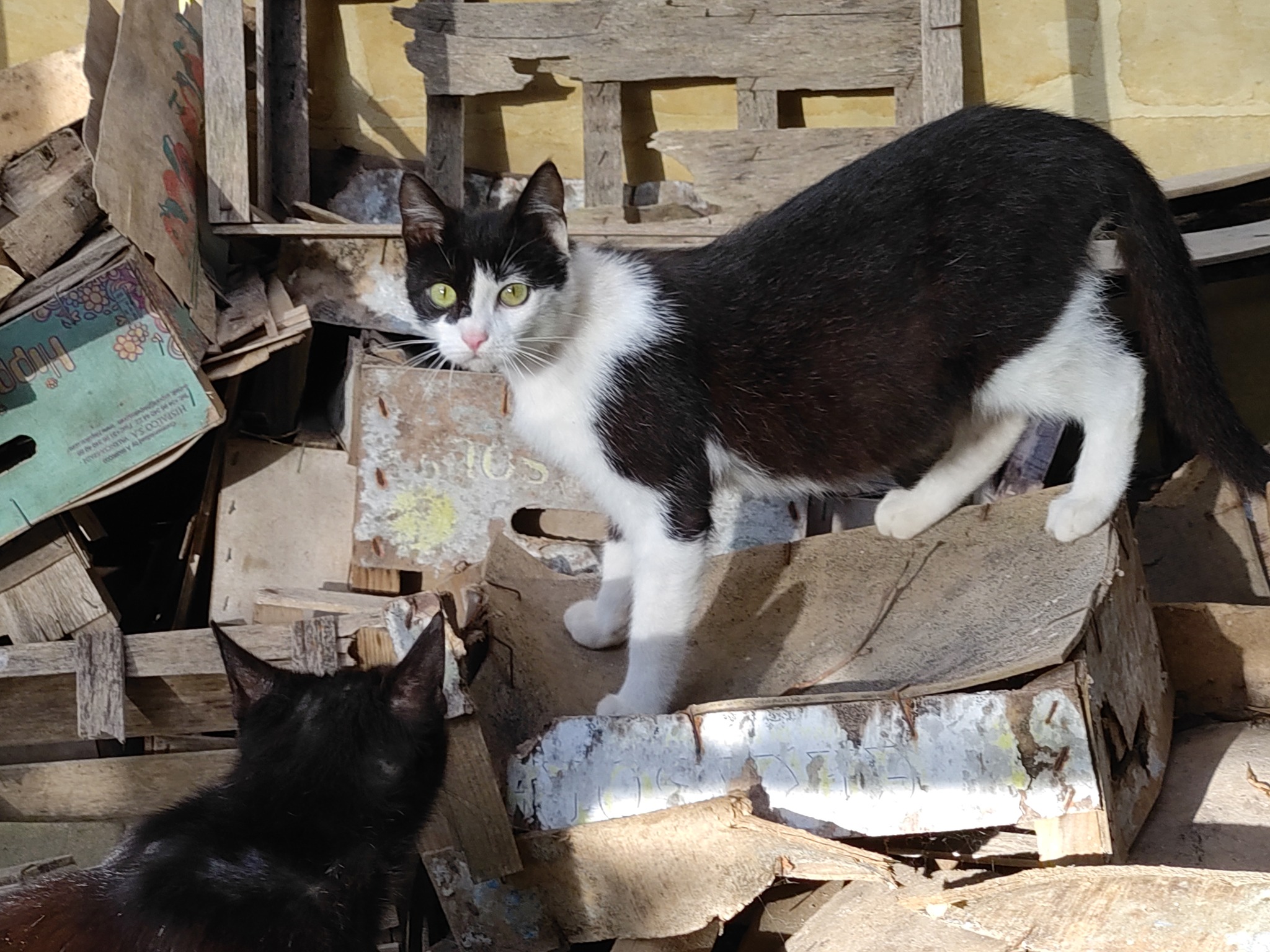
Of course, new female Visiting Cats also arrived during the pandemic months, and one was Phantom whose mother brought her to the food bowls one night. Phantom was only a few months old, but she was clever and quick to learn, so when her mother disappeared after a couple of days, Phantom stayed. It took several weeks before she would come anywhere near us, and it was a while before we realised that Phantom was a she and not a he. There had been very few female black-and-white cats recently.

Phantom was a loner, a stanchly independent lady who made her home on the far side of the fields opposite, walking back and to twice every day for food and water. It was a good place for an outdoor cat as there were unfinished buildings which provided shelter, and gardens and fields for hunting. But, all the same, for a small cat, it was a long walk.
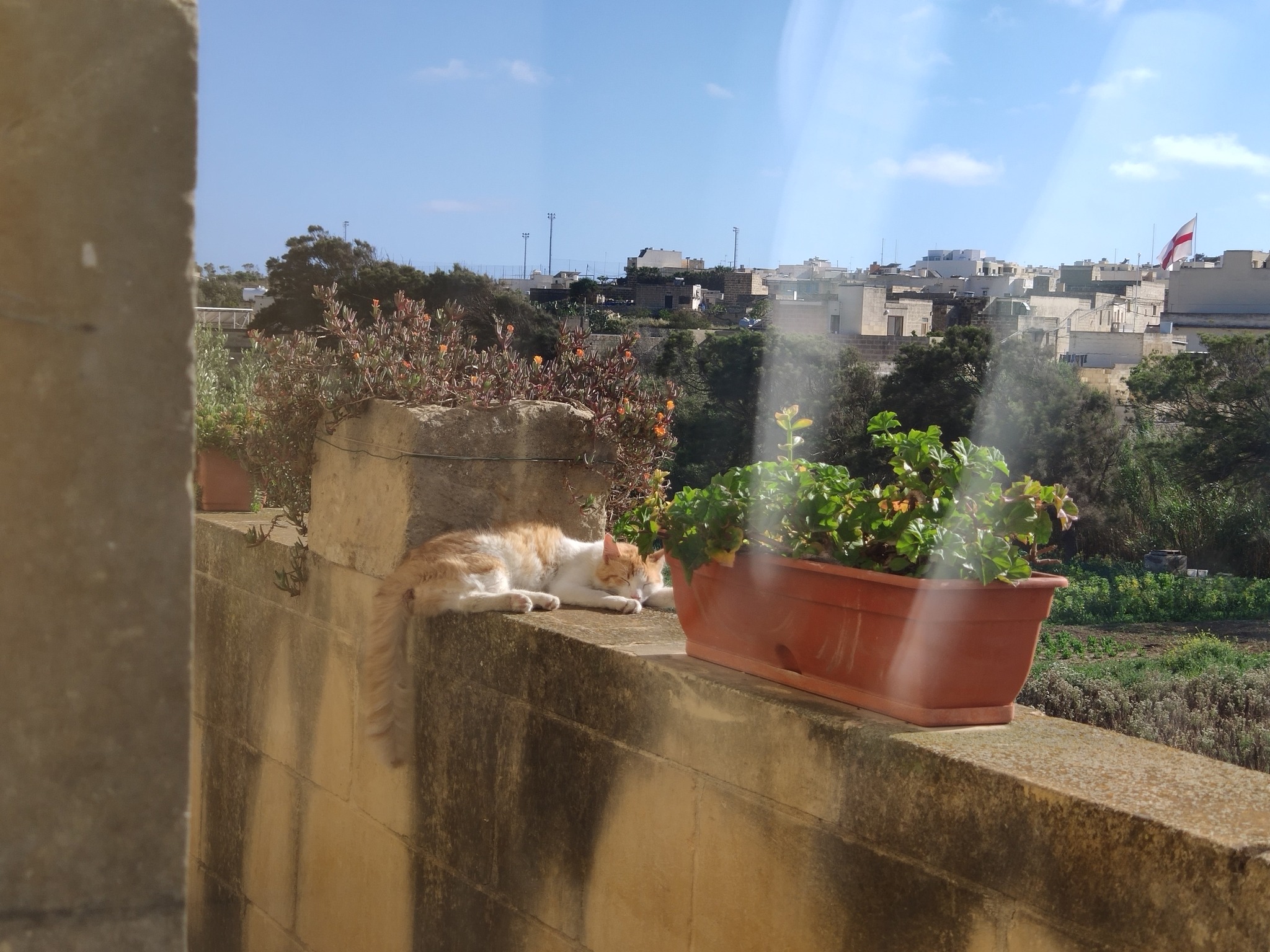
The next to arrive was Gypsy. She was definitely used to being around humans and knew exactly what a front door was. Someone had loved her enough to have her neutered so she had either been ‘owned’, or a colony cat.
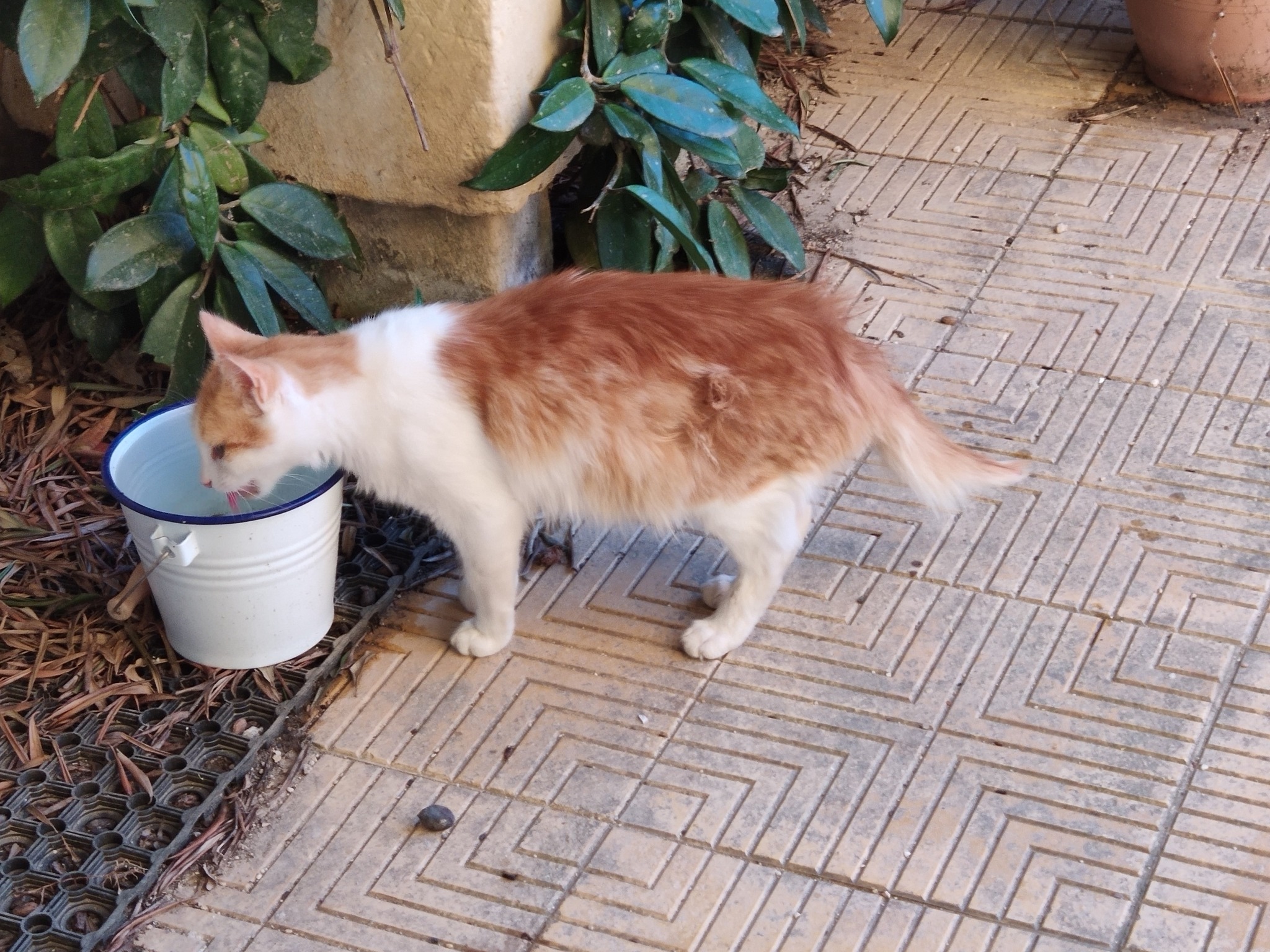
She got on well with the other cats, but after a few weeks, she suddenly disappeared. A few days later, she was brought back by Dawn who had befriended her in the garden. Gypsy’s tail was dragging behind her – had someone somewhere closed a front door on her? Had she had to drag herself out of somewhere? Who knows. More than half of her lovely plume of a tail withered and fell off, but thankfully she survived.
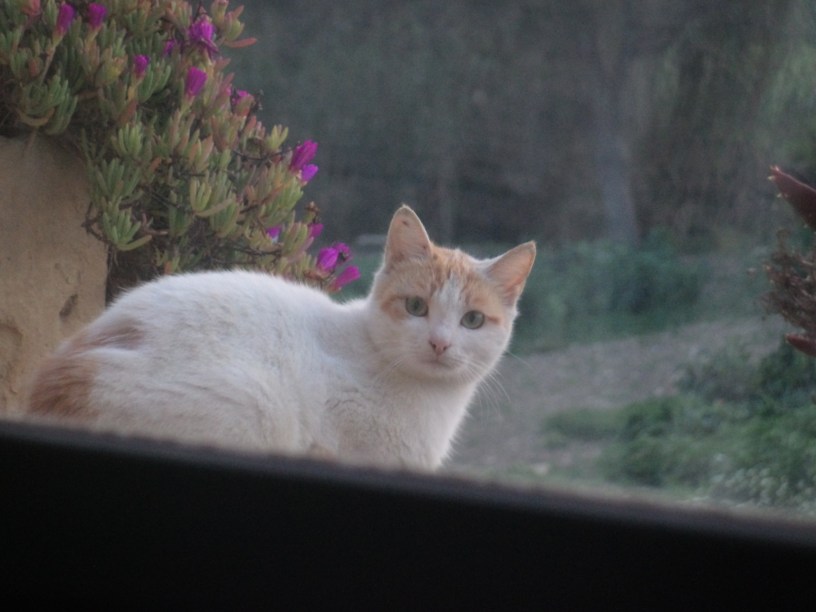
And the third female to arrive during spring of pandemic year was Roma, who, like Phantom, came from the fields opposite. She was very feisty and wasn’t interested in being friends with any of the other cats. She was a loner, used to fighting for survival, and not friendly, but just as welcome at the food bowls as any of the other cats.
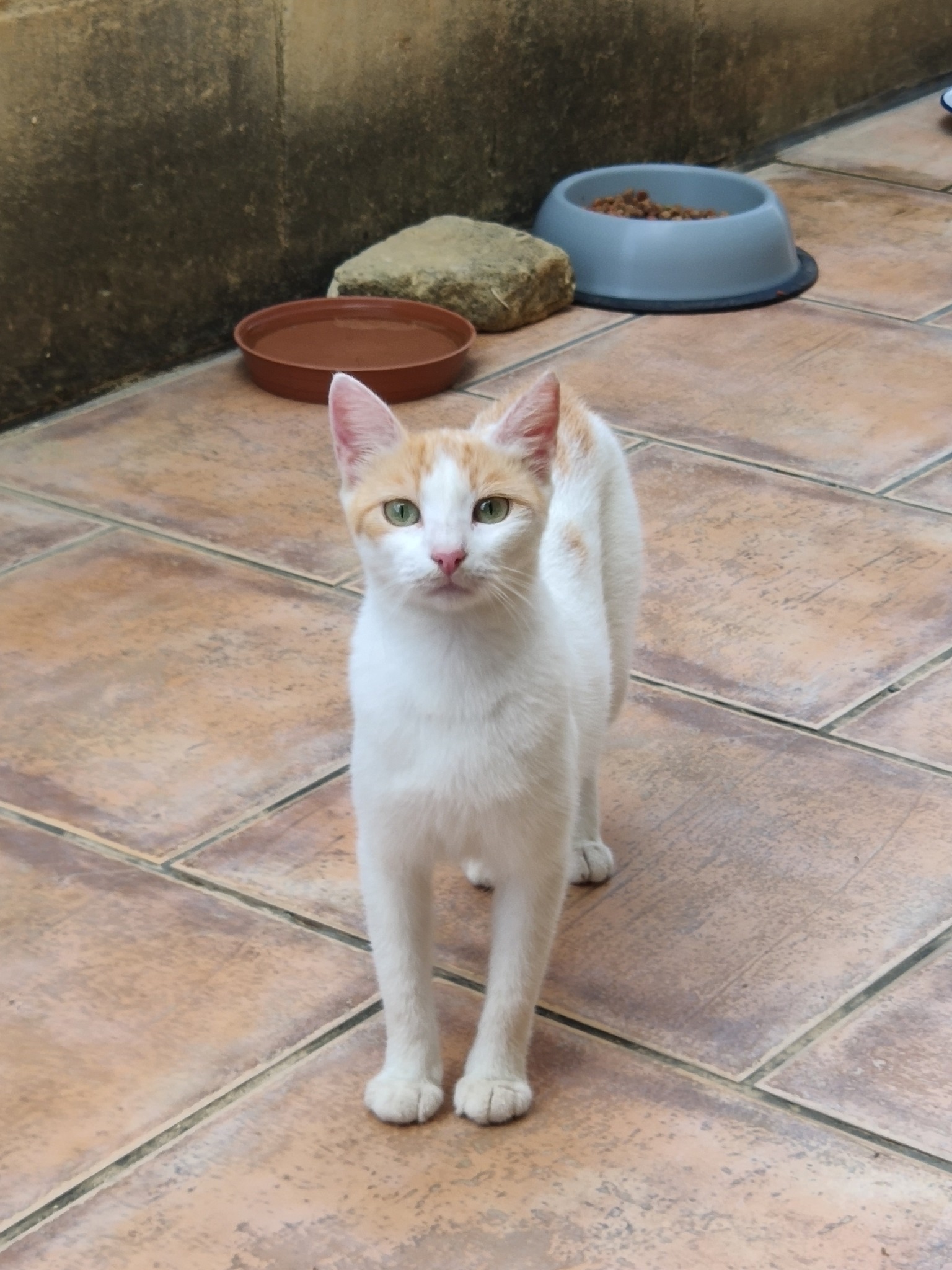
Roma became accustomed to having the humans around, but she remained quick to lash out at other cats.
 thecatisbusy