

In The Cat’s Garden, Dinky’s best friend was Lightning. But out and about in the fields, his friends were Longtail and Quink. We called them the Three Mouseketeers and they adventured and explored their surroundings together.
Longtail had been our first ever black Visiting Cat, so we were surprised to see him in the fields one day with another adult black cat, similar in many ways, but obviously malnourished and very shaky.
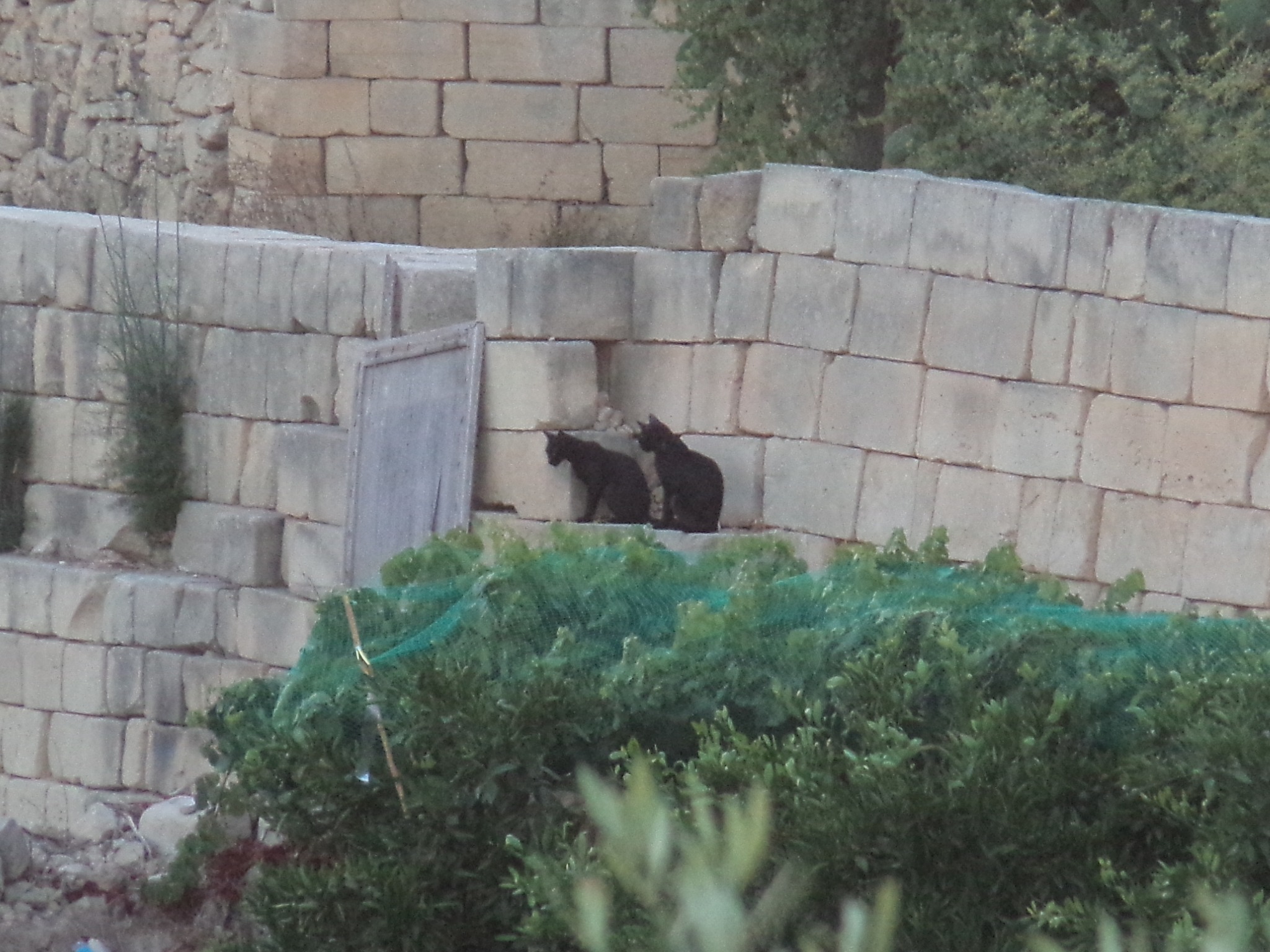
As it turned out, Dinky was turning out to be an empathetic cat, a rare and sensitive being, endowed with wisdom far beyond his years. And a few days later we spotted him slowing leading the new black cat across the fields towards the garden, stopping every now to patiently wait for the new cat to shakily catch him up. The fields were full of stubble from hay and straw which had been harvested, which we thought accounted for the new cat’s high-stepping and unsteady gait. Over the next few days, hunger took over from fear and one evening the new cat clambered awkwardly onto the top of the garden wall where we had placed a bowl of food. Unfortunately, the cat was too shaky and weak to jump into the garden, but after a few days of regular food and water, appeared stronger. The humans could only observe from a distance, hidden so as not to frighten the cat, but it soon became clear that the newcomer (who was female) had cerebellar hypoplasia. This was a new condition to us, something that we had never seen before.
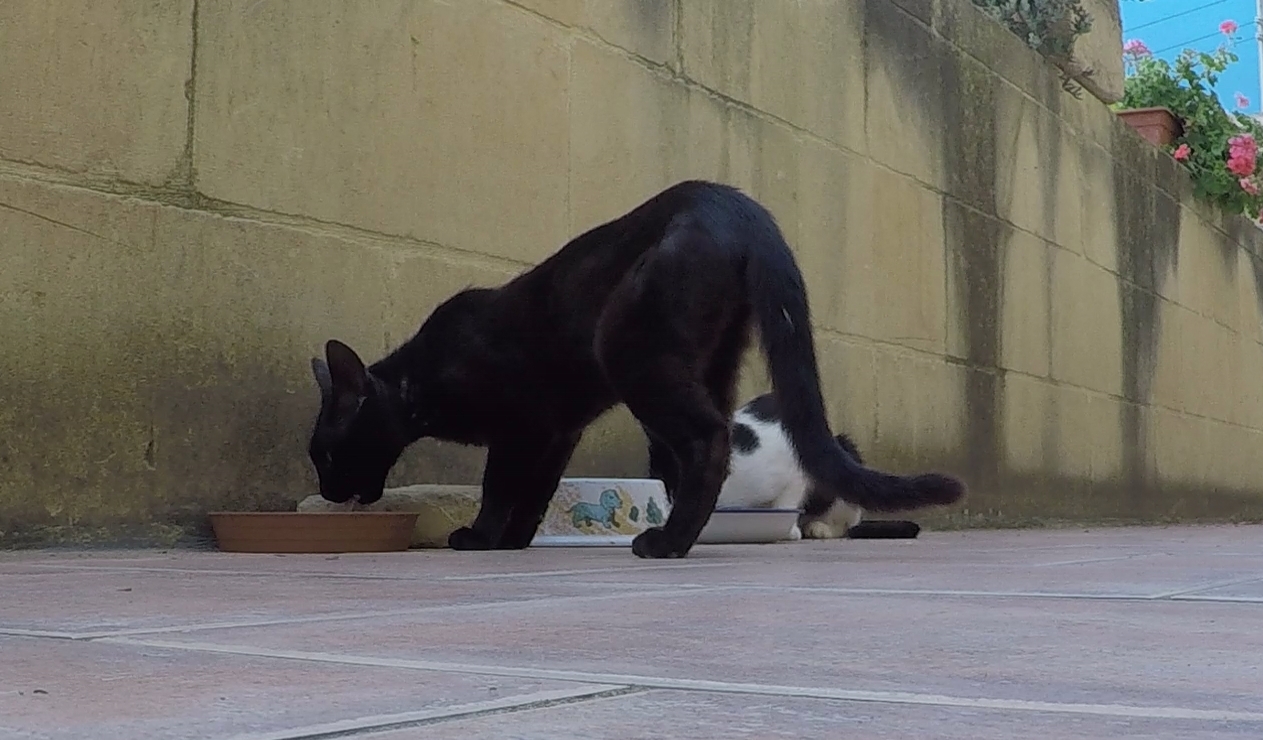
Over the coming weeks and months the cat became a regular visitor. She found her way to the drive where she could eat without having to scale any walls. She became stronger, put on weight, and her coat became glossy once again. We named her Kiwi, and she was to become one of our most regular Visiting Cats.
 thecatisbusy